From Excess Weight to a Leaner Body: What Really Happens When You Lose Weight?
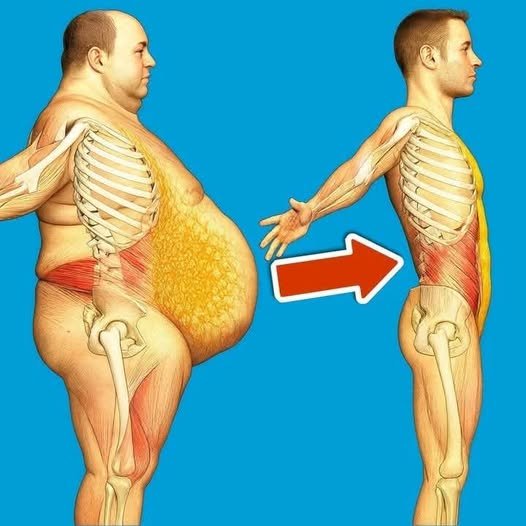
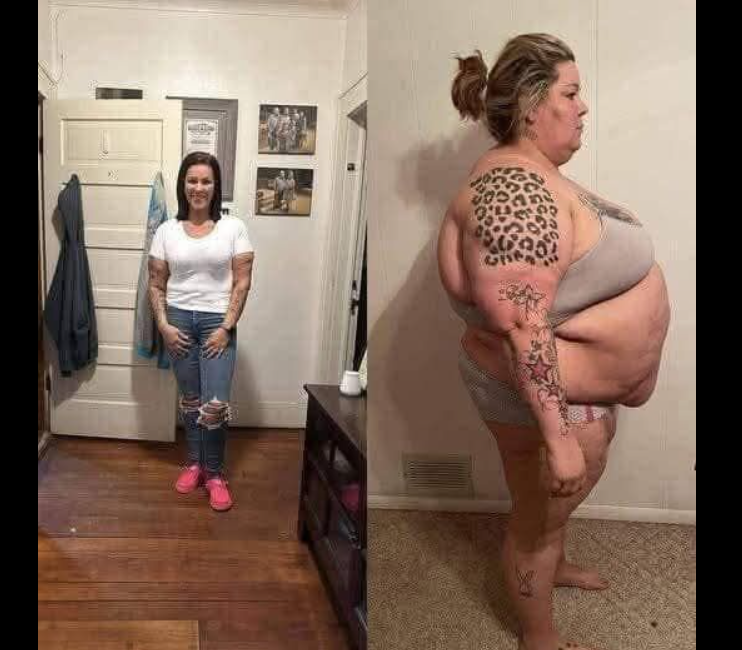
The illustration shows a dramatic transformation: a body carrying substantial abdominal fat on one side and a much leaner figure on the other. Images like this are often shared online to promote weight-loss plans, diets, or “before-and-after” transformations.
But real weight loss is more complicated than simply making the body look like the figure on the right.
Where Does the Lost Weight Actually Go?
When the body uses more energy than it receives from food and beverages over time, it draws on stored energy. During weight loss, the body loses a combination of body fat, water, and sometimes lean tissue, rather than fat simply disappearing from one particular area.
That is why you generally cannot choose exactly where your body loses fat first.
Some people notice changes around the face or waist early, while others notice changes in their hips, legs, or arms first. Genetics, age, hormones, body composition, and other factors all influence how fat is distributed and lost. (Institut national du diabète et des maladies digestives et rénales)
What Happens to Belly Fat?
The large abdomen shown in the illustration represents substantial stored body fat around the midsection.
Reducing overall body fat can reduce waist circumference, but targeting abdominal fat with a single exercise or food isn’t possible.
Exercises such as walking, cycling, swimming, or strength training can contribute to overall fitness and weight management, but they don’t selectively instruct the body to burn fat from one specific location.
A Calorie Deficit Is Part of the Equation
For weight loss to occur, energy intake generally needs to be lower than the amount of energy the body uses over time. NIDDK explains that reducing calorie intake while increasing or maintaining physical activity can support weight loss. (Institut national du diabète et des maladies digestives et rénales)