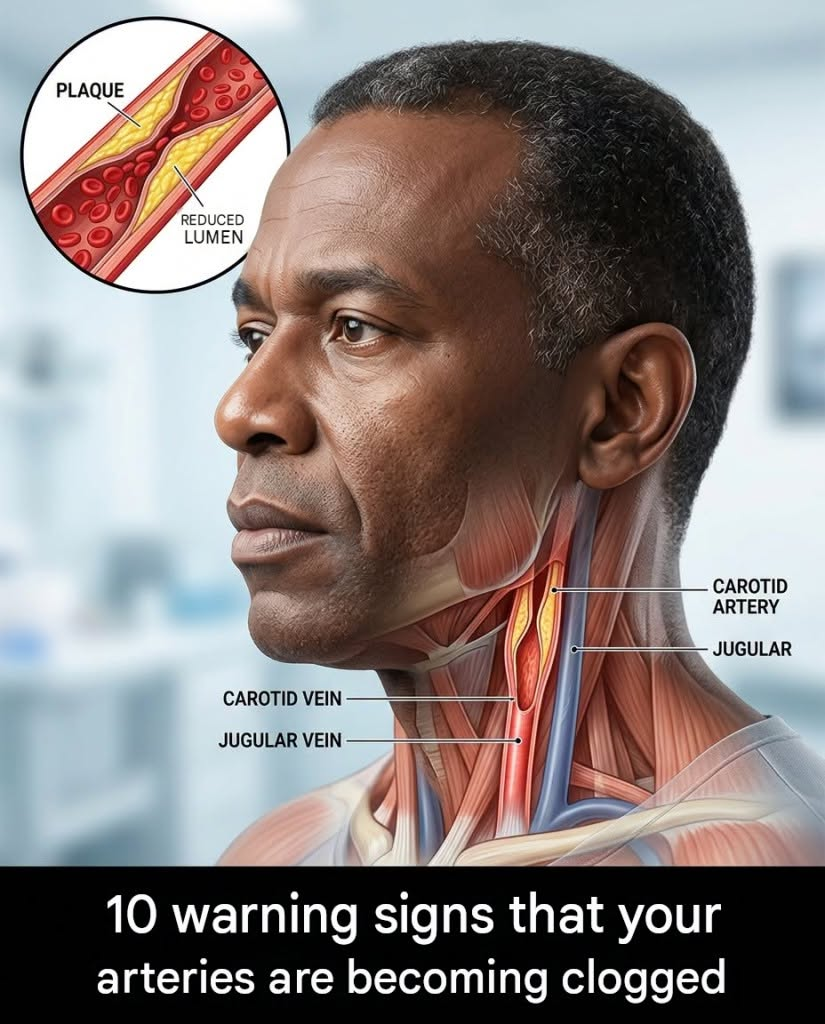
The image is clinical and arresting: a cross-section of a human neck revealing the carotid artery and jugular vein, alongside a magnified inset showing a vessel partially occluded by yellow plaque, labeled “reduced lumen.” The headline promises “10 warning signs that your arteries are becoming clogged.” For anyone who has worried about cardiovascular health, this is the kind of post that demands attention. But the reality of arterial disease is both more subtle and more serious than a listicle can convey. Arteries do not usually announce their narrowing with a neat set of ten symptoms. In the carotid arteries, which supply blood to the brain, the first sign is often a transient ischemic attack (TIA) or a stroke—and many people have no symptoms at all before that event . In the peripheral arteries of the legs, the classic warning is pain or cramping with walking that resolves with rest, but up to four in ten people with peripheral arterial disease have no leg pain . The danger of the “10 signs” format is that it can create either false reassurance (if you don’t have the listed symptoms) or unnecessary panic. What matters is understanding the specific warning signs that are medically validated, recognizing which ones require emergency attention, and knowing that the absence of symptoms does not mean the absence of disease.