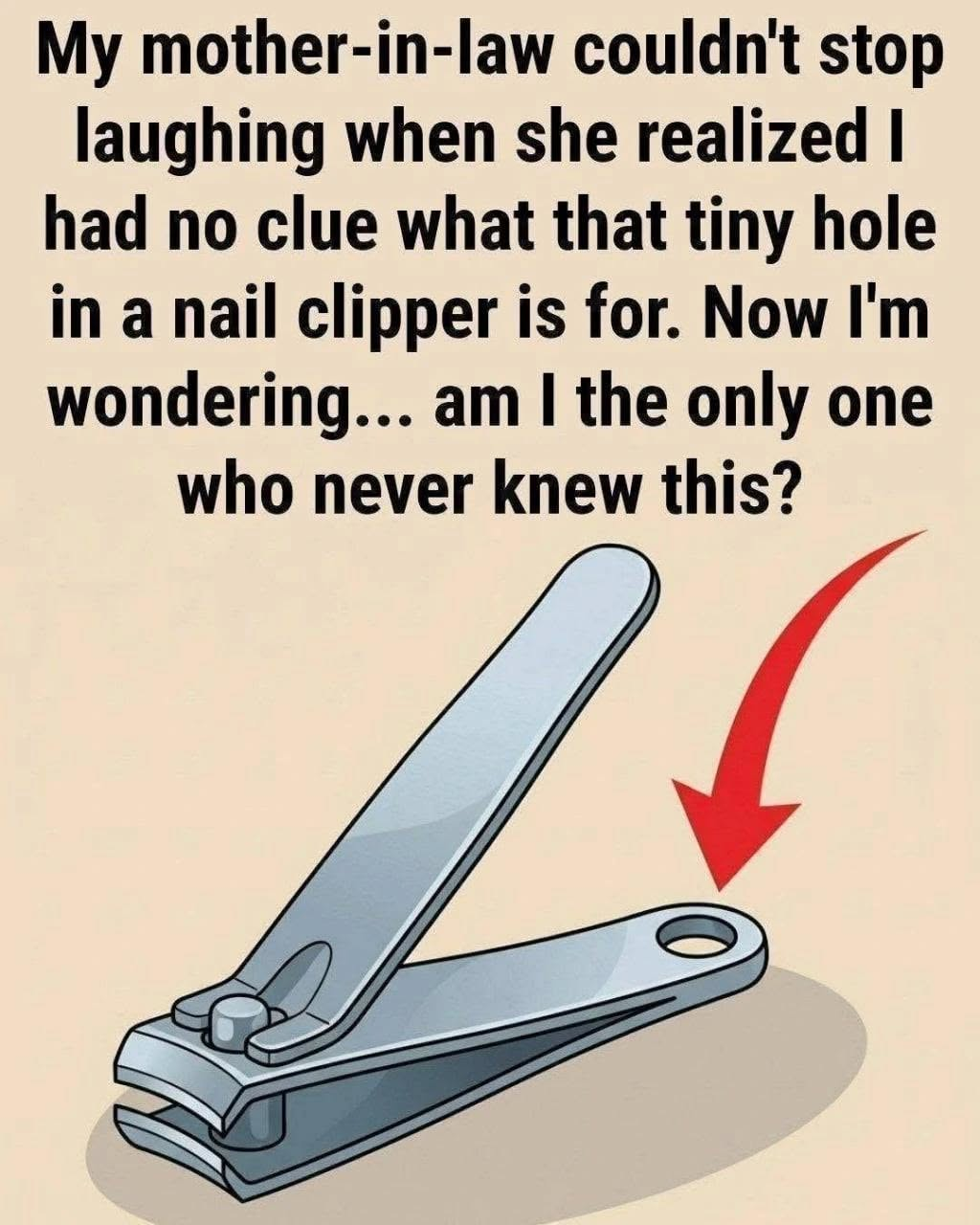
The image captures a moment of mild domestic embarrassment: a person who has used nail clippers their entire life has just discovered, thanks to a laughing mother-in-law, that the tiny hole at the end of the tool has a purpose. The question—”am I the only one who never knew this?”—resonates because it touches on a shared blind spot. We handle these objects so routinely that we stop seeing them. The hole looks like a manufacturing artifact, a leftover from some industrial process, or perhaps a decorative detail. It is none of those things. It is a deliberate design feature that has survived nearly a century and a half of manufacturing evolution for a reason that is almost comically practical.
Understanding what that hole is for requires a brief trip through the history of the nail clipper itself, from its origins as a dangerous alternative to pocket knives to its current status as a ubiquitous household object. It also requires an honest look at why so many people never learned this fact: the hole serves a function that most users simply do not need in their daily lives. But for travelers, organizers, and anyone who has ever lost a nail clipper in the bottom of a toiletry bag, that tiny opening is a quiet piece of engineering foresight. This article will explain the hole’s original purpose, its place in the tool’s patented design, and the practical ways people use it today.