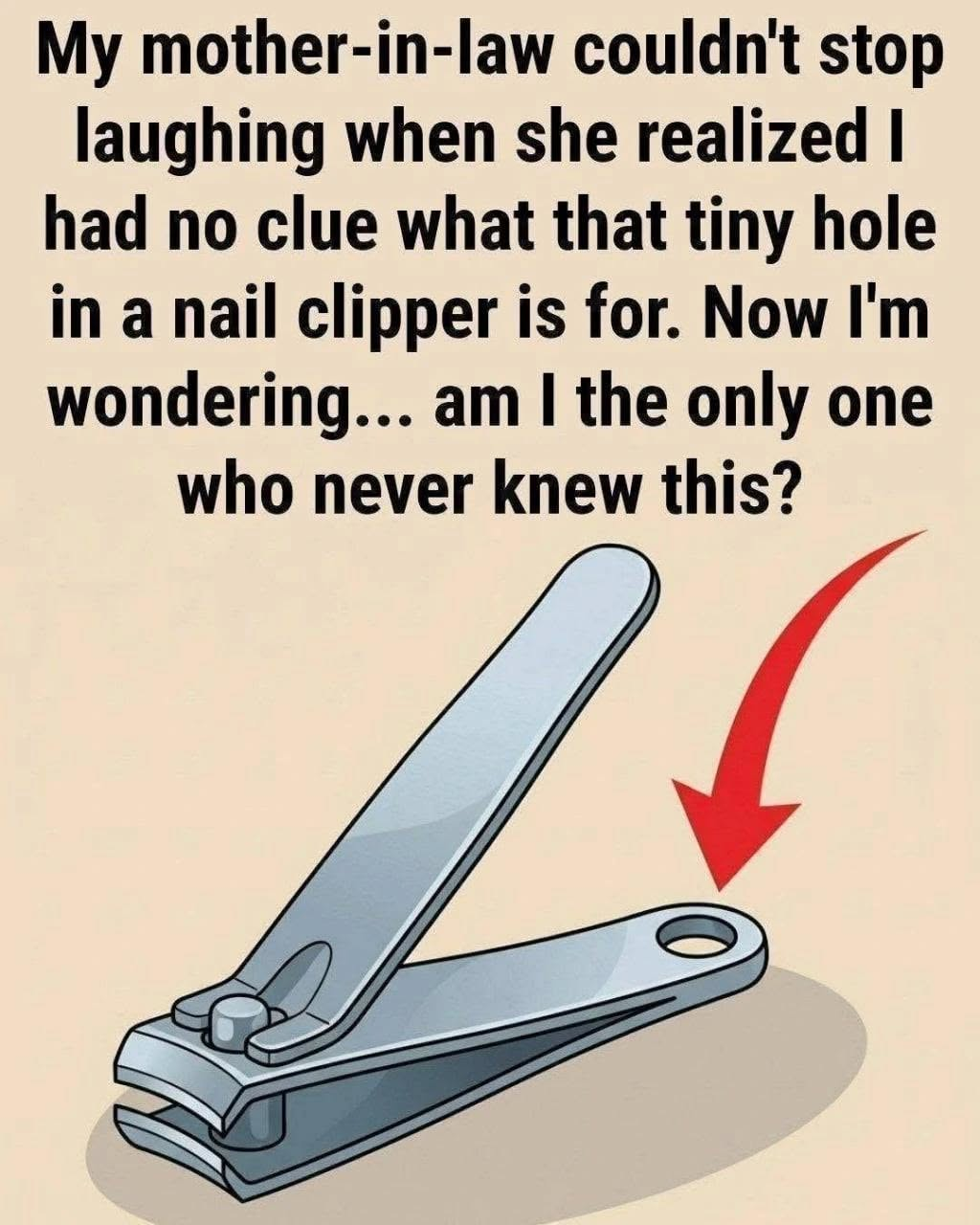
The hole is not a modern addition to the nail clipper. Its origins are embedded in the very first patents for the lever-style tool that we recognize today. Before the 1880s, nail care was a far less precise affair. People used small pocket knives, scissors, or files, often with results that were uneven at best and painful at worst. The lever-based clipper represented a genuine leap forward in both safety and efficiency.
The modern nail clipper’s lineage traces to 1875, when Valentine Fogerty patented an early lever-style model in the United States. A few years later, in 1881, inventors Eugene Heim and Celestin Matz refined the design and added the small hole that persists today . According to Reader’s Digest, the feature was present from the beginning in the form of a loop rather than a hole: “It’s not a hole, but they have a loop in the patent from 1881” . The feature was not an afterthought. It was a deliberate choice that acknowledged a simple truth: small grooming tools are easy to lose, and a small opening costs almost nothing to manufacture while providing a lasting practical benefit.
The Hole in the Age of Disposable Convenience
Today, the hole’s original purpose may feel slightly archaic. Most people do not carry nail clippers on their keychains, and the tool is cheap enough that losing one is an inconvenience rather than a crisis. Yet the feature has not disappeared, and its survival points to something interesting about how we use everyday objects. The hole persists because it still works, even for people who never consciously use it for its intended purpose.
Some users thread a colorful ribbon or a piece of yarn through the hole to make the clipper easier to spot in a drawer or cabinet . Others hang the clipper on a hook inside a bathroom cabinet, keeping it accessible and off cluttered countertops . Travelers who do attach their clippers to a keychain or toiletry bag often discover that the habit is more convenient than they expected; a tool that is always with you is a tool you never have to search for. The hole also makes it possible to keep fingernail and toenail clippers together as a set, threaded onto the same ring, which is a small organizational victory for anyone who has ever mixed them up .
Conclusion
The tiny hole at the end of a nail clipper is not a mystery, a manufacturing error, or a decorative flourish. It is a deliberate design feature with a history that stretches back to the 1880s, created so that the tool could be attached to a keychain, a chain, or a hook and thereby kept from being lost. The fact that so many people never learned this is less a reflection of poor design than of how thoroughly the object has blended into the background of daily life. We use nail clippers without thinking about them, and a feature that serves a purpose we do not personally need becomes invisible.
Yet the hole remains useful, even in an era of cheap, disposable grooming tools. It offers a simple solution to a universal problem: small things get lost. Whether you thread a ribbon through it to make your clipper easier to find, hang it on a bathroom hook, or attach it to a travel kit, the hole is there for exactly that purpose. The next time you pick up a nail clipper and notice that small opening, you can appreciate it for what it is: a quiet piece of practical engineering that has outlasted nearly every other detail of its original design.
Frequently Asked Questions
1. What is the tiny hole at the end of a nail clipper actually for? The hole is designed for attachment. It allows the clipper to be threaded onto a keychain, a lanyard, a small chain, or a hook, making the tool easier to keep track of and less likely to be lost .
2. Is the hole meant to catch nail clippings? No. This is a common misconception, but the hole is far too small and poorly positioned to catch clippings. The primary purpose is attachment, not clipping collection .
3. When was the hole first added to nail clippers? The feature dates back to the early patents for lever-style nail clippers. The 1881 patent by Eugene Heim and Celestin Matz included a loop at the end of the lever, which is the ancestor of the modern hole .
4. Why do some nail clippers have larger holes than others? Manufacturers vary the hole size to accommodate different attachment methods. A larger hole can fit thicker key rings, carabiners, or split rings, while a smaller hole is sufficient for string or thin chains .
5. Can I use the hole to hang my nail clipper in the bathroom? Yes. Threading a string or small cord through the hole and hanging the clipper on a hook inside a medicine cabinet or on a wall is a practical way to keep it accessible and off cluttered surfaces .
6. Does the hole have any function during manufacturing? In many clipper designs, the hole serves as the insertion point for the pivot pin that holds the lever and base together during assembly. This dual purpose helps explain why the feature has been retained across so many different models .
7. Why do some people carry nail clippers on their keychains? Carrying a clipper on a keychain ensures the tool is always available for minor grooming needs, such as a torn nail or a frayed thread. It also prevents the clipper from being misplaced, since keys are typically kept in a consistent location .
8. Is the hole a recent addition to nail clipper design? No. The hole has been part of the design since the late 19th century and has remained a standard feature across virtually all lever-style nail clippers produced since then .