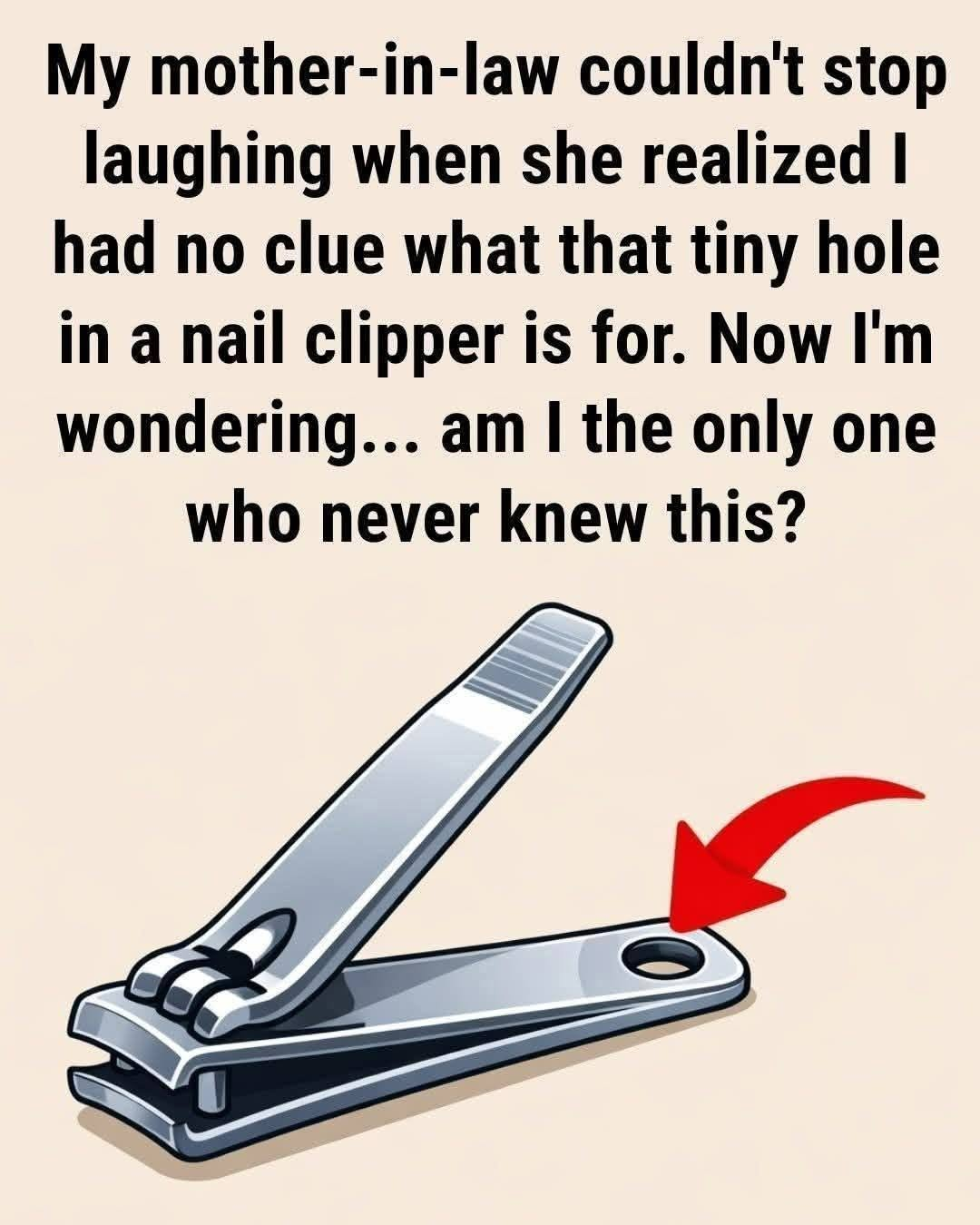
Few objects are as ubiquitous and yet as overlooked as the standard nail clipper. Found in bathroom cabinets, travel kits, and desk drawers worldwide, this simple lever-based tool is a marvel of mechanical efficiency that has remained largely unchanged for over a century. We use it routinely, often without a second thought, until a stray question—perhaps prompted by a curious family member or a viral social media post—forces us to pause and scrutinize its design. One such question that has recently baffled millions of people is the purpose of the tiny, perfectly circular hole located at the tail end of the clipper’s lever. Is it a manufacturing artifact, a specific grooming aid, or something else entirely? While it may seem like a trivial detail, the history and function of this small aperture reveal a fascinating story about industrial design, user behavior, and the enduring legacy of a 19th-century invention. Understanding its true purpose not only solves a minor modern mystery but also connects us to the practical considerations of the inventors who shaped the tools we rely on today.
The Mystery of the Hole: Common Misconceptions
When people first notice the hole, their minds often race to creative conclusions. Some theorize that it is a specialized guide for hanging the clipper to air-dry after washing, while others suspect it might be a tool for collecting clippings or even a safety feature to reduce suction during cutting. In online forums and social media discussions, guesses have ranged from a resting place for a specific finger during use to a remnant of the manufacturing process where the metal is stamped. However, the overwhelming consensus among design experts and historians points to a much simpler and more utilitarian explanation. The hole is not a cutting guide, a cleaning port, or a decorative flourish; it is a deliberate attachment point designed to solve a problem that has plagued humanity for as long as we have owned small tools: the tendency to lose them.
The Primary Function: Attachment and Portability
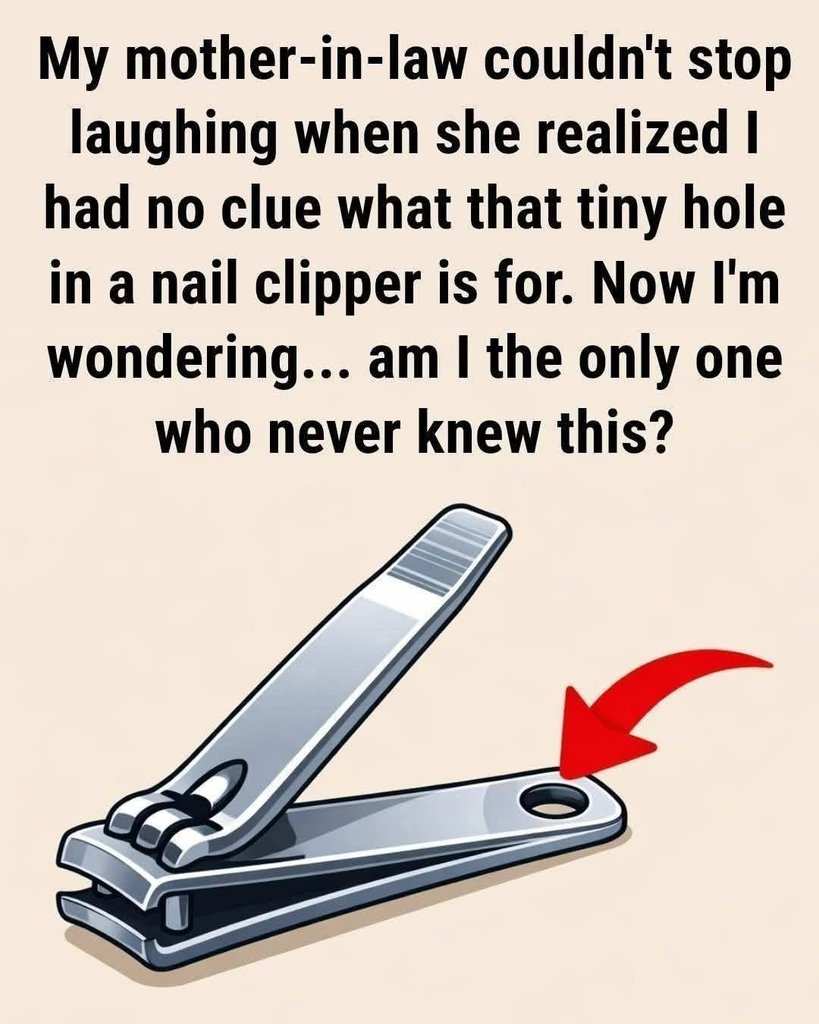
The tiny hole at the end of a nail clipper serves one primary, highly practical purpose: it allows the tool to be attached to a keychain, lanyard, or hook . This simple design choice transforms the nail clipper from a loose item that easily disappears into the depths of a drawer or luggage into a secure, trackable accessory. By threading a small ring or cord through the hole, users can ensure their clippers are always exactly where they expect them to be. This is particularly useful for travelers who want to keep their grooming essentials accessible, for soldiers or outdoor enthusiasts who need to maintain hygiene in the field, and for anyone who has ever frantically searched for a clipper before an important meeting . Some manufacturers even lean into this feature by providing clippers with a small beaded chain already attached, acknowledging the utility of keeping the tool tethered to a larger, harder-to-lose object .
Historical Origins: A Feature Since 1881
The presence of the hole is not a modern cost-saving measure or a recent addition to the design. Its history is deeply intertwined with the invention of the modern nail clipper itself. The lever-style nail clipper that we recognize today was patented in 1881 by inventors Eugene Heim and Celestin Matz . From the very beginning, the design included a loop or hole at the free end of the lever. This indicates that even in the late 19th century, the inventors recognized that users would want a way to hang or secure their valuable grooming tools. The patent drawings show a product that is remarkably similar to the ones sold in stores today, complete with the hole that has confused so many modern consumers . This continuity suggests that the feature has always provided genuine value, surviving over 140 years of manufacturing evolution because it addresses a timeless human need.
Beyond the Keychain: Alternative and Bonus Uses
While the primary purpose is attachment, the hole has proven to be a versatile feature with several secondary applications. For those who practice meticulous grooming, the hole offers a way to keep fingernail and toenail clippers distinct and organized. By threading a small ring through the holes of two separate clippers, users can keep them together as a set without mixing them up . This is a small but significant organizational hack for hygiene-conscious individuals. Additionally, the hole can be used to hang the clipper on a small hook inside a medicine cabinet, preventing it from being buried under bottles and tubes. In a more technical sense, the hole also serves a function during the manufacturing process, often acting as the insertion point for the pivot pin that holds the lever and base together before the tool is fully assembled . This dual utility—serving both the consumer and the assembler—explains why the design has remained so consistent across different brands and price points.