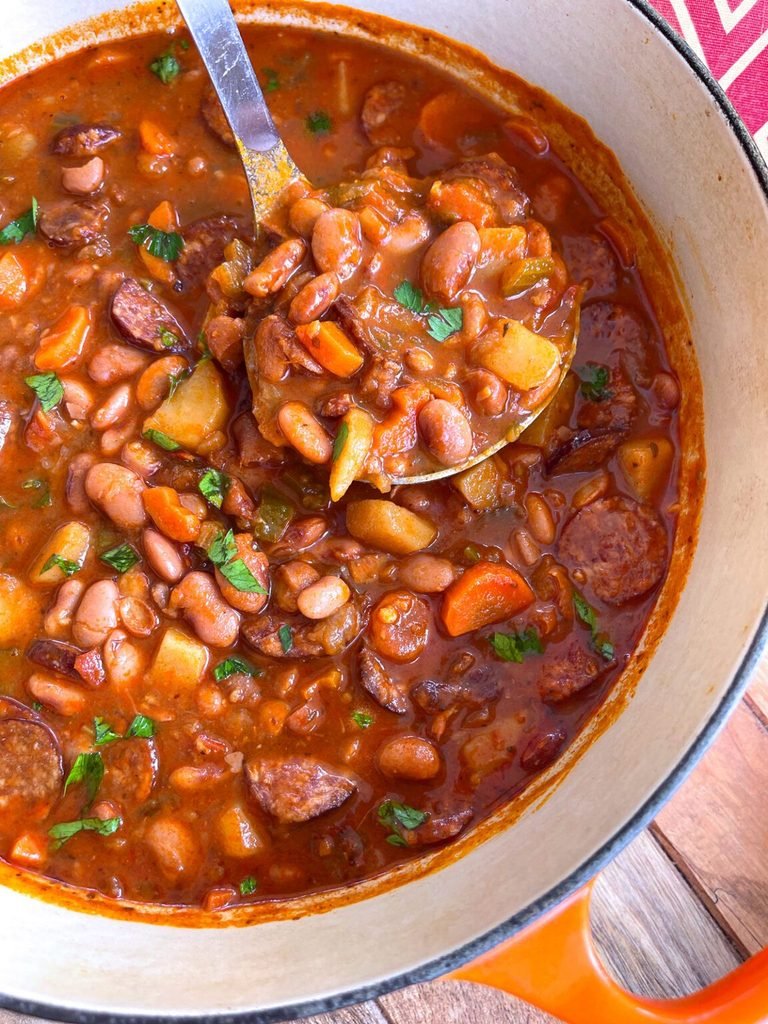
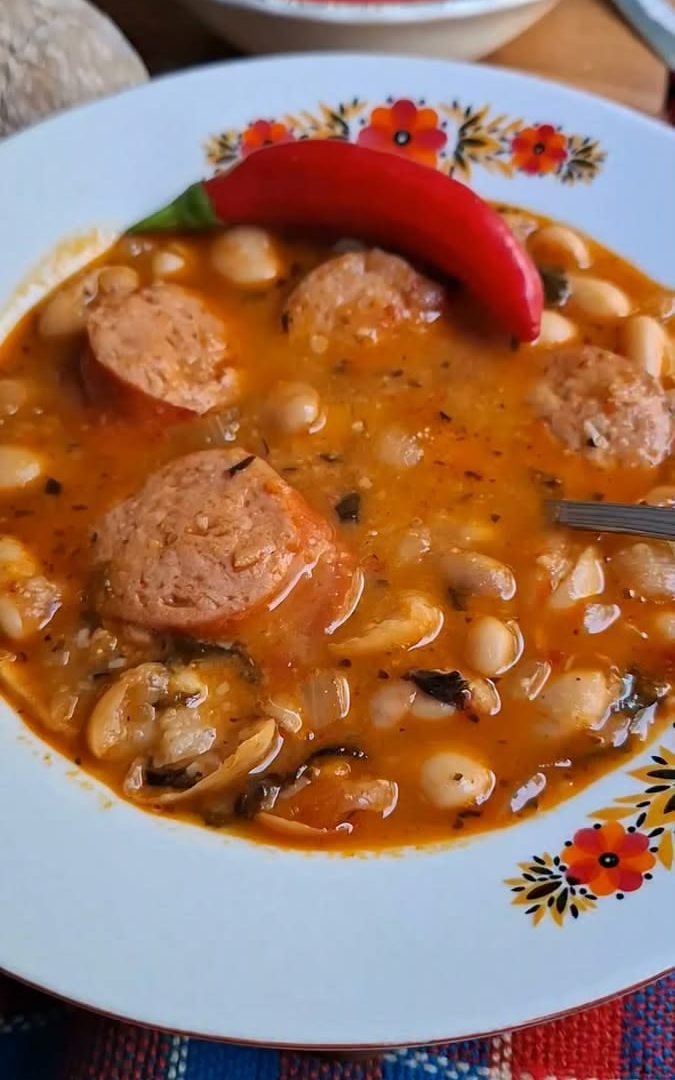
Few dishes represent the comforting side of Hungarian home cooking quite like Bableves, or Hungarian Bean Soup. Hearty, rustic, and deeply flavorful, this traditional soup combines tender beans with vegetables, paprika, herbs, and often smoked meat or sausage.
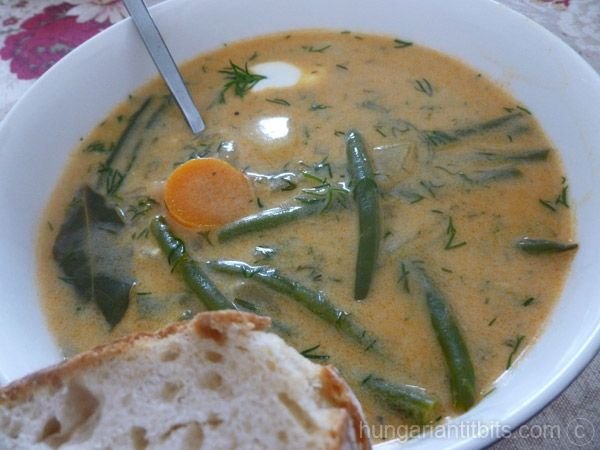
There are countless variations of Hungarian bean soup. Some are thick and substantial, while others have a lighter broth. Some include smoked pork, ham hock, or sausage, while vegetarian versions rely entirely on beans and vegetables for their richness.
What they share is a comforting combination of simple ingredients transformed by slow cooking and Hungarian seasoning.
What Is Hungarian Bean Soup?
Bableves literally means bean soup in Hungarian.
Beans form the foundation of the dish, providing a hearty texture and substantial flavor. Traditional recipes often combine them with carrots, parsley root, celery, onions, and potatoes.
Hungarian paprika gives the broth its characteristic color and mild peppery flavor.
Smoked meat is another common addition. Smoked pork, ham, bacon, or sausage can infuse the soup with a rich, savory character.
Traditional Ingredients
A classic Hungarian bean soup may include:
Dried beans
Onion
Carrots
Parsley root
Celery
Potatoes
Garlic
Hungarian paprika
Bay leaves
Black pepper
Salt
Smoked pork or sausage
Water or stock
Fresh parsley
Some recipes also include tomatoes or green peppers.
The exact combination depends on regional and family traditions.
Choosing the Beans
Dried beans are commonly used for traditional preparations.
White beans, cranberry beans, and other varieties can work well, depending on the recipe. The beans should become tender during cooking while still retaining enough structure to remain distinct in the soup.
If using dried beans, soaking them beforehand can help reduce cooking time and promote more even cooking.
Canned beans can also be used for a quicker modern version, although the flavor and texture can differ from a soup made with dried beans cooked from scratch.
Building the Flavor
Like many Hungarian dishes, the flavor begins with onions.
Finely chopped onions are gently cooked until soft. Garlic can then be added briefly.
Paprika is incorporated carefully, because excessive direct heat can cause it to burn and become bitter.
Once the paprika is combined with the onions, the remaining vegetables and liquid can be added.
This simple foundation creates the characteristic Hungarian flavor of the soup.
The Role of Smoked Meat
Smoked meat is optional but traditional in many versions.
A piece of smoked pork, ham hock, bacon, or sausage can slowly release its flavor into the broth as the beans cook.
The result is a savory, smoky soup with considerably more depth.
If using salty smoked meat, be cautious when adding additional salt. The meat can contribute a substantial amount of seasoning to the finished dish.
Cooking the Beans
The beans need enough time to become tender.
With dried beans, cooking time varies according to the type of bean, its age, whether it was soaked, and the cooking temperature.
The beans should be cooked gently until tender rather than boiled aggressively.
Vegetables can be added according to how long they need to cook. Carrots, parsley root, and celery can withstand longer simmering, while potatoes may be added later so they don’t become overly soft.
Hungarian Paprika Makes the Difference
Paprika is one of the defining ingredients in Bableves.
Hungarian sweet paprika contributes a beautiful red color and a mild, slightly sweet pepper flavor.
Hot paprika can be added for those who prefer a spicier soup.
As with other Hungarian dishes, paprika should not be allowed to scorch. Adding it away from intense heat helps preserve its flavor.
Thickening the Soup
Hungarian bean soup can be prepared with a relatively light broth or thickened into a more substantial dish.
One traditional approach is to prepare a simple paprikás rántás, a flour-based roux flavored with paprika, and stir it into the soup.
Another method is to allow some of the beans and potatoes to break down naturally, creating body without adding flour.
The preferred consistency is largely a matter of personal and family tradition.
A Vegetarian Version
Bableves doesn’t have to contain meat.
A vegetarian version can use beans, onions, carrots, celery, parsley root, potatoes, garlic, paprika, and herbs.
For additional depth, mushrooms or smoked paprika can provide a savory character without meat.
Vegetable stock can replace water or meat-based broth.
The result is still hearty and satisfying because beans provide plenty of texture and substance.