Combine the flour, sugar, baking powder, and salt in a large bowl.
Add the cold butter and work it into the flour until the mixture resembles coarse crumbs.
Add the egg yolk and sour cream. Mix just until a soft dough forms.
Don’t overwork the dough. You want the finished crust to remain tender rather than tough.
Wrap the dough and let it rest in the refrigerator for about 30 minutes.
2. Bake the Base
Roll the chilled dough into a rectangle large enough to fit a greased baking pan.
Transfer it carefully to the pan and gently press it into place.
Prick the surface several times with a fork.
Bake for approximately 12–15 minutes, just until the pastry begins to set and very lightly color.
Remove it from the oven.
3. Make the Túró Filling
Place the túró or well-drained farmer cheese in a bowl.
Add:
Sugar
Egg yolks
Vanilla
Lemon zest
Semolina
Sour cream
Raisins, if using
Mix until the filling is evenly combined.
The lemon zest is especially important because it gives the rich cheese mixture a fresh aroma and helps balance its sweetness.
Spread the filling evenly over the partially baked pastry.
Return the pan to the oven and bake for approximately 20–25 minutes, until the filling is set.
4. Add the Apricot Jam
Warm the apricot jam slightly if it is very thick.
Spread it gently over the baked túró layer.
A thin, even layer is all you need. Too much jam can overpower the delicate cheese filling.
The bright apricot flavor is one of the defining characteristics of this dessert.
5. Prepare the Meringue
Beat the egg whites until they become foamy.
Gradually add the sugar while continuing to beat.
Continue until the meringue becomes thick, glossy, and capable of holding firm peaks.
Add the lemon juice and mix briefly.
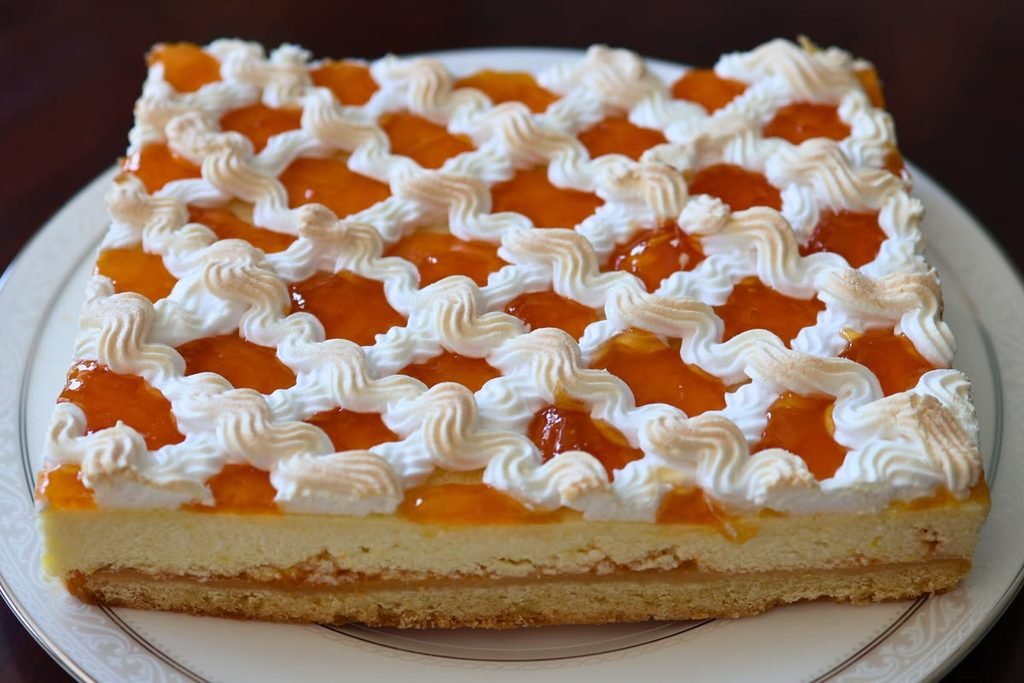
Traditionally, the meringue is piped or spread over the apricot layer in an attractive pattern.
6. Finish Baking
Return the dessert to the oven at a slightly lower temperature, around 325°F (165°C).
Bake until the meringue is lightly golden and set.
Keep a close eye on it because meringue can brown quickly.
Allow the Rákóczi Túrós to cool completely before slicing.
For the cleanest pieces, chill it before serving.
Tips for the Best Rákóczi Túrós
Use well-drained cheese
Túró can vary in moisture. If your cheese is particularly wet, drain it before making the filling. Excess moisture can make the dessert difficult to set.
Don’t skip the lemon zest
The lemon adds freshness to the rich cheese filling and works beautifully with apricot.
Don’t use too much jam
A relatively thin layer provides plenty of apricot flavor without making the dessert overly sweet.
Let it cool
This dessert becomes easier to slice once it has completely cooled and the layers have had time to firm up.
Make the meringue glossy
Adding the sugar gradually helps create a smoother, more stable meringue.
What Does Rákóczi Túrós Taste Like?
The first bite gives you several textures at once.
The pastry is buttery and tender.
The túró filling is creamy, lightly tangy, and rich.
The apricot jam provides bright fruitiness and a gentle acidity.
The meringue is sweet and delicate, creating a beautiful contrast with the tangy cheese.
It’s a dessert that manages to feel rich without relying entirely on sweetness.
A Little History of Rákóczi Túrós
Rákóczi Túrós is associated with Hungarian chef János Rákóczi, who helped popularize the dessert in the 20th century.
The dessert became particularly well known internationally after appearing at the 1958 Brussels World’s Fair, where Hungarian cuisine was represented.
Its combination of familiar Hungarian ingredients—especially túró and apricot—helped establish it as a recognizable part of Hungary’s pastry tradition.
Today, variations can be found in Hungarian homes and pastry shops, with differences in the pastry, cheese filling, jam, and meringue presentation.
How to Serve It
Rákóczi Túrós is delicious served:
Chilled
At room temperature
With a cup of Hungarian coffee
Alongside tea
As an afternoon dessert
As part of a holiday dessert table
For an especially beautiful presentation, cut it into neat rectangles so the golden pastry, white túró filling, orange apricot layer, and meringue are all visible.
Frequently Asked Questions
Can I use cottage cheese instead of túró?
Yes. If túró is unavailable, well-drained cottage cheese or farmer cheese can be used as a substitute. For a smoother filling, cottage cheese can be processed briefly before mixing.
Can I make it ahead?
Yes. Rákóczi Túrós is well suited to preparing ahead because the layers become easier to handle after cooling.
Does it need to be refrigerated?
Because the dessert contains a cheese-based filling and eggs, refrigeration is the safer choice for storage.
Can I leave out the raisins?
Absolutely. Raisins are optional and can be omitted if you prefer a smoother filling.
Can I use another fruit jam?
Apricot is traditional and gives the dessert its characteristic flavor, but other fruit preserves can create variations. If you’re aiming for a traditional Rákóczi Túrós, however, apricot jam is the classic choice.
Why This Hungarian Dessert Is Worth Making
Rákóczi Túrós is more than a simple cheesecake-style dessert. It brings together several flavors that are strongly associated with Hungarian home baking: buttery pastry, fresh curd cheese, lemon, apricot, and meringue.
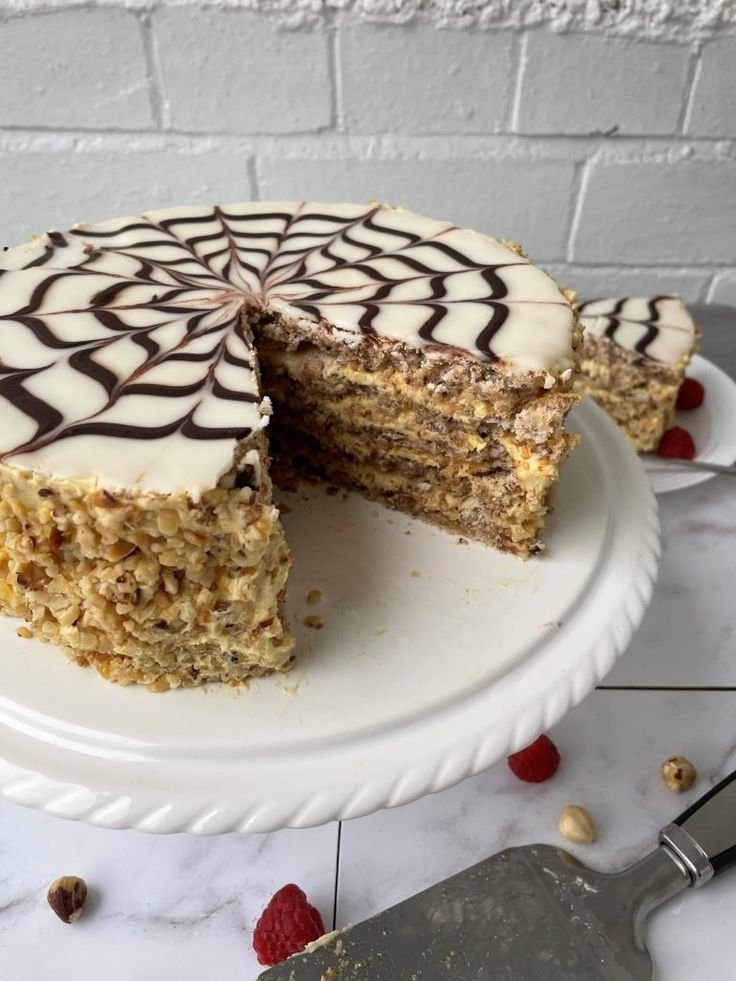
It’s also a wonderful example of why Hungarian desserts deserve a place beyond the famous Dobos Torta and chimney cakes.
If you’ve never tried túró before, this is one of the most delicious ways to discover it.
Save this recipe, gather your ingredients, and bring a little taste of Hungary to your kitchen. 🇭🇺🍑❤️