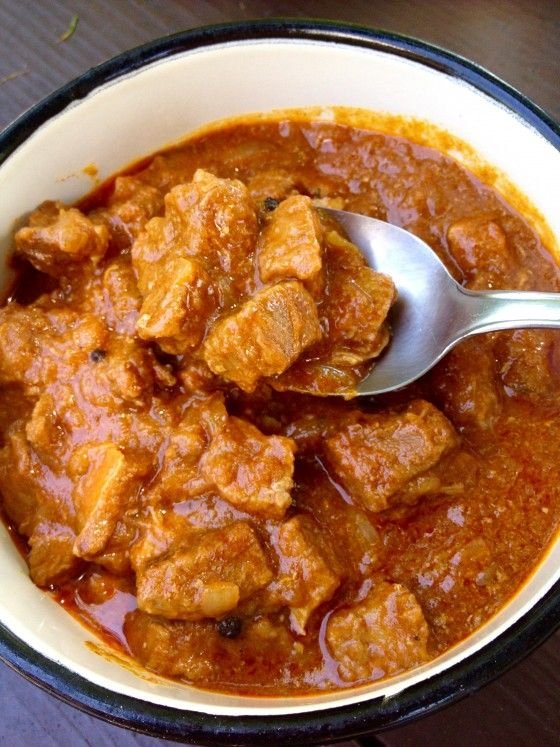
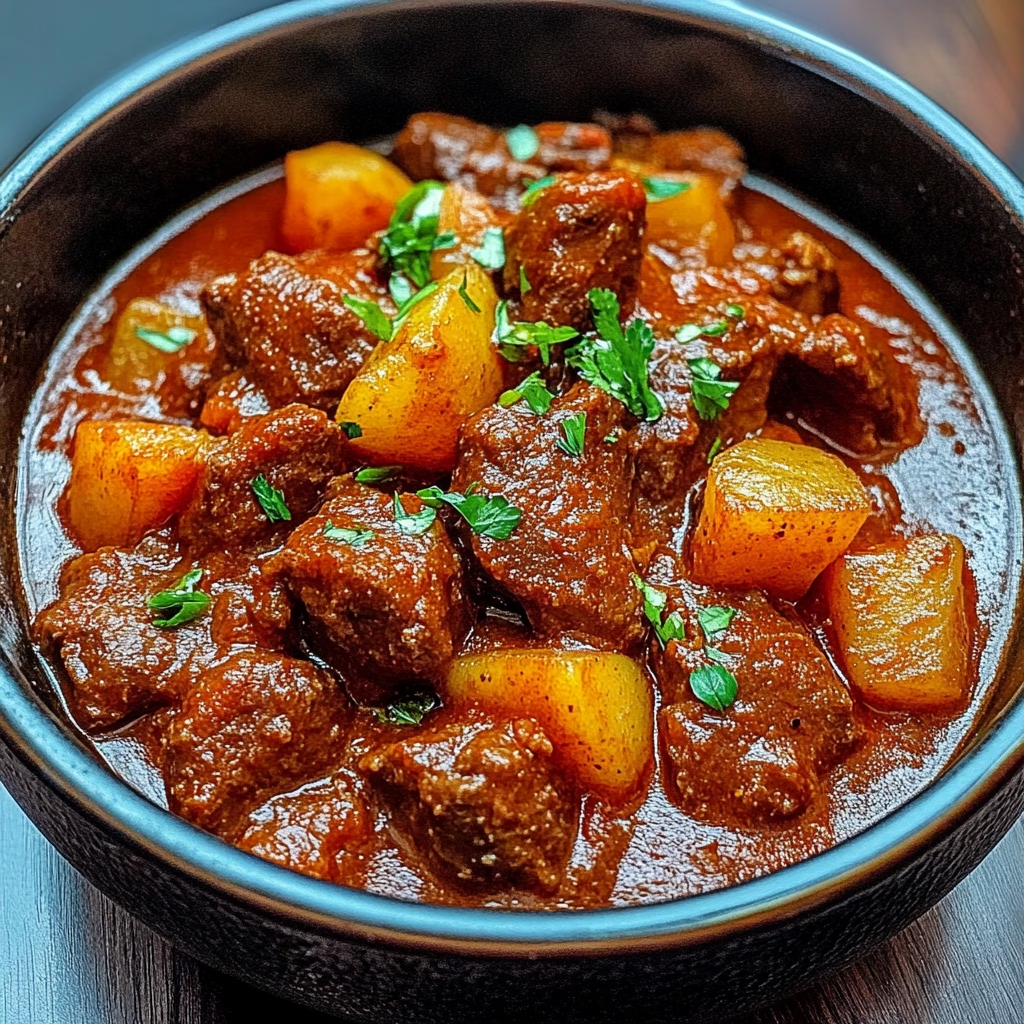
The beef becomes tender while absorbing the flavor of the paprika and onions.
What to Serve With Marhapörkölt
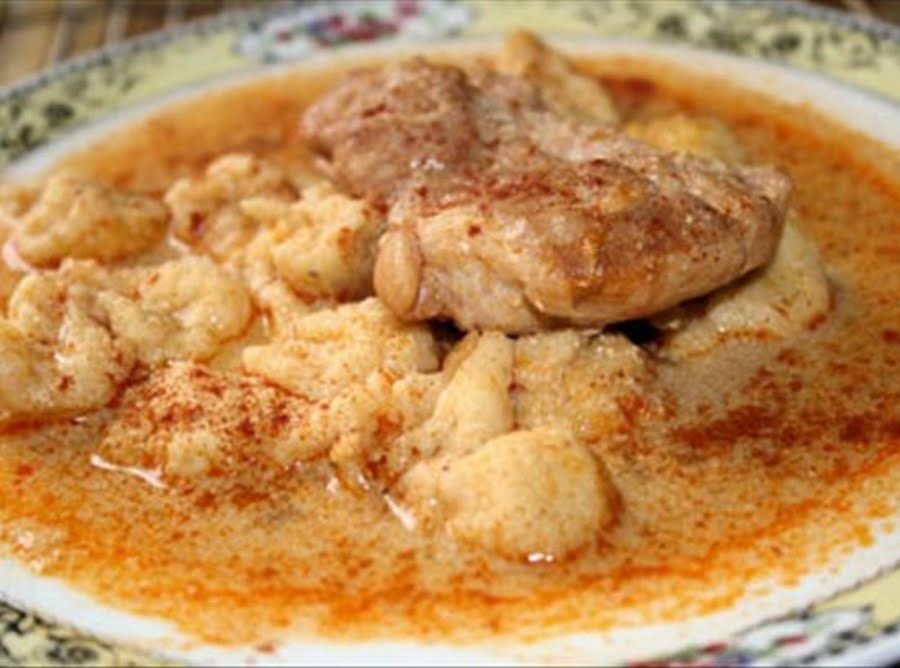
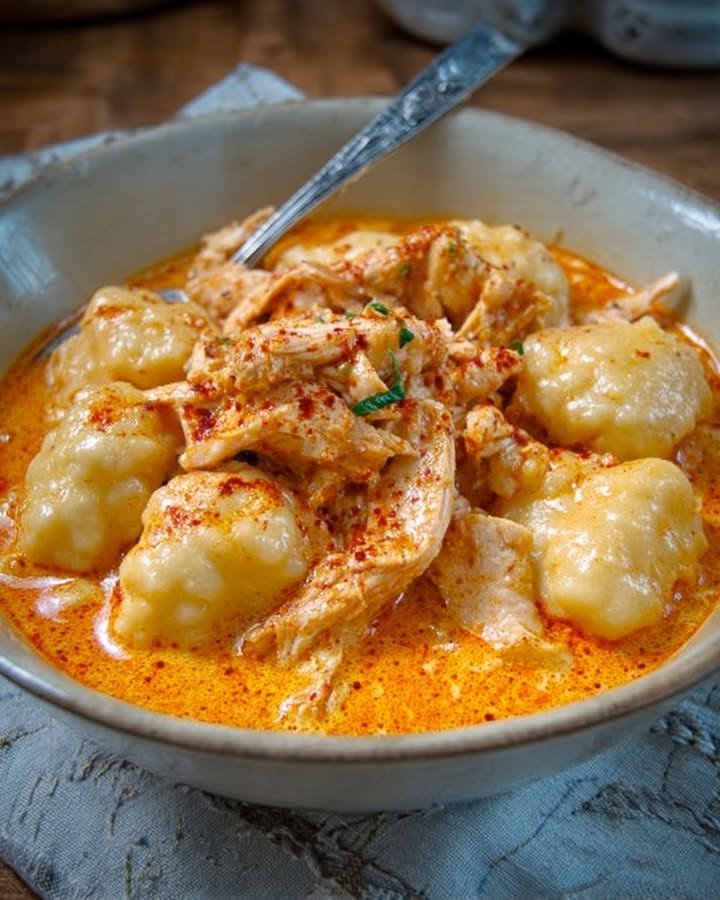
Hungarian beef stew is particularly delicious with nokedli, small Hungarian egg dumplings that soak up the rich sauce.
Other excellent choices include:
Boiled potatoes
Mashed potatoes
Egg noodles
Rice
Fresh crusty bread
Pickled cucumbers
Pickled peppers
Hungarian cucumber salad
A spoonful of sour cream can also be served alongside the stew, although it isn’t necessary for a traditional pörkölt.
Tips for the Best Hungarian Beef Stew
Use beef chuck
Chuck contains enough connective tissue and fat to become wonderfully tender during slow cooking.
Don’t rush the onions
Well-cooked onions provide much of the stew’s body and sweetness.
Protect the paprika from burning
Adding paprika directly to extremely hot fat can make it bitter. Remove the pot from the heat briefly before adding it.
Keep the cooking gentle
A slow simmer gives the beef time to become tender without drying out.
Don’t add too much liquid
Pörkölt should have a thick, concentrated sauce rather than the thin broth of a conventional soup-like stew.
Make it ahead
Like many slow-cooked dishes, Hungarian beef stew can taste even better after resting overnight as the flavors have more time to develop.
A Little Hungarian Food History
Pörkölt is one of the central dishes of Hungarian cuisine and belongs to the broader family of paprika-rich meat dishes that helped define Hungarian cooking.
The dish is closely related to goulash, but they are not exactly the same.
Traditional gulyás is generally more soup-like, while pörkölt is thicker and has a concentrated sauce coating the meat.
There are many versions of pörkölt made with beef, pork, lamb, and other meats. Marhapörkölt, made with beef, is one of the most beloved versions.
Frequently Asked Questions
Is Hungarian beef stew the same as goulash?
No. They are related but different dishes. Hungarian goulash is traditionally more like a hearty soup, while pörkölt is thicker and more concentrated.
Can I use another cut of beef?
Yes, but cuts suitable for slow cooking, such as chuck, are ideal.
Can I make it in a slow cooker?
Yes, although browning the onions, paprika, and beef first will give the dish more depth of flavor.
Can I make it spicy?
Absolutely. Add hot Hungarian paprika or a small hot pepper if you enjoy heat.
Can I freeze Hungarian beef stew?
Yes. Allow it to cool completely, then store it in an airtight container and freeze. Thaw it safely in the refrigerator before reheating.
Final Thoughts
Hungarian Beef Stew (Marhapörkölt) is a perfect example of the power of simple ingredients.
Tender beef, sweet onions, fragrant Hungarian paprika, peppers, and tomatoes slowly transform into a deeply satisfying stew with a rich, concentrated sauce.
Serve it with homemade nokedli, a few crisp pickles, and plenty of fresh bread, and you have a comforting Hungarian meal that feels both rustic and special.
A true Hungarian classic—slow-cooked, paprika-rich, and made for sharing. 🇭🇺🥘❤️