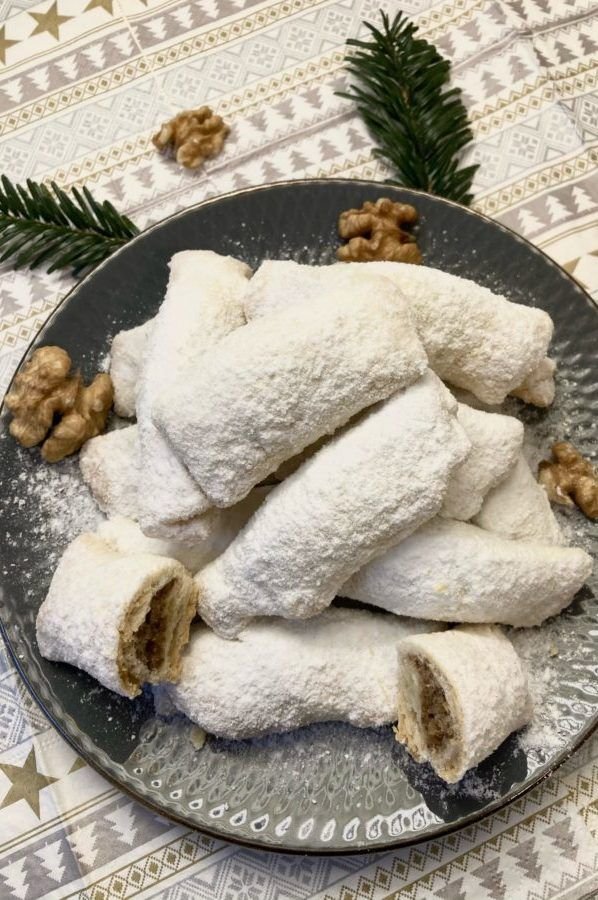
Hungarian Beigli – Christmas Poppy Seed & Walnut Roll
How to Make Hungarian Beigli
1. Prepare the Dough
Warm the milk gently and combine it with the yeast and a small amount of the sugar. Let it stand for several minutes until the yeast becomes active.
In a large bowl, combine the flour, remaining sugar, and salt. Add the softened butter and work it into the flour until the mixture becomes crumbly.
Add the egg yolks, vanilla, and yeast mixture. Knead until a smooth, soft dough forms.
Divide the dough into two equal portions if making both walnut and poppy seed Beigli.
Cover and allow the dough to rest in the refrigerator for about 30–60 minutes.
2. Make the Walnut Filling
Combine the ground walnuts, sugar, milk, vanilla, lemon zest, and cinnamon in a saucepan.
Cook gently over low heat, stirring until the mixture becomes thick and spreadable.
Stir in raisins if desired and allow the filling to cool completely.
3. Make the Poppy Seed Filling
Prepare the poppy seed filling in the same way by combining the ground poppy seeds, sugar, milk, vanilla, and lemon zest.
Cook gently until thickened, then allow it to cool before spreading.
The filling should be cool before it goes onto the dough.
4. Roll the Dough
Preheat the oven to 350°F (175°C).
Roll each portion of dough into a thin rectangle on a lightly floured surface.
Spread the cooled filling evenly over the dough, leaving a small border around the edges.
Carefully fold the edges inward and roll the dough tightly into a log.
Place each roll seam-side down on a parchment-lined baking sheet.
5. Create the Traditional Finish
Brush the rolls with beaten egg.
For the characteristic appearance of Hungarian Beigli, allow the egg coating to dry slightly, then brush again if desired.
Prick the surface of the rolls several times with a fork or skewer. This helps steam escape during baking and can help reduce splitting.
6. Bake
Bake for approximately 30–40 minutes, or until the Beigli is golden brown and beautifully glossy.
Remove from the oven and allow the rolls to cool completely before slicing.
This is important because the filling continues to set as the pastry cools.
Tips for Beautiful Beigli
Keep the filling thick. A filling that is too wet can make the pastry difficult to roll and may contribute to cracking.
Cool the filling first. Warm filling can soften the dough and make assembly difficult.
Roll evenly. Keeping the dough and filling at an even thickness helps create attractive swirls.
Don’t overfill. A generous filling is traditional, but too much can cause the roll to split.
Prick the pastry. Small holes allow steam to escape during baking.
Cool before slicing. Use a sharp knife and allow the pastry to cool completely for clean, beautiful slices.
Walnut or Poppy Seed?
Choosing between the two classic fillings is part of the fun.
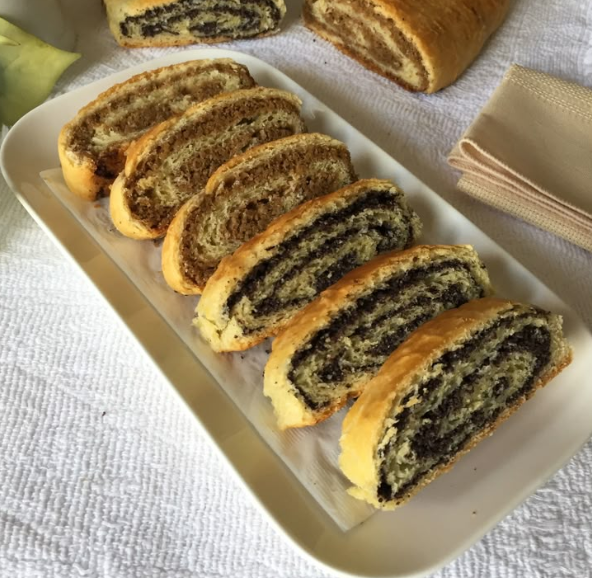
Walnut Beigli (Diós Beigli) has a rich, nutty flavor with warm cinnamon and citrus notes.
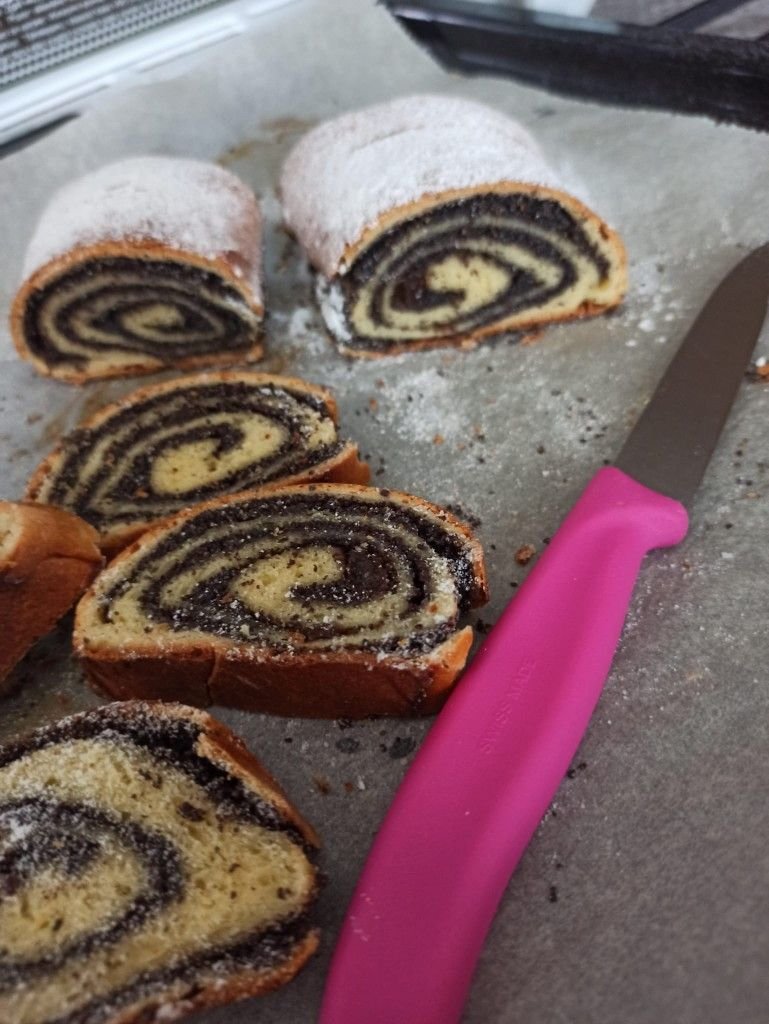
Poppy Seed Beigli (Mákos Beigli) has a distinctive earthy, slightly nutty flavor that pairs beautifully with lemon and vanilla.
Many Hungarian families prepare both varieties for Christmas, placing them side by side on the holiday dessert table.
How to Serve Beigli
Beigli is traditionally sliced into neat rounds so the beautiful spiral of filling is visible.
Serve it with:
Hot coffee
Black tea
Hungarian-style Christmas desserts
A light dusting of powdered sugar
It is delicious at room temperature and can also be enjoyed slightly chilled.
Why Beigli Is Special at Christmas
For many Hungarian families, Beigli is closely associated with the Christmas season. Its preparation is part of the holiday tradition, and the combination of buttery pastry, walnuts or poppy seeds, citrus, and warm spices creates a flavor that immediately feels festive.
The finished rolls also make a beautiful homemade gift. Wrapped carefully, slices of Beigli can be shared with family and friends throughout the holiday season.
Frequently Asked Questions
Can I make both fillings in one batch?
Yes. Divide the dough and prepare one walnut roll and one poppy seed roll for a traditional Hungarian Christmas assortment.
Why did my Beigli crack?
Some cracking is actually characteristic of traditional Beigli. Excess moisture in the filling, overfilling, or insufficient steam vents can increase the chance of significant splitting.
Can I make Beigli ahead of time?
Yes. Beigli is well suited to holiday preparation and can be made ahead of serving.
Should Beigli be refrigerated?
For longer storage, refrigeration is appropriate. Allow it to come closer to room temperature before serving for the best texture and flavor.
A Hungarian Christmas Classic
Hungarian Beigli is a pastry made for sharing. Its tender, buttery dough, rich walnut or poppy seed filling, and distinctive spiral make it one of the most recognizable treats on a Hungarian Christmas table.
Whether you choose Diós Beigli, Mákos Beigli, or bake both, this traditional Christmas roll brings a beautiful combination of flavor, texture, and Hungarian heritage to the holiday table.