Hungarian Beigli – Traditional Poppy Seed & Walnut Rolls
How to Make Hungarian Beigli
1. Prepare the Dough
Combine the flour, sugar, salt, and yeast in a large bowl. Add the softened butter, egg yolks, milk, and vanilla.
Mix until a smooth dough forms. Knead gently until combined, being careful not to overwork it.
Divide the dough into two equal portions, cover, and refrigerate for about 30–60 minutes.
2. Prepare the Filling
For the walnut filling, combine the ground walnuts, sugar, milk, honey, lemon zest, cinnamon, and vanilla in a saucepan.
Cook gently over low heat until the mixture becomes thick and spreadable. Allow it to cool completely.
Prepare the poppy seed filling in the same way, omitting the cinnamon if preferred.
The filling should be thick and cool before spreading so it doesn’t soften the pastry too much.
3. Roll Out the Dough
Place one portion of chilled dough on a lightly floured surface and roll it into a rectangular shape.
Spread an even layer of filling over the dough, leaving a small border around the edges.
4. Roll the Beigli
Fold the edges slightly inward and carefully roll the pastry into a tight log.
Place it seam-side down on a parchment-lined baking sheet.
Repeat with the second piece of dough.
5. Create the Traditional Finish
Brush the rolls with egg yolk and allow them to dry briefly. Then brush them with egg white.
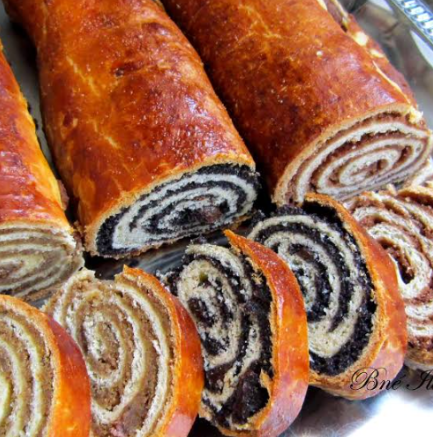
This traditional two-step egg wash helps create the characteristic shiny, golden, slightly marbled surface of Hungarian Beigli.
Prick the rolls several times with a fork or skewer. This allows steam to escape during baking and helps prevent excessive cracking.
6. Bake
Bake in a preheated 350°F (175°C) oven for approximately 30–40 minutes, or until the Beigli is beautifully golden brown.
Allow the rolls to cool completely before slicing.
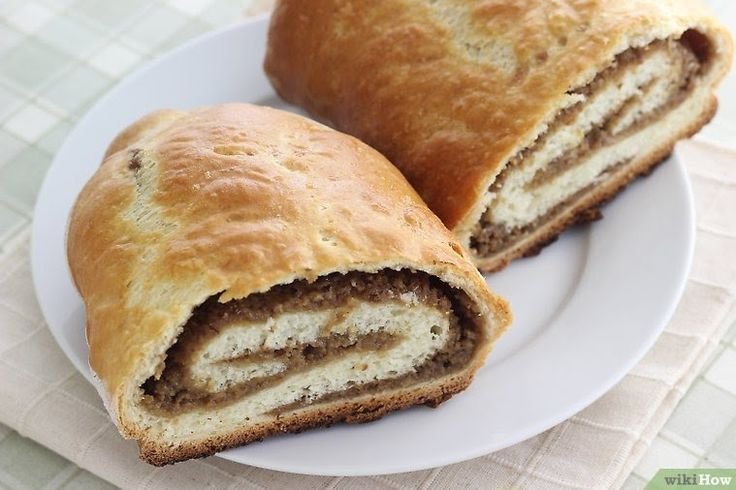
How to Get Beautiful Swirls
The signature spiral inside Beigli comes from the way the filling and dough are rolled together.
For the cleanest slices:
Spread the filling evenly.
Don’t make the filling excessively thick.
Roll the pastry firmly but gently.
Avoid leaving large air pockets.
Let the baked Beigli cool completely before cutting.
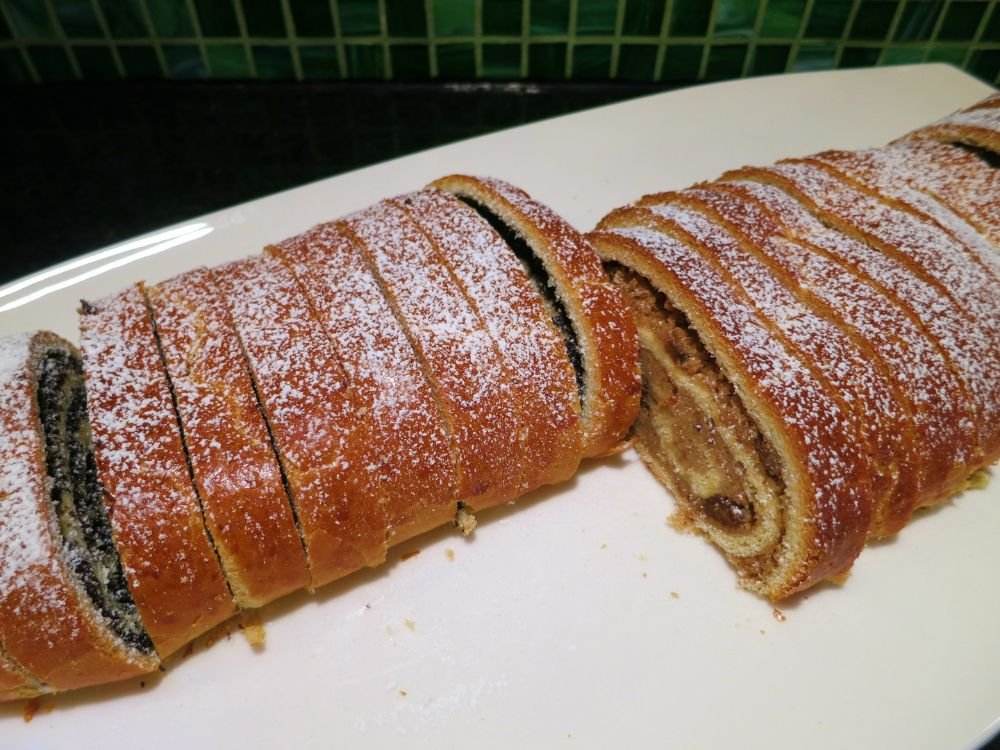
A serrated knife works particularly well for slicing without crushing the delicate pastry.
Why Does Beigli Crack?
Some cracking is actually traditional and is part of Beigli’s characteristic appearance. However, excessive cracking can occur when there is too much moisture or filling, the dough is rolled too tightly, or steam cannot escape.
Pricking the rolled pastry before baking helps release steam.
How to Serve Beigli
Hungarian Beigli is usually sliced into elegant rounds and served at room temperature.
It pairs beautifully with:
Coffee
Black tea
Hot chocolate
Mulled wine
Hungarian dessert wines
The walnut version is rich and nutty, while the poppy seed version has a deeper, slightly earthy flavor with bright citrus notes.
A Beloved Hungarian Christmas Tradition
Beigli has a special place in Hungarian holiday baking. During Christmas, it is common for Hungarian families to prepare several rolls, often making both walnut and poppy seed versions.
The pastry is also deeply connected with family recipes. Fillings, spices, dried fruit, and sweetness can vary from one household to another, giving each family’s Beigli its own character.
Frequently Asked Questions
Can I make only one filling?
Yes. You can make the entire recipe with either walnut or poppy seed filling.
Can Beigli be frozen?
Yes. Once completely cooled, Beigli can be wrapped tightly and frozen. Thaw it at room temperature before serving.
How long does Beigli stay fresh?
Stored in an airtight container in a cool place, it can remain enjoyable for several days. The flavors often become even more developed after resting.
Can I add raisins?
Absolutely. Raisins are a traditional addition to both walnut and poppy seed fillings and provide little bursts of sweetness.
Final Thoughts
Hungarian Beigli is more than just a beautiful pastry. With its tender golden dough, fragrant filling, and distinctive spiral pattern, it represents the warmth and tradition of Hungarian holiday baking.
Whether you choose walnut Beigli (diós beigli), poppy seed Beigli (mákos beigli), or make both, this classic Hungarian pastry makes a beautiful addition to any festive table.