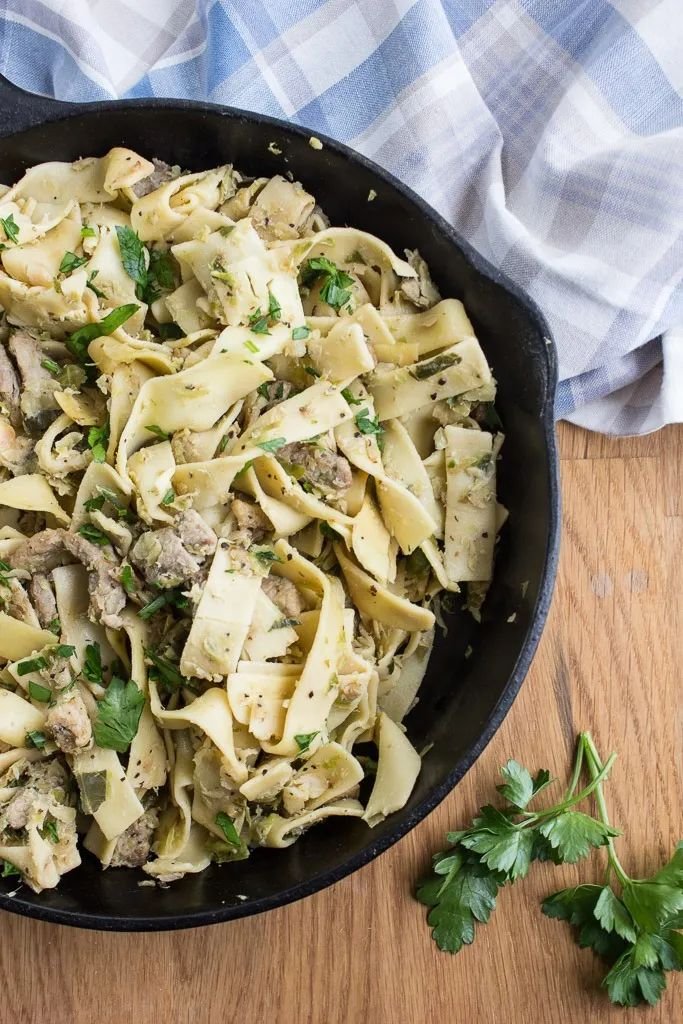
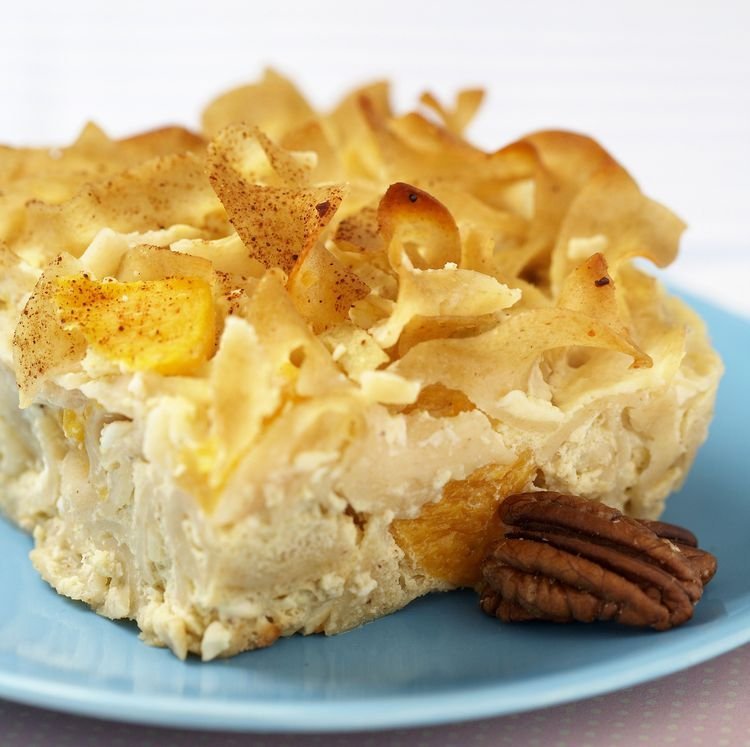
The recipe is straightforward and can usually be prepared in a relatively short amount of time.
1. Cook the Pasta
Bring a large pot of salted water to a boil and cook the pasta according to its instructions.
Avoid overcooking it. The noodles should remain tender but retain enough texture to hold up when mixed with the other ingredients.
Reserve a small amount of pasta water before draining if you want to loosen the mixture later.
2. Prepare the Cottage Cheese
Place the cottage cheese in a bowl and break up any large pieces with a fork.
The cheese does not need to be completely smooth. Its slightly crumbly texture is one of the defining characteristics of the dish.
3. Cook the Bacon
Cut the bacon into small pieces and cook it in a skillet until crisp.
Remove the bacon pieces and reserve some of the rendered fat.
The crispy bacon can be sprinkled over the finished pasta just before serving.
4. Combine the Pasta and Cheese
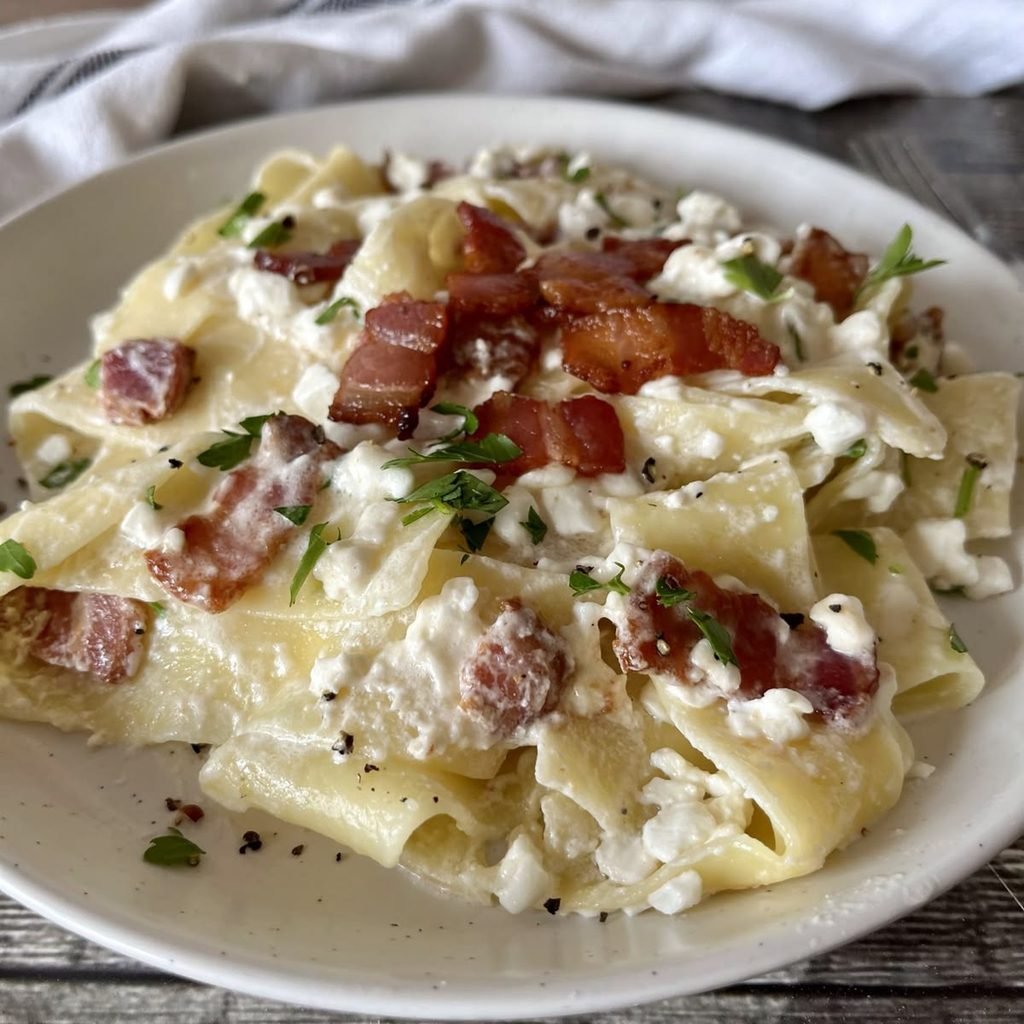
Add the drained pasta to a warm dish and combine it with the cottage cheese and sour cream.
Mix gently so that the pasta remains intact.
Add a small amount of reserved pasta water if the mixture seems too dry.
5. Finish With Bacon
Top the pasta with crispy bacon and, if desired, drizzle a small amount of the rendered bacon fat over the dish.
Serve immediately while warm.
The Importance of Texture
Túrós Tészta is particularly enjoyable because of its contrasting textures.
The noodles are soft and chewy, the cottage cheese is slightly crumbly, the sour cream is smooth and creamy, and the bacon provides a crisp element.
Rather than trying to make everything perfectly smooth, traditional preparation embraces these differences.
That rustic quality is part of the dish’s charm.
Sweet and Savory Possibilities
Although the savory version with bacon is one of the most recognizable preparations, Hungarian cuisine also has a long tradition of combining cottage cheese with sweet ingredients.
A sweeter variation can be made by omitting the bacon and combining the noodles with cottage cheese, sour cream, and sugar.
Some versions may also include powdered sugar, fruit preserves, or other sweet accompaniments.
This demonstrates the versatility of Hungarian cottage cheese, which can be used in both savory and sweet preparations.
Choosing the Right Cottage Cheese
The type of cottage cheese you use can significantly affect the final texture.
Traditional Hungarian túró is relatively dry and crumbly compared with many creamy Western-style cottage cheeses.
If your cottage cheese is very wet, drain it before using it. Excess moisture can make the pasta watery.
For the closest approximation to traditional túró, look for a dry-curd or farmer-style cottage cheese.
Tips for Better Túrós Tészta
Do not overcook the pasta. Slightly firm noodles provide a better texture.
Drain very wet cottage cheese. Excess liquid can make the dish loose.
Use full-fat sour cream when possible. It provides a richer texture and more traditional flavor.
Cook the bacon until crisp. The contrast between crunchy bacon and soft noodles is important.
Mix gently. Excessive stirring can break the pasta and turn the dish mushy.
Serve immediately. Túrós Tészta is at its best while warm.
What to Serve With Túrós Tészta
Because the dish is rich and filling, it can easily be served on its own.
A simple green salad or fresh vegetables can provide a refreshing contrast.
Pickled vegetables are another excellent accompaniment. Their acidity helps balance the richness of the sour cream, cottage cheese, and bacon.
For a traditional Hungarian-style meal, the pasta can be served as a generous main course followed by a light fruit-based dessert.
Why This Dish Remains Popular
Túrós Tészta represents an important characteristic of traditional Hungarian cooking: making satisfying food from simple ingredients.
There is no need for an elaborate sauce, expensive ingredients, or complicated preparation. Pasta, fresh cheese, sour cream, and bacon can create a meal that feels generous and comforting.
It is also practical. The recipe is quick enough for a weekday meal while still having the warmth and familiarity associated with traditional home cooking.
A Dish That Reflects Hungarian Home Cooking
Many traditional recipes survive not because they are complicated, but becau