Hungarian Milk Soup (Madártej): A Delicate Hungarian Classic
Although the ingredient list is short, the preparation requires some care.
The milk is first heated gently with vanilla and part of the sugar. Meanwhile, the egg whites are beaten until they become light and firm.
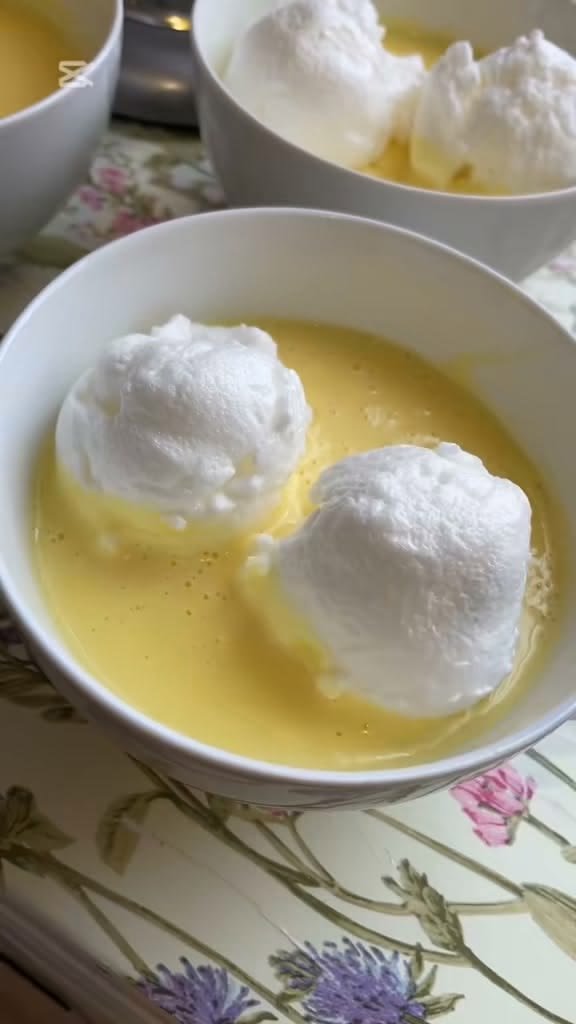
Small portions of the whipped egg white mixture are then carefully placed into the hot milk. They are gently poached until they become set but remain soft and airy.
The poached egg-white pieces are removed and reserved while the milk is used to prepare the custard.
The egg yolks are combined with sugar and carefully incorporated into the warm milk. The mixture is heated gently until it thickens into a smooth, creamy custard.
One important detail is temperature control. The custard should not be boiled aggressively, because excessive heat can cause the egg yolks to scramble rather than produce a silky texture.
Once the custard has cooled, the fluffy egg-white islands are placed on top.
A Dessert of Contrasting Textures
The appeal of Madártej comes largely from its contrast in texture.
The custard is smooth, creamy, and rich, while the poached egg whites are light, airy, and delicate. Together, they create a dessert that feels surprisingly sophisticated despite its modest ingredients.
This contrast is also visually appealing. The white islands floating over the pale yellow vanilla custard give the dish an elegant appearance.
Serving Madártej
Madártej is generally served well chilled.
It can be presented in a large serving bowl for family-style dining or portioned into individual dessert dishes. The floating meringue-like pieces are carefully arranged over the custard before serving.
Some versions are finished with a light dusting of cinnamon, while others rely entirely on the natural vanilla aroma.
For a more contemporary presentation, Madártej can be served in individual glass bowls, emphasizing its delicate layers and airy texture.
A Familiar Dessert in Hungarian Homes
Madártej belongs to the tradition of simple European home desserts that rely on inexpensive, readily available ingredients.
For many Hungarians, it is associated with home cooking and childhood memories. Its preparation does not require elaborate equipment or unusual ingredients, making it accessible to home cooks.
Like many traditional desserts, recipes can vary from one household to another. Some cooks prefer a richer custard, while others emphasize the lightness of the poached egg whites. The amount of vanilla and sugar can also vary.
These small differences are part of what makes traditional home cooki