If using fresh cabbage, remove the core and carefully separate the leaves. Blanch them in boiling water for a few minutes until softened.
If using fermented cabbage leaves, rinse them lightly if they are particularly salty and carefully separate the leaves.
Trim the thick central vein from each leaf if necessary so that the leaves are easier to roll.
2. Make the Filling
Heat the oil or lard in a skillet and gently cook the chopped onion until soft.
Allow it to cool slightly.
In a large bowl, combine the ground pork, uncooked rice, onion, garlic, paprika, salt, pepper, and egg.
Mix until everything is evenly incorporated.
3. Roll the Cabbage
Place a cabbage leaf flat on your work surface.
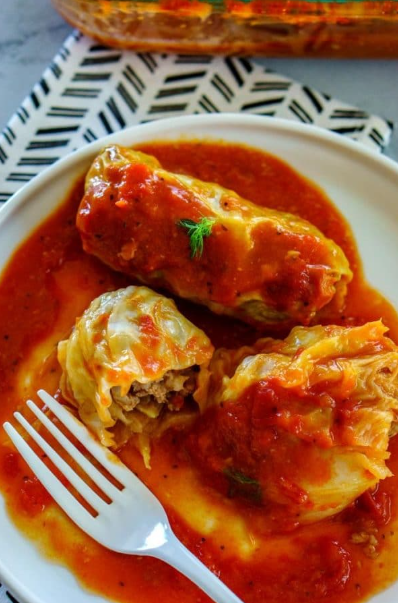
Put a portion of the meat mixture near the bottom of the leaf. Fold the sides inward and roll the cabbage tightly into a neat parcel.
Repeat until all the filling is used.
4. Build the Pot
Spread some sauerkraut across the bottom of a large heavy pot.
Arrange the cabbage rolls tightly over the sauerkraut.
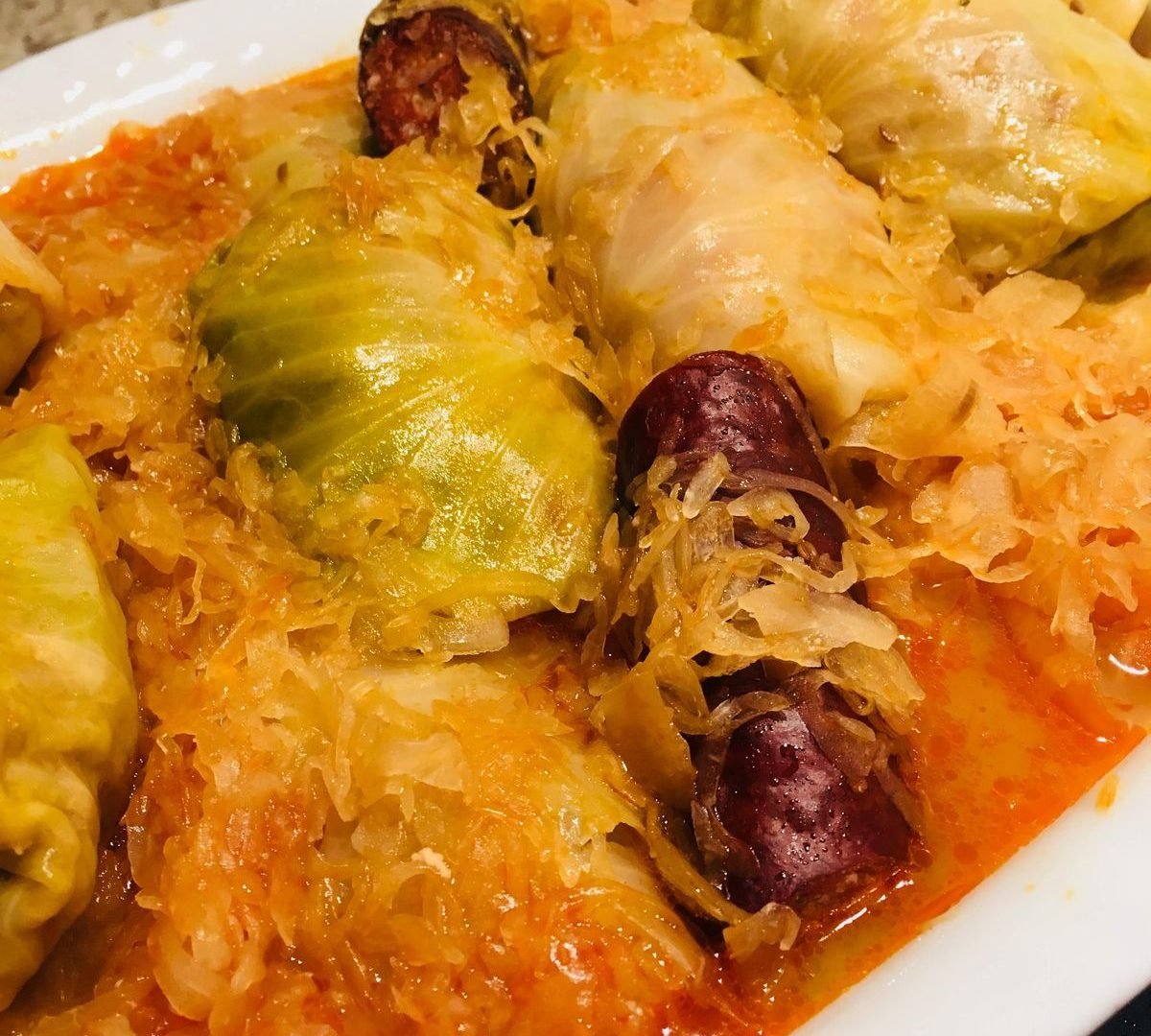
Add another layer of sauerkraut between or over the rolls. If using smoked sausage or bacon, distribute it throughout the pot.
Mix the tomato paste with the broth or water and pour it into the pot.
Sprinkle with paprika and add the bay leaves.
5. Slow Cook
Bring everything gently to a simmer.
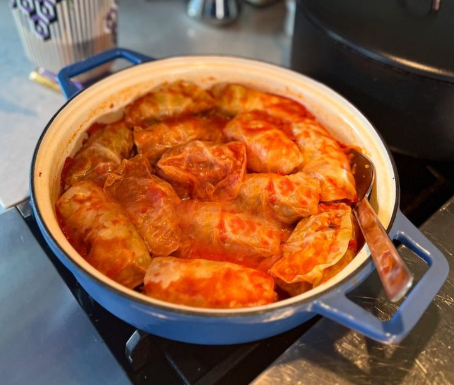
Cover and cook over low heat for approximately 1½–2 hours, until the cabbage is tender and the meat and rice are fully cooked.
Avoid vigorous boiling because the cabbage rolls can break apart.
6. Rest Before Serving
Turn off the heat and allow the dish to rest for about 15–20 minutes before serving.
This gives the flavors time to settle and makes the rolls easier to handle.
How to Serve Töltött Káposzta
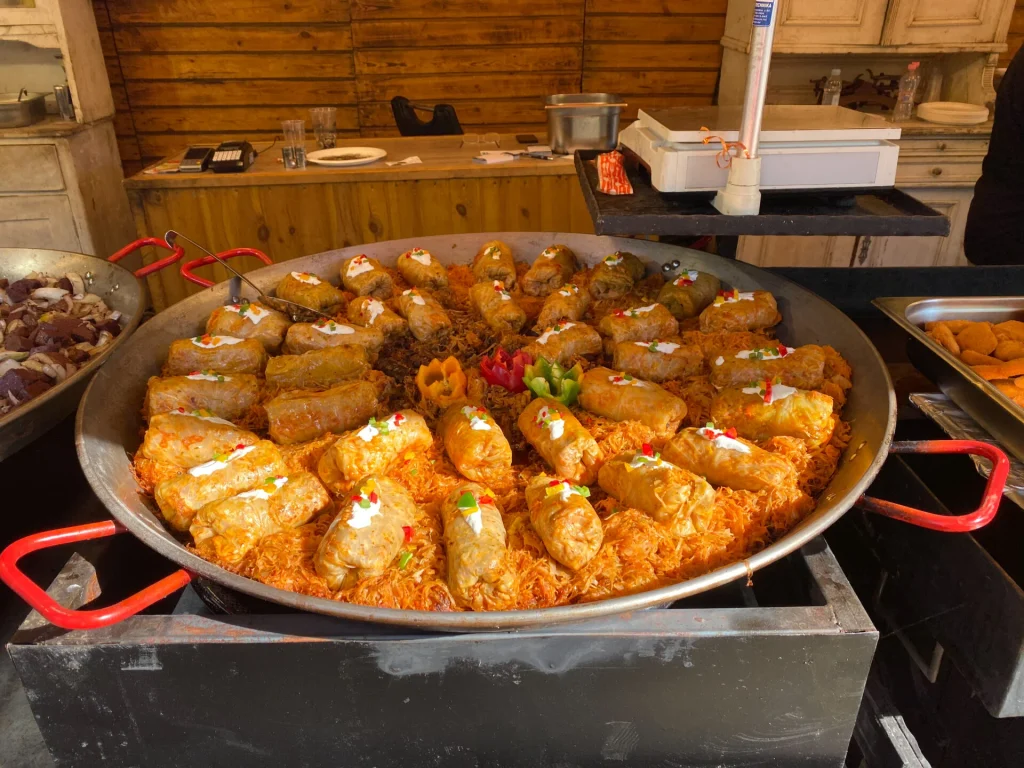
Traditional Hungarian stuffed cabbage is commonly served generously with sour cream.
A slice of rustic bread is perfect for soaking up the rich paprika-infused sauce.
For an especially hearty serving, add a piece of smoked sausage or bacon from the cooking pot alongside the cabbage rolls.
Tips for Perfect Stuffed Cabbage
Don’t overfill the leaves. The rice expands as it cooks, so leave enough room inside each roll.
Keep the rolls snug. Arrange them closely together so they remain intact during cooking.
Cook slowly. Low and slow cooking produces tender cabbage and allows the flavors to develop.
Use Hungarian paprika. Sweet Hungarian paprika gives the dish its characteristic color and flavor.
A Hungarian Family Classic
Töltött Káposzta has long been a staple of Hungarian festive and family cooking. Recipes vary from household to household, with differences in the meat, rice, cabbage, spices, and use of smoked meats.
Some versions are prepared with fermented cabbage leaves, while others use fresh cabbage. The combination of sour cabbage, savory meat, rice, paprika, and creamy sour cream creates the unmistakable character of this traditional dish.
Frequently Asked Questions
Can I make stuffed cabbage ahead of time?
Yes. In fact, many people find that the flavor improves after the dish rests overnight. Refrigerate it and gently reheat before serving.
Can I freeze Hungarian stuffed cabbage?
Yes. Allow the cooked cabbage rolls to cool completely, then freeze them in an airtight container with some of the cooking liquid.
Can I use beef instead of pork?
Yes. Ground beef can be used, although pork provides the richness traditionally associated with many Hungarian versions. A combination of pork and beef also works well.
What rice should I use?
Regular white rice works well. It is generally added uncooked to the filling because it cooks inside the cabbage rolls.
Final Thoughts
Hungarian Töltött Káposzta is more than a hearty meal—it is a dish closely connected with Hungarian family traditions and celebrations. Tender cabbage, savory meat and rice, smoky flavors, and sweet paprika come together in a slow-cooked dish that is comforting from the very first bite.
Serve it with plenty of sour cream and crusty bread for a traditional Hungarian meal everyone can enjoy.