Warm the milk until it is lukewarm. Stir in the yeast and a small amount of the sugar.
Let it stand for several minutes.
In a large bowl, combine the flour, remaining sugar, and salt. Add the cold or cool butter and lard and work them into the flour until the mixture resembles coarse crumbs.
Add the egg yolks and yeast mixture.
Mix until a soft dough forms.
Avoid kneading the dough excessively. Beigli dough should remain tender rather than developing a strong bread-like structure.
2. Chill the Dough
Divide the dough into two equal portions.
Shape each portion into a rectangle or ball, wrap it, and refrigerate for approximately 30–60 minutes.
Chilling makes the dough easier to roll and helps create the characteristic pastry texture.
3. Prepare the Walnut Filling
Place the ground walnuts, sugar, and milk in a saucepan.
Heat gently while stirring until the mixture becomes thick and cohesive.
Remove from the heat and stir in the vanilla, lemon zest, cinnamon, and raisins if using.
Allow the filling to cool completely before spreading it over the dough.
The filling should be thick enough to spread easily without being runny.
4. Roll Out the Dough
Place one portion of chilled dough on a lightly floured surface.
Roll it into a thin rectangle, approximately ¼ inch thick.
Try to keep the edges relatively straight so the finished roll will have an even shape.
Repeat with the second portion.
5. Add the Walnut Filling
Spread half of the cooled walnut filling evenly over the dough.
Leave a small border around the edges.
Do not spread the filling too thickly because excessive filling can cause the pastry to split during baking.
6. Roll the Beigli
Fold the shorter edges slightly inward.
Then carefully roll the pastry from one long side into a tight log.
Place the finished roll seam-side down on a parchment-lined baking sheet.
Repeat with the second piece of dough.
7. Create the Traditional Finish
Brush the rolls lightly with egg yolk.
Allow them to rest until the surface is dry, then brush them with the egg wash again, this time using the egg white or a whole-egg mixture according to your preferred traditional technique.
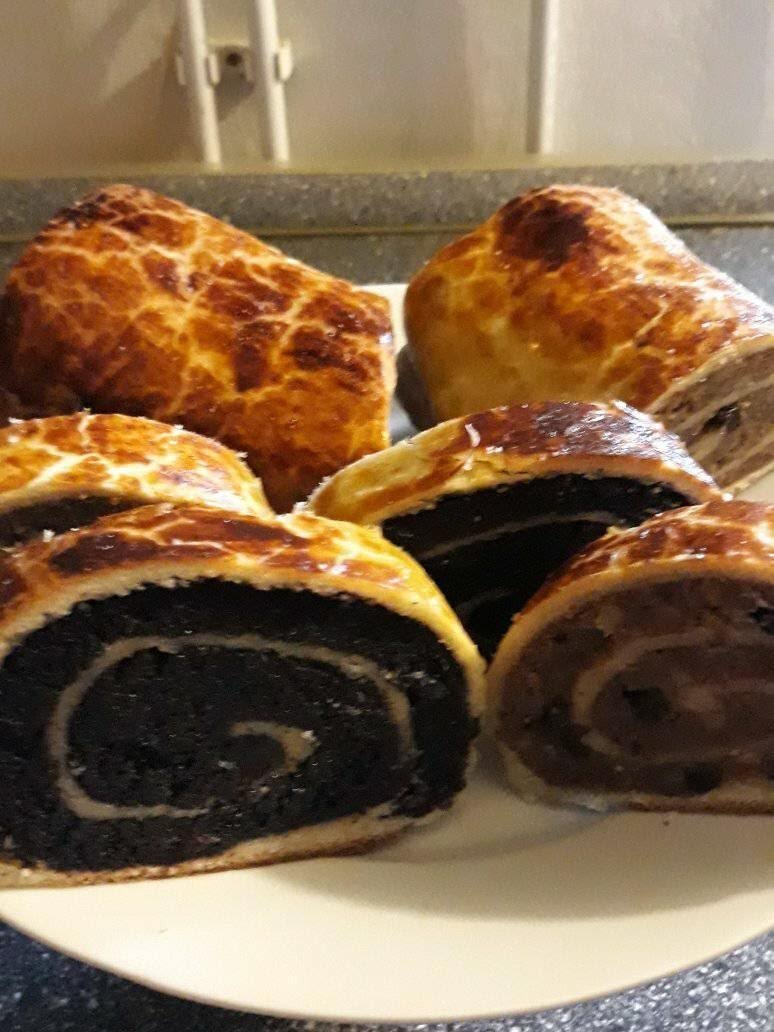
This helps create the distinctive marbled, glossy surface associated with Hungarian beigli.
Before baking, prick the rolls several times with a skewer or thin wooden stick.
These small openings allow steam to escape and can help reduce cracking.
8. Bake
Preheat the oven to 350°F (175°C).
Bake the beigli for approximately 30–40 minutes, or until beautifully golden brown.
The exact baking time depends on the size and thickness of the rolls.
Allow them to cool completely before slicing.
The Secret to Beautiful Beigli
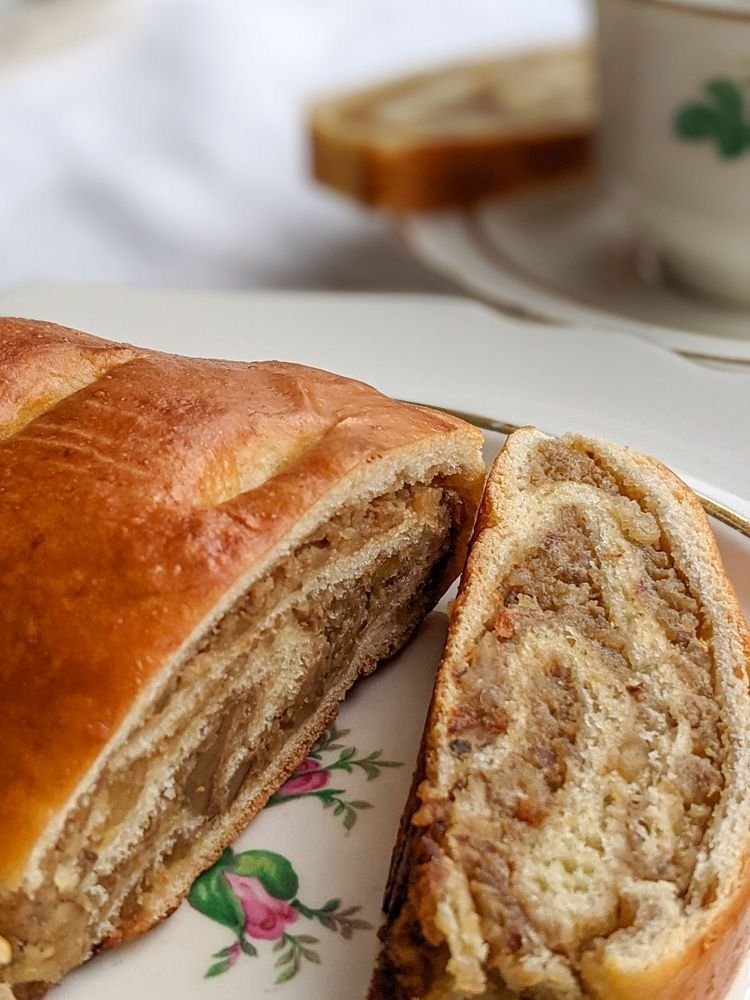
One of the most recognizable characteristics of beigli is the swirling walnut pattern inside.
Getting that beautiful appearance requires a balance between the dough and filling.
The filling should not be too wet, and the roll should be firm without being compressed excessively.
Most importantly, don’t skip the chilling and resting stages.
Why Does Beigli Crack?
A cracked beigli isn’t necessarily a failure—traditional beigli can develop characteristic cracks during baking.
However, excessive cracking can happen when:
The filling contains too much moisture
The dough is rolled too tightly
Steam cannot escape
The dough and filling have very different moisture levels
The pastry is not properly rested before baking
Pricking the rolled pastry with a skewer gives steam an escape route and can help control cracking.
A Beloved Hungarian Christmas Tradition
Beigli is strongly associated with Hungarian Christmas celebrations.
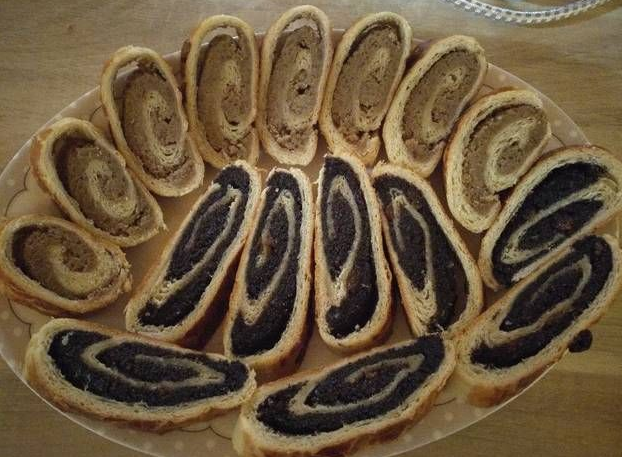
Families commonly prepare both major versions:
Diós Bejgli — walnut-filled
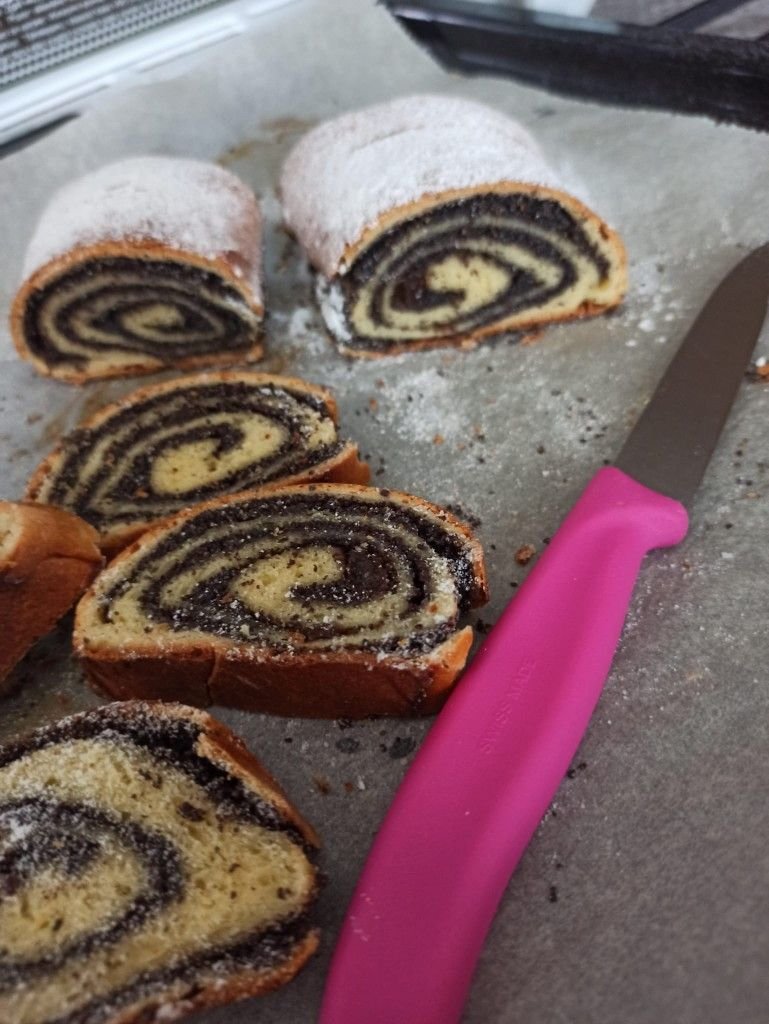
Mákos Bejgli — poppy-seed-filled
The two are often sliced and served together, creating a beautiful contrast between the nutty walnut filling and the distinctive flavor of poppy seeds.
Recipes differ from family to family, and many Hungarian households have their own preferred proportions, fillings, and preparation methods.
Walnut Beigli vs. Poppy Seed Beigli
Although the pastry dough is similar, the fillings create two very different experiences.
Walnut beigli has a rich, nutty, gently sweet flavor, often enhanced with lemon zest, cinnamon, raisins, or vanilla.
Poppy-seed beigli has a deeper, more distinctive flavor with a slightly earthy character.
Both are important parts of Hungarian holiday baking.
Helpful Tips for Perfect Beigli
Keep the Dough Cool
If the dough becomes too soft while rolling, place it back in the refrigerator for a short time.
Cool the Filling
Never spread hot walnut filling over the dough. Warm filling can soften the pastry and make rolling difficult.
Don’t Overfill
A generous filling is desirable, but too much can cause the pastry to split.
Roll Evenly
Try to create a consistent thickness throughout the rectangle so the finished log bakes evenly.
Pierce the Surface
Small holes allow steam to escape during baking.
Cool Before Cutting
Cutting beigli while it is still hot can cause the filling to crumble and the slices to lose their clean spiral pattern.
How to Serve Hungarian Walnut Beigli
Beigli is traditionally sliced into neat pieces and served as a dessert or sweet accompaniment to coffee and tea.
It pairs beautifully with:
Hot coffee
Black tea
Milk
Hot chocolate
Vanilla ice cream
Lightly sweetened whipped cream
A simple dusting of powdered sugar is usually all it needs.
How to Store Beigli
Once completely cooled, wrap the rolls tightly or place them in an airtight container.
They can remain delicious for several days when stored properly.
Beigli also freezes well. Wrap the cooled pastry securely and thaw it gradually before serving.
Frequently Asked Questions
What does Diós Bejgli mean?
Diós means “walnut” in Hungarian, while bejgli refers to the traditional rolled pastry. So Diós Bejgli means Hungarian walnut beigli.
Why does my beigli crack?
Some cracking is characteristic of beigli, but excessive cracking can result from moisture differences between the dough and filling, overly tight rolling, or trapped steam.
Can I use pecans instead of walnuts?
Yes, although walnuts provide the traditional Hungarian flavor. Pecans can create a slightly sweeter, buttery variation.
Can I make beigli ahead of time?
Yes. Beigli is particularly well suited to advance preparation and can be stored for several days or frozen for longer storage.
Should beigli be served warm?
It is generally best served at room temperature, once the pastry has cooled completely and the filling has set.
Final Thoughts
Hungarian Walnut Beigli (Diós Bejgli) is a beautiful combination of tender pastry and rich walnut filling, but its real charm comes from the tradition surrounding it.
The carefully rolled pastry, fragrant nut filling, golden crust, and distinctive spiral make it a centerpiece of Hungarian holiday baking. Whether prepared for Christmas, a family celebration, or simply to enjoy with afternoon coffee, each slice offers a taste of the warmth and craftsmanship found in traditional Hungarian baking. 🇭🇺