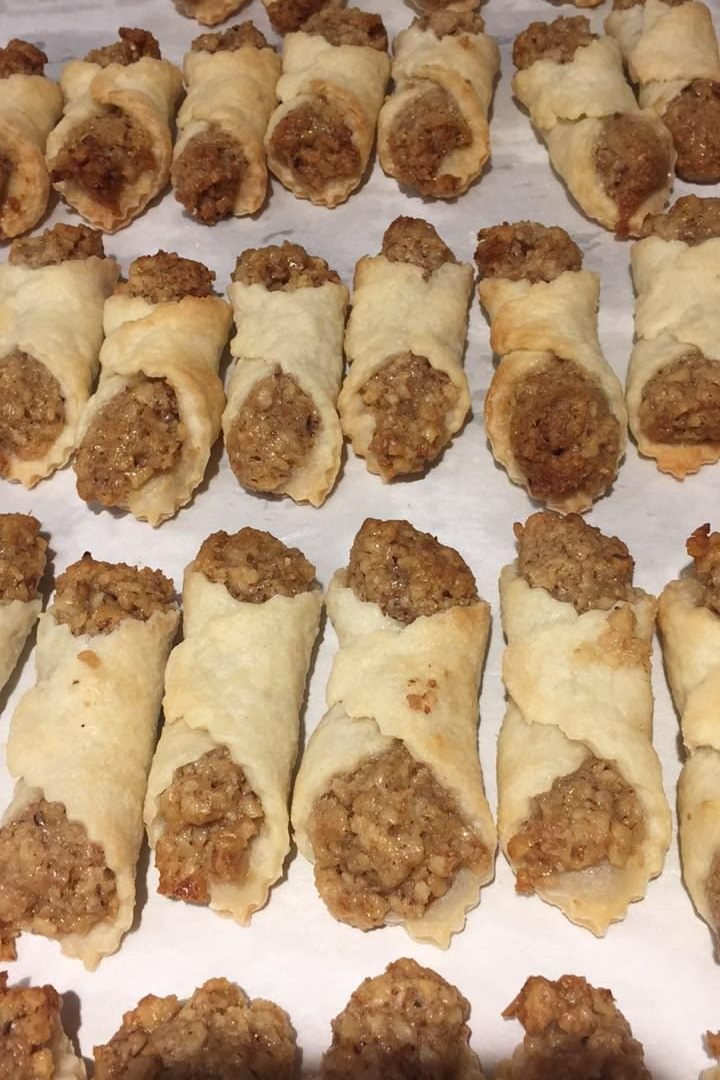
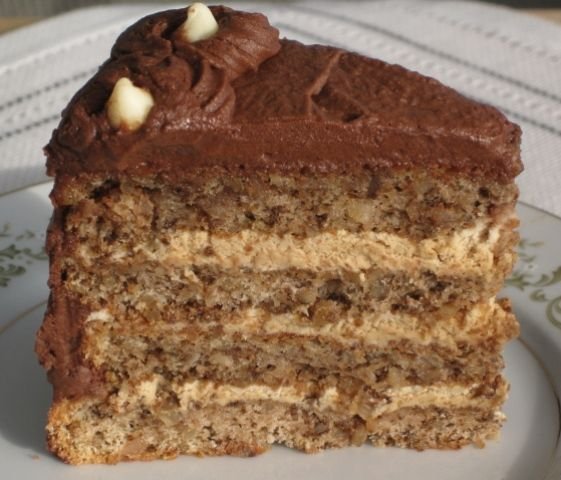
The Hirshon Hungarian Poppy Seed and Walnut Beigli – Mákos és Diós Bejgli
How to Make Hungarian Bejgli
1. Prepare the Dough
Warm the milk until it is just lukewarm.
Stir in the yeast with a small amount of the sugar and allow it to stand for about 5–10 minutes.
In a large bowl, combine the flour, remaining sugar, and salt.
Add the softened butter and work it into the flour until the mixture becomes crumbly.
Add the egg yolks, whole egg, vanilla, and activated yeast mixture.
Mix until a smooth dough forms.
Knead briefly until the dough is uniform and supple. Avoid excessive kneading; bejgli dough should remain tender rather than becoming elastic like bread dough.
Divide the dough into four equal portions.
Shape each portion into a ball, cover, and refrigerate for at least 1–2 hours.
Chilling the dough makes it easier to roll and helps create the characteristic pastry texture.
2. Prepare the Poppy Seed Filling
Place the milk, sugar, and honey in a saucepan.
Heat gently until the sugar dissolves.
Add the ground poppy seeds and stir well.
Add the lemon zest, vanilla, raisins, and semolina.
Cook briefly until the mixture thickens.
The filling should be moist but not runny.
Allow it to cool completely before spreading it over the pastry.
3. Prepare the Walnut Filling
Place the milk, sugar, and honey in another saucepan.
Warm gently until the sugar dissolves.
Stir in the ground walnuts, lemon zest, vanilla, raisins, and breadcrumbs.
Cook until the mixture becomes thick enough to spread.
Again, allow the filling to cool completely.
A filling that is too wet can make the pastry difficult to roll and may cause it to split during baking.
4. Roll Out the Dough
Take one chilled portion of dough and place it on a lightly floured work surface.
Roll it into a thin rectangle.
Try to keep the thickness even from one end to the other.
Spread an even layer of filling over the dough, leaving a small border around the edges.
Don’t make the filling excessively thick. The goal is a balanced ratio between pastry and filling.
5. Roll the Bejgli
Fold the short edges slightly inward.
Then carefully roll the pastry from one long side into a firm cylinder.
Place the finished roll seam-side down on a parchment-lined baking sheet.
Repeat with the remaining dough.
Traditionally, you can make two poppy seed rolls and two walnut rolls, giving you both classic varieties.
6. Create the Traditional Surface
One of the distinctive characteristics of bejgli is its beautiful baked surface.
Pierce the rolled pastry several times with a skewer or thin fork.
This allows steam to escape during baking and can help reduce the chance of the rolls bursting.
Brush each roll with egg yolk and allow it to dry briefly.
Then brush again with the egg-and-milk mixture.
This helps create the deep golden finish associated with traditional bejgli.
7. Bake
Preheat the oven to 350°F (175°C).
Bake the rolls for approximately 30–40 minutes, depending on their size and your oven.
They should become golden brown and firm.
Don’t worry if small cracks appear. Traditional bejgli can develop characteristic cracks on the surface as the pastry and filling expand during baking.
Allow the rolls to cool completely before slicing.
The Secret to Beautiful Bejgli
The most important part isn’t simply the ingredients—it’s controlling moisture and temperature.
Keep the filling thick
Wet filling creates pressure inside the pastry and can cause the roll to split.
Chill the dough
Cold dough is easier to roll and handle.
Don’t overfill
A generous filling is traditional, but too much can make rolling difficult.
Pierce the rolls
Small holes allow steam to escape.
Cool before slicing
Freshly baked bejgli is delicate. Waiting allows the filling and pastry to settle and makes cleaner slices.
Mákos vs. Diós Bejgli
The two versions are both traditional, but they offer completely different flavors.
Mákos Bejgli
Poppy seed filling has an intense, earthy flavor with a slight bitterness that works beautifully with lemon and sugar.
Diós Bejgli
Walnut filling is richer and nuttier, with a naturally buttery flavor that pairs beautifully with citrus and vanilla.
Many Hungarian families serve both versions at Christmas, making the choice part of the holiday tradition.
The History Behind Bejgli
Bejgli has a fascinating Central European history.
Hungarian food authorities describe it as originating from a Silesian pastry tradition dating back centuries. It reached Hungary through Austrian influence and became increasingly popular in the second half of the 19th century, eventually becoming closely associated with Hungarian Christmas celebrations. (portal.nebih.gov.hu)
The name is generally connected with the German word “beugen,” meaning “to bend,” reflecting the pastry’s original curved form. The Hungarian word bejgli appears in print in the 20th century. (portal.nebih.gov.hu)
There are also older Central European traditions surrounding poppy seeds and walnuts. In Hungarian folk beliefs, walnuts were associated with protection, while poppy seeds were associated with abundance and prosperity. (portal.nebih.gov.hu)
That symbolism helps explain why these ingredients became such natural companions to holiday celebrations.
How to Serve Bejgli
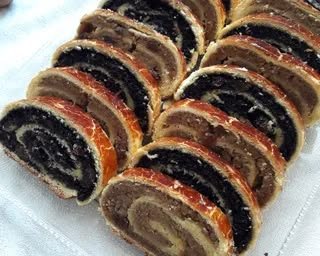
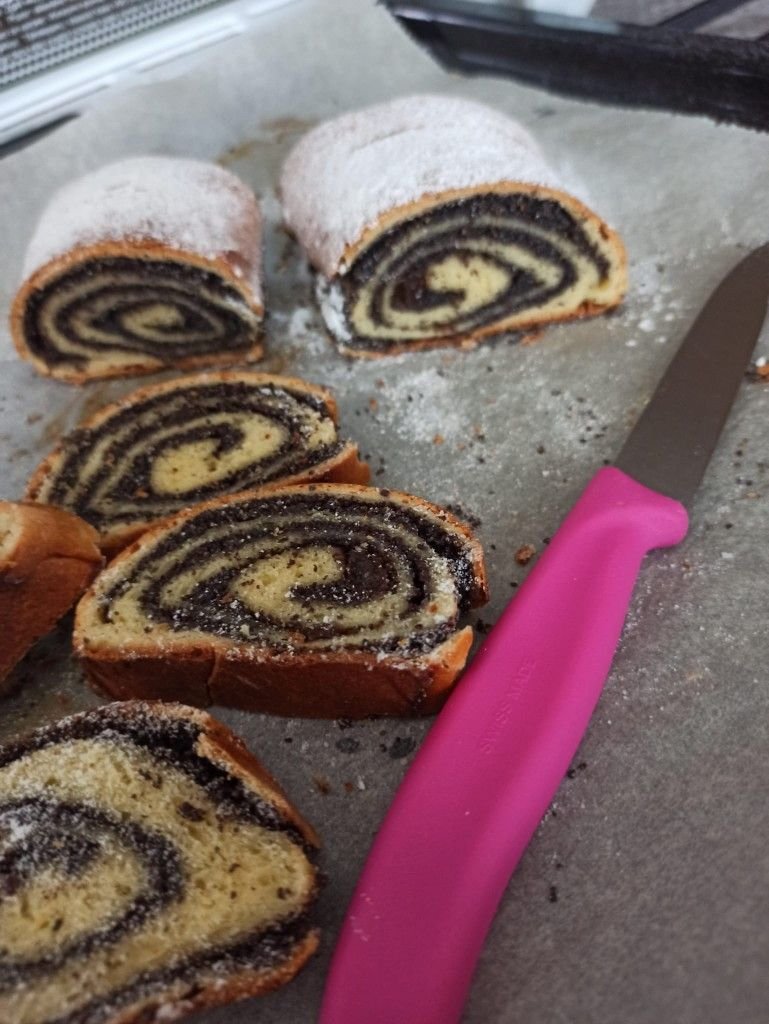
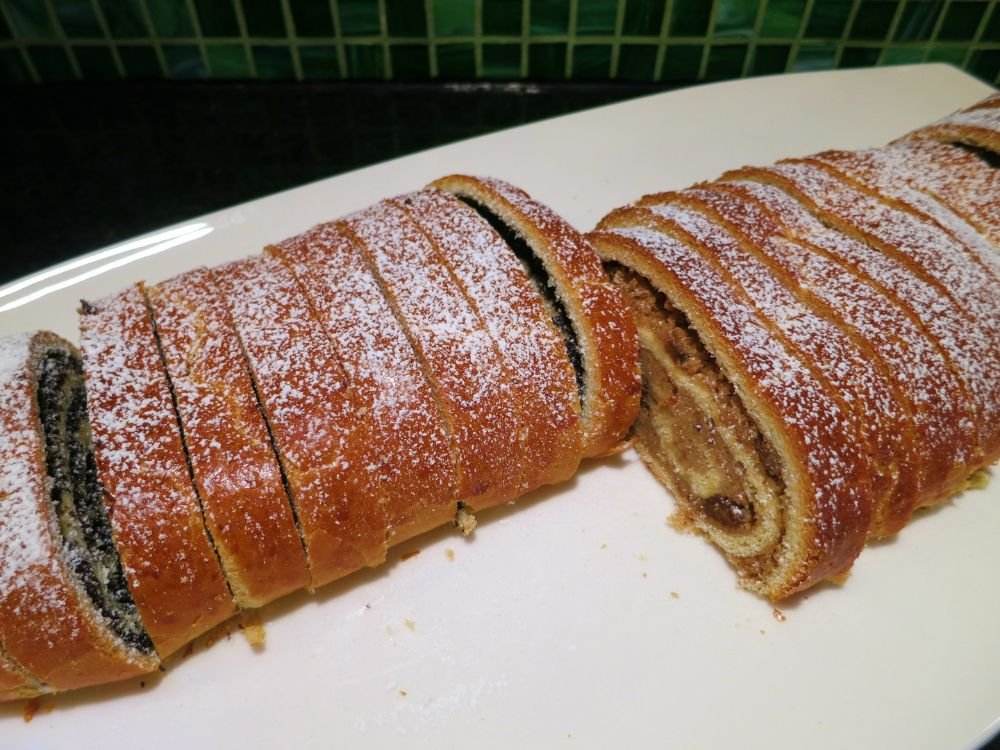
Bejgli is traditionally sliced into neat pieces showing off the spiral of filling.
Serve it with:
Hungarian coffee
Black tea
Hot chocolate
Mulled wine
A festive Christmas breakfast
An afternoon dessert
A traditional Hungarian holiday spread
It’s especially beautiful when you place poppy seed and walnut slices together on one platter, creating a contrast between the dark poppy seed spirals and golden walnut filling.
Frequently Asked Questions
Why does my bejgli crack?
Cracking can happen when moisture and steam build up inside the roll. The consistency of the filling, rolling technique, and oven temperature all matter. Piercing the pastry before baking allows steam to escape.
Can I make only one filling?
Absolutely. If you prefer poppy seed, make four poppy seed rolls. If walnuts are your favorite, make four walnut rolls.
Can I freeze bejgli?
Yes. Once completely cooled, well-wrapped bejgli can be frozen. Thaw it gradually before serving.
Can I leave out the raisins?
Yes. Raisins are common in many versions but aren’t essential.
Why is the filling cooked first?
Cooking helps dissolve the sugar and creates a thicker filling with the right consistency for rolling.
A Hungarian Christmas Tradition
Bejgli is more than a pastry.
For many families, preparing it is part of the Christmas ritual itself—the smell of toasted walnuts, freshly ground poppy seeds, citrus zest, and sweet pastry filling the kitchen while the rolls cool on the counter.
And then comes the familiar question:
Mákos or diós?
Poppy seed or walnut?
Whichever one you choose, a slice of homemade bejgli brings a little piece of Hungarian holiday tradition to the table. 🇭🇺❤️
A Note on “The Hirshon” Version
The title you provided refers to a specific published recipe by The Food Dictator / The Hirshon, which has its own ingredient proportions and preparation details. The recipe above is an original, independently written bejgli recipe inspired by the traditional Hungarian style, rather than a reproduction of that published recipe. The referenced Hirshon recipe itself uses separate poppy-seed and walnut fillings and emphasizes chilling the dough before rolling. (thefooddictator.com)