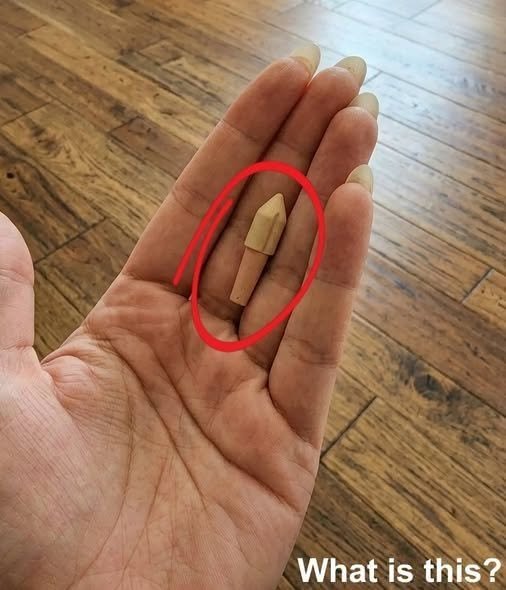
What Is This Tiny Wooden Object? The Small Tool That Has People Guessing
Could It Be Part of Furniture?
That’s certainly possible.
Furniture makers have used wooden pegs, wedges, dowels, and other small components for centuries. Some are used to join pieces together, while others secure joints or prevent components from moving.
A loose wooden fitting found during a furniture repair or renovation can look completely meaningless until its original location is discovered.
Could It Be a Craft or Traditional Tool?
Another possibility is that it belongs to a specialized craft or traditional household item.
Small wooden components are found in everything from musical instruments and looms to handmade tools, toys, kitchen equipment, and decorative objects.
Without information about where the piece was found, identifying it becomes much more difficult.
How to Identify It
If you have found a mysterious object like this, the most useful clues aren’t necessarily its appearance—they’re its context and measurements.
Try to determine:
Where was it found?
What was nearby?
How long is it?
Is it made from wood, plastic, bone, or another material?
Is there a hole, groove, or threaded section?
Does the narrow end fit into anything?
Are there matching pieces nearby?
A photograph showing the object beside a ruler would also make identification much easier.
Why These Tiny Objects Become Internet Mysteries
Modern life is filled with small components designed for very specific purposes. Once separated from the original item, they can become almost impossible to recognize.
That’s why a tiny peg, clip, screw, or plastic insert can generate hundreds of guesses online.
The real answer often seems obvious only after you know what larger object it belongs to.
Final Thoughts
This little wooden piece may look simple, but its unusual shape suggests that it was probably designed for a specific fitting, fastening, or craft purpose.
From this single photograph, its exact identity can’t be confirmed confidently. The most useful next clue would be the location where it was discovered or a photograph showing the object from the side and underside.
Sometimes the smallest objects have the most interesting stories—especially when we’ve completely forgotten what they were made to do.