The Primary Culprit: The Battery and Signal Interference
Why the Battery Is Usually the Blame
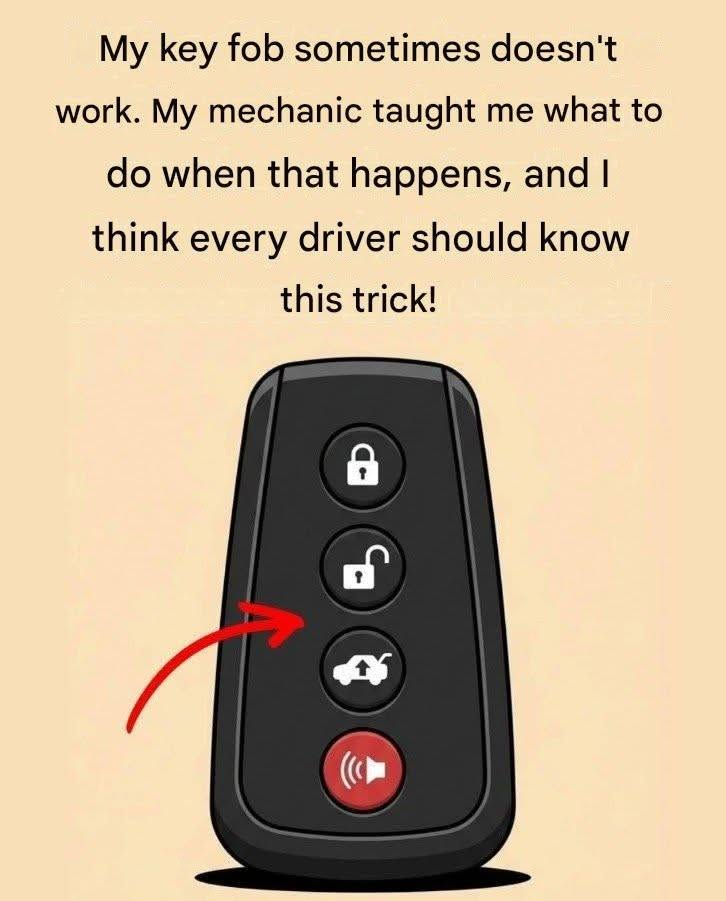
When a key fob fails, the most statistically likely cause is a depleted battery. These small coin-cell batteries, typically lasting between two and four years, power the radio transmitter that sends the coded signal to your car . As the battery weakens, the signal strength diminishes, leading to a reduced operating range or a complete failure to communicate. If you notice that you have to stand right next to your car to unlock it, or if the buttons require multiple presses to respond, the battery is likely on its last legs . Replacing it is usually a straightforward process that requires no specialized tools. You simply need to identify the correct battery type—commonly a CR2032 or CR2025—which is printed on the old battery itself. Using a small flathead screwdriver or a coin, you can gently pry open the fob’s casing along the seam, taking care not to force it, and swap in the new battery with the positive side facing up as indicated inside the casing .
The Science of Signal Interference
Sometimes, the battery is perfectly fine, but the signal is being blocked. Key fobs operate on short-range radio frequencies, which can be disrupted by environmental factors. Sources of interference include smartphones, Wi-Fi routers, large metal structures, and even dense electronic payment systems in parking garages . If your fob works at home but fails in a specific location, you are likely experiencing signal interference. To combat this, try moving away from the interfering source. A well-known, albeit unusual, trick is to hold the fob directly against your head or chin. While it may look silly, the human body can act as a conductor, slightly amplifying the signal and occasionally providing just enough boost to unlock the door when the battery is weak . However, this is a temporary fix and not a substitute for a fresh battery.
The Hidden Emergency Key and Manual Entry
Accessing the Mechanical Backup
Every modern electronic key fob contains a secret analog backup: a mechanical key hidden inside the housing. This is the manufacturer’s fail-safe for exactly this situation. To find it, look along the side or back of your fob for a small release button, a sliding latch, or a notch. Pressing or sliding this mechanism will allow you to pull out a slim metal key . This key is your ticket into the vehicle when the electronics are completely dead.
Using the Key to Gain Entry
Once you have the mechanical key in hand, you need to find the lock cylinder on your car door. In many modern vehicles, the keyhole is not immediately visible; it is often hidden behind a small plastic cover on the driver’s side door handle . You can usually pop this cover off by inserting the key into a small slot at the bottom of the cover. Once the cover is removed, insert the key and turn it manually to unlock the door. This simple step bypasses the electronic locking system entirely, allowing you to get inside the vehicle and out of the elements while you figure out the next step .