Baking Soda for Dark Spots and Wrinkles: Does This Viral Beauty Trick Really Work?
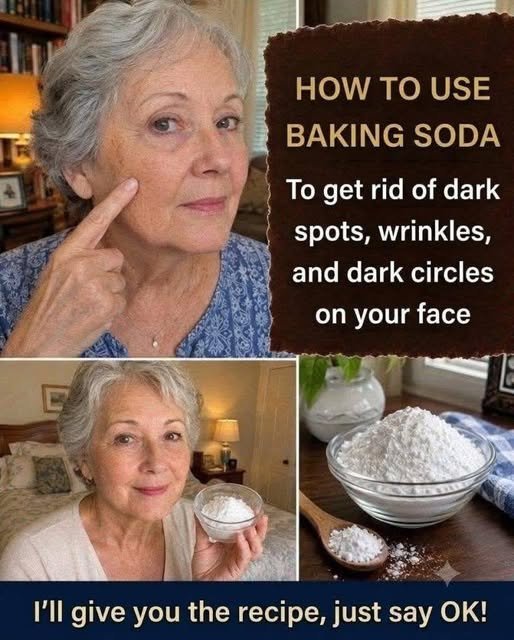
A viral beauty post claims that baking soda can help get rid of dark spots, wrinkles, and dark circles, presenting it as a simple grandmother-style skincare secret.
The idea is certainly tempting: baking soda is inexpensive, widely available, and already used for cleaning and household purposes. But when it comes to facial skin, a kitchen ingredient isn’t automatically a safe or effective skincare treatment.
What Does Baking Soda Actually Do to Skin?
Baking soda is alkaline, while healthy adult skin normally has a mildly acidic pH of around 5.5. Changing the skin’s natural pH can interfere with its protective barrier and potentially contribute to dryness, flaking, irritation, and sensitivity. (Cleveland Clinic)
That’s particularly important on the face, where the skin around the eyes is relatively delicate.
So although baking soda may make skin temporarily feel different or remove some surface buildup, that doesn’t mean it is treating the underlying cause of wrinkles or pigmentation.
Can Baking Soda Remove Wrinkles?
There is no good evidence that applying baking soda to the face removes wrinkles.
Wrinkles develop through a combination of natural aging, reduced skin elasticity, sun exposure, and other factors. A homemade baking-soda paste cannot reverse those structural changes.
A product may temporarily make skin appear smoother simply by changing its hydration or surface appearance, but that’s very different from actually eliminating wrinkles.
What About Dark Spots?
Dark spots have many possible causes, including sun exposure, inflammation after acne or irritation, and other pigmentation changes.
Scrubbing or irritating the skin with a harsh homemade mixture can actually make pigmentation problems more complicated. Skin inflammation can sometimes be followed by additional discoloration, particularly in people prone to post-inflammatory hyperpigmentation.
For that reason, trying to “scrub away” dark spots isn’t a reliable strategy.
And Those Dark Circles?
Dark circles are particularly complicated because they can result from several factors, including genetics, pigmentation, visible blood vessels, shadows from facial anatomy, and changes associated with aging.
Applying baking soda around the eyes is especially questionable because the skin there is thin and sensitive. The American Academy of Dermatology notes that the skin around the eyes is more susceptible to contact dermatitis. (Académie Américaine de Dermatologie)
A homemade baking-soda treatment shouldn’t be considered a proven solution for dark circles.