The “Grandmother’s 2-Ingredient” Skin Trick: Can It Really Replace Makeup?
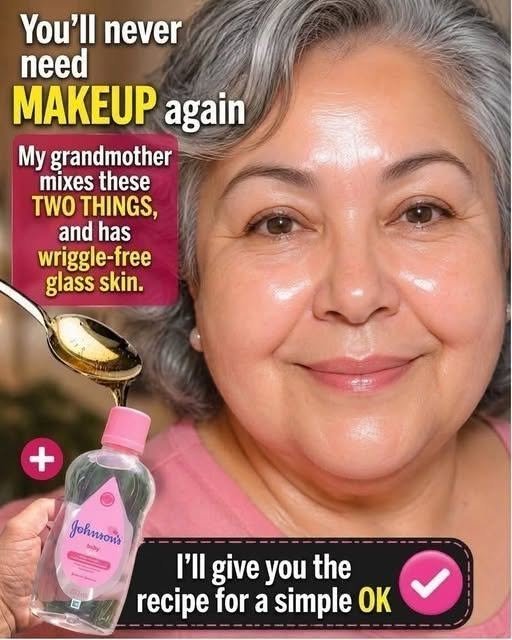
A viral beauty image making the rounds online promises “wrinkle-free glass skin” with a simple mixture of two household ingredients. The image shows an older woman with glowing, smooth-looking skin alongside a spoon and a bottle of baby oil, suggesting that this traditional beauty trick can make makeup unnecessary.
It certainly makes for an attention-grabbing beauty tip—but the dramatic claims need a little context.
What Is the Viral Beauty Trick?
The image appears to promote a simple DIY mixture involving baby oil and another household ingredient, presented as a moisturizing treatment for smoother-looking skin.
The basic idea behind many such home remedies is understandable: keeping the skin moisturized can temporarily make it look softer, smoother, and more radiant.
Dermatologists also recognize that moisturizers can reduce the appearance of some fine lines by helping the skin retain water. (Académie Américaine de Dermatologie)
But that is very different from permanently removing wrinkles or replacing makeup.
Can Moisturizing Really Make Skin Look Smoother?
Yes—but the effect is usually cosmetic and temporary.
When skin becomes better hydrated, fine lines can appear less noticeable because the outer layer of skin contains more water. This can create the soft, plump appearance often described online as “glass skin.” (Académie Américaine de Dermatologie)
That’s one reason a simple moisturizing routine can sometimes produce a surprisingly noticeable difference.
However, moisturizing doesn’t erase the underlying causes of wrinkles.
What About Baby Oil?
Baby oil is generally an oil-based product designed to help reduce moisture loss from the skin. It can leave the skin feeling soft and looking shiny.
But there’s an important distinction:
Soft, glossy skin ≠ wrinkle removal.
The FDA notes that products marketed simply to moisturize or make wrinkles less noticeable through moisturizing are considered cosmetic claims, whereas claims that a product actually changes the structure or function of skin can fall into a different regulatory category. (U.S. Food and Drug Administration)