What Is This Tiny Insect on the Fingernail? A Closer Look at a Surprisingly Small Bug
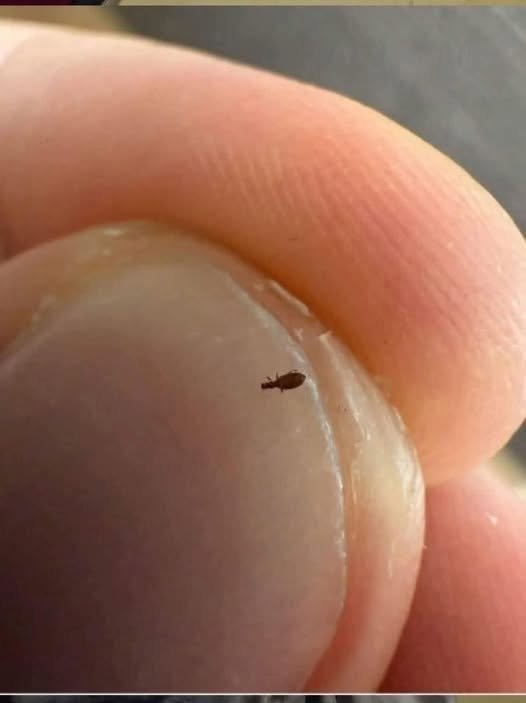
At first glance, the insect in this photograph looks almost too small to notice. Sitting on a fingernail, it appears to be only a few millimeters long, yet its body shape and tiny legs are clearly visible when photographed up close.
Small insects like this often raise the same question: What exactly is it, and should you be concerned?
A Tiny Insect Under the Microscope
The insect appears to have a small, elongated body, several tiny legs, and noticeable antennae. Because of its extremely small size and the limited detail visible in a single photograph, identifying it with absolute certainty is difficult.
Its appearance could be consistent with one of several tiny household or outdoor insects. A high-resolution image showing the insect from several angles would be needed for a confident species-level identification.
That uncertainty is important because many unrelated insects can look remarkably similar when they are only a few millimeters long.
Why Do Tiny Bugs End Up on People?
Finding a tiny insect on your hand or fingernail doesn’t necessarily mean that it came from your body.
Small insects can accidentally land on people while they are:
Working with plants or soil
Sitting outdoors
Handling clothing or bedding
Walking through grass
Cleaning dusty areas
Handling food, cardboard, or stored materials
Coming into contact with household surfaces
Because fingernails provide a relatively smooth, light-colored surface, they can also make tiny dark insects particularly easy to notice.
Is It Dangerous?
Simply finding a tiny insect on your fingernail is generally not a reason to panic.
The important question is what type of insect it actually is. Some tiny insects are harmless accidental visitors, while others can bite, infest household materials, or be associated with pets.
If you repeatedly find similar insects indoors, especially around bedding, carpets, plants, or food-storage areas, then identifying the insect becomes much more useful than focusing on a single specimen.