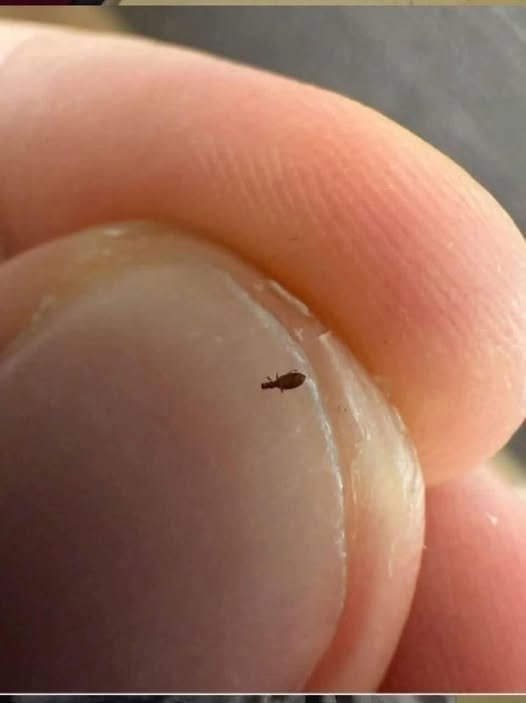
What Is This Tiny Insect on the Fingernail? A Closer Look at a Surprisingly Small Bug
Don’t Judge the Bug by Its Size
One of the fascinating things about insects is how much detail can be packed into such a tiny body.
Even an insect that is only a couple of millimeters long can have:
Jointed legs
Antennae
Specialized mouthparts
A segmented body
Protective outer structures
Sensory organs
A macro photograph can make an otherwise invisible creature look surprisingly large and detailed.
How to Identify a Tiny Bug Correctly
If you discover another insect like this, try taking several photographs before removing it.
For the best chance of identification:
Use good lighting.
Take a close-up photograph without excessive digital zoom.
Photograph the insect from above.
Take another picture from the side.
Place a ruler or coin nearby for scale.
Note where you found it—bedroom, kitchen, garden, pet bedding, bathroom, etc.
If possible, record whether it was jumping, flying, crawling, or biting.
Those details can make the difference between identifying a bug family and simply guessing.
Could It Be a Flea?
Fleas are sometimes suspected when people discover very small dark insects. However, fleas have distinctive characteristics, including a laterally flattened body and powerful hind legs adapted for jumping.
A photograph alone should not be used to confidently label every tiny dark insect as a flea.
If you notice repeated jumping insects or unexplained bites affecting people or pets, examining the environment and having the insect properly identified is a better approach.
What Should You Do If You Find One?
For a single tiny insect, there usually isn’t a need for drastic action.
Simply remove it and clean the surface. If you begin seeing multiple insects, look around the area where they were discovered. Check plants, windowsills, bedding, carpets, pet areas, stored foods, and damp locations depending on where the insects are appearing.
If there are repeated bites, a significant infestation, or uncertainty about a potentially biting insect, professional identification can be worthwhile.
Final Thoughts
This tiny creature may look insignificant, but the photograph is a great reminder of just how much insect life exists around us—much of it small enough to go unnoticed.
The exact insect in this particular photograph cannot be identified with complete confidence from this single image alone. Its tiny size and limited visible features make a definitive identification difficult.
And that’s part of what makes macro photography so interesting: a creature that normally disappears into the background suddenly becomes an intriguing little mystery when viewed up close.