A Snake in the House? What This Unexpected Visitor May Be Trying to Tell You
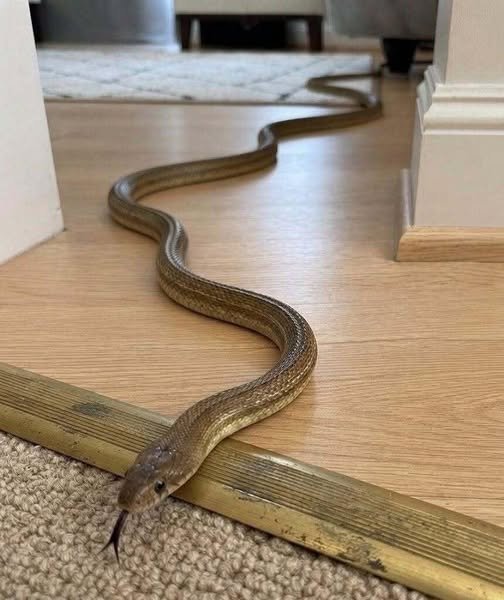
Finding a long, snake-like animal stretching across your living-room floor is enough to make almost anyone stop in their tracks. The photograph shows a slender snake moving from a carpeted area onto a wooden floor, apparently making its way through the home.
While the sight may be alarming, a snake inside a house doesn’t necessarily mean it has made the home its permanent habitat. Snakes can enter buildings accidentally, while searching for food, or while looking for shelter. (Extension Missouri)
What Kind of Snake Is This?
The photograph clearly shows a slender snake, but identifying the exact species from this single image would not be reliable.
The snake has a long, narrow body and is actively flicking its forked tongue. That tongue-flicking behavior is normal: snakes use their tongues to collect chemical information from the environment and help determine what is around them. (Natural Resources)
Its exact species—and whether it is venomous—depends heavily on the location where it was found. A photograph alone shouldn’t be used to assume that a snake is harmless.
Why Would a Snake Come Inside a House?
There are several possible explanations.
1. It’s Looking for Food
One of the most common reasons snakes enter buildings is the presence of prey.
Rodents such as mice can attract snakes, particularly species that specialize in eating them. Other snakes may be searching for insects, frogs, lizards, or other small animals. (Publications et Ressources Éducatives)
In other words, sometimes the snake isn’t really the first problem—it may be evidence that another food source is nearby.
2. It’s Looking for Shelter
Snakes may seek cool, dark, protected spaces during hot weather or warmer locations during cold periods.
Basements, crawl spaces, garages, sheds, and gaps around buildings can provide attractive temporary shelter. (Extension Missouri)
3. It May Have Simply Wandered Inside
Not every snake found indoors is trying to establish a home there.
Some accidentally enter through gaps around doors, foundations, windows, pipes, vents, or other openings and then become trapped inside. (Penn State Extension)