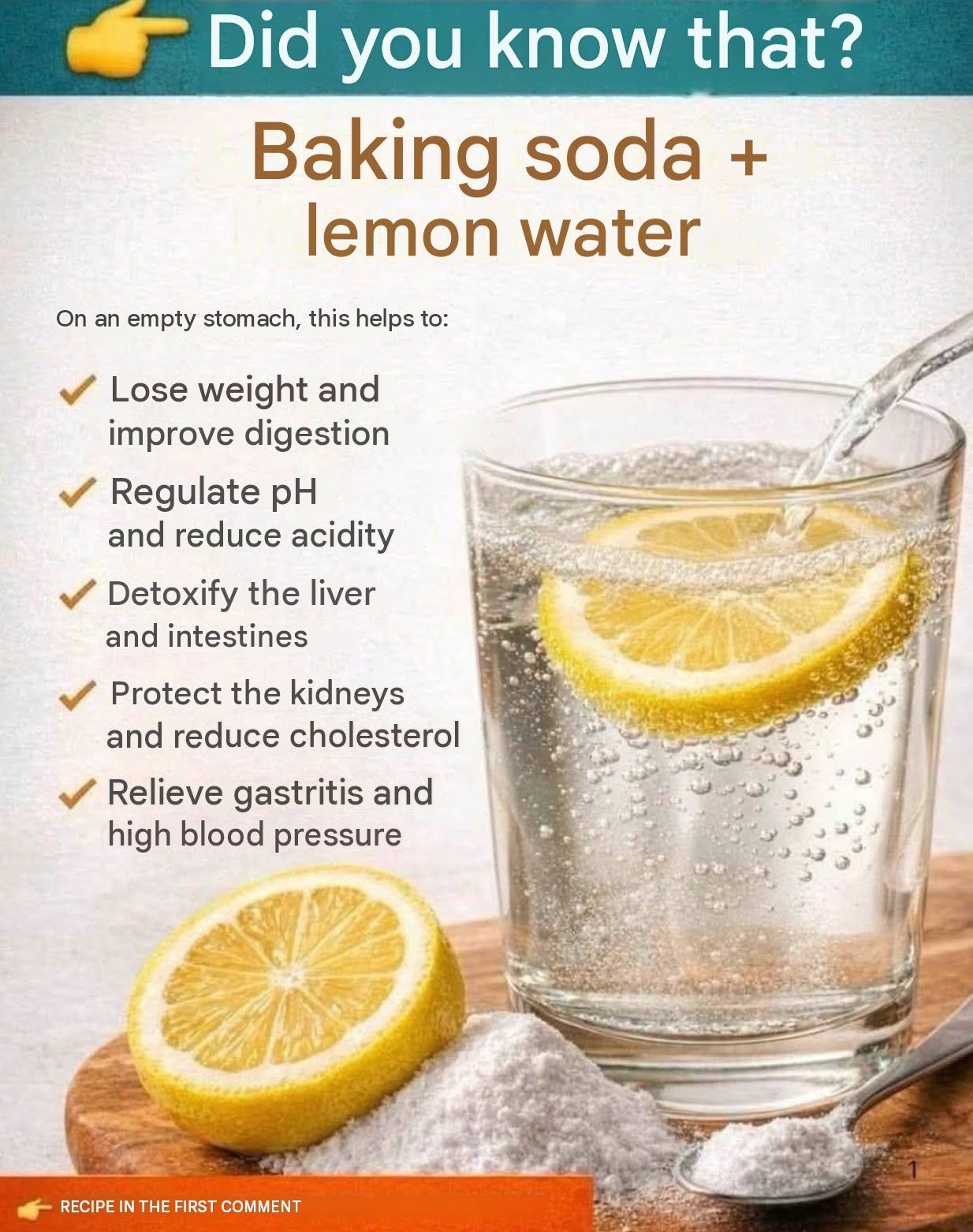
Few wellness trends are as visually satisfying or as aggressively promoted as the morning ritual of drinking lemon water mixed with baking soda. The fizzing glass, the promise of a “reset” on an empty stomach, and the laundry list of benefits—weight loss, improved digestion, pH regulation, liver detoxification, kidney protection, and relief from gastritis and high blood pressure—make it seem like a miraculous, affordable solution to modern health concerns. The image circulating online presents this concoction as a comprehensive health tonic, implying that a simple chemical reaction in a glass can correct systemic imbalances. However, human physiology is far more complex than a middle-school science experiment. The body maintains its internal environment within extremely narrow parameters through sophisticated buffering systems, and no beverage can override these mechanisms. This article examines the actual chemistry of the lemon-baking soda reaction, evaluates each of the claimed health benefits against established scientific evidence, and explains why this popular remedy is, at best, ineffective for its advertised purposes and, at worst, potentially harmful.