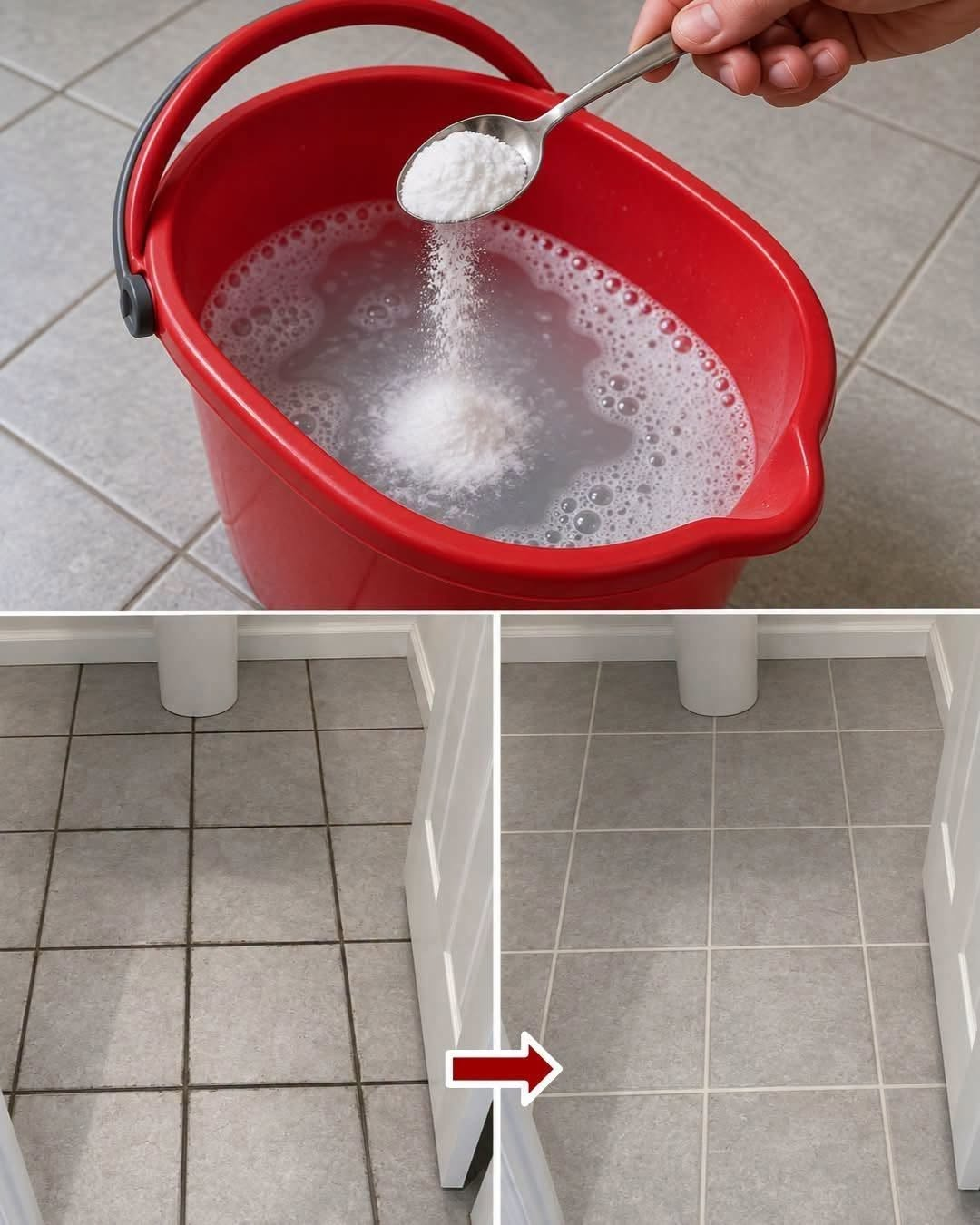
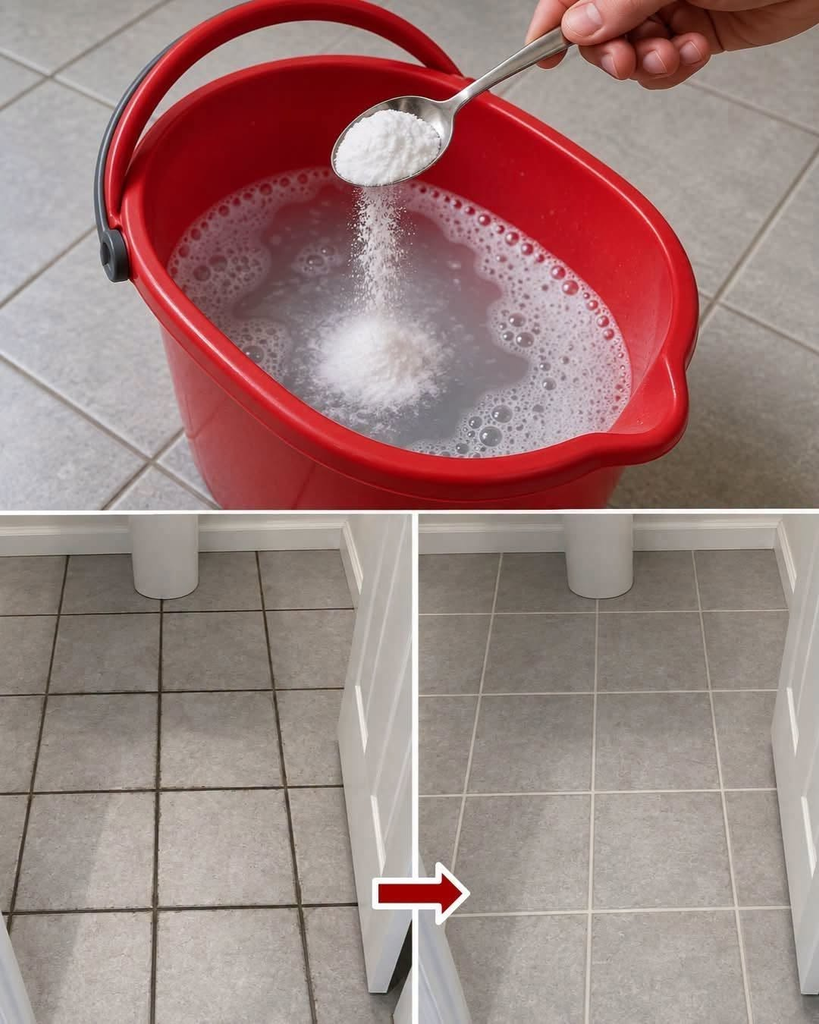
Few household cleaning tasks feel as futile as scrubbing dirty floor grout. The tiles may gleam, but the dark, dingy lines between them tell a different story—one of trapped grease, soil, and years of accumulated grime. The image of a spoonful of white powder being stirred into a bucket of water offers a refreshingly simple solution: baking soda. This humble kitchen staple has become the centerpiece of countless viral cleaning hacks, promising to restore grout to its original brightness without harsh chemicals or expensive specialty products.
But does this trick actually work, or is it another social media exaggeration? The answer is nuanced. Baking soda is genuinely effective for certain types of grout cleaning, particularly when used correctly and with realistic expectations. It works through a combination of mild abrasion and alkaline chemistry, lifting surface grime without damaging the tile or grout. However, its limitations are equally real, especially when dealing with deep-set stains or grease that has bonded to the porous grout surface. This article examines the science behind baking soda as a grout cleaner, separates the proven techniques from the viral myths, and provides a practical, step-by-step guide to achieving the best possible results.