Why Sleeping on Your Left Side May Help With Acid Reflux
Nighttime heartburn can make it difficult to fall asleep, wake you during the night, and leave you uncomfortable the following morning. For people who experience acid reflux, something as simple as changing sleeping position may help reduce symptoms.
One position that has received particular attention is sleeping on the left side. The reason isn’t simply a matter of comfort. The position of the stomach and the effects of gravity may influence how easily stomach contents move back toward the esophagus.
Understanding Acid Reflux at Night
Acid reflux occurs when stomach contents flow backward into the esophagus. This can cause symptoms such as:
A burning sensation in the chest, commonly called heartburn
A sour or bitter taste in the mouth
Regurgitation of food or liquid
Throat irritation
Nighttime coughing or throat clearing
Difficulty sleeping because of discomfort
Reflux can become more noticeable when lying down because gravity is no longer helping keep stomach contents in the stomach.
For some people, symptoms are particularly troublesome after a large evening meal or when going to bed soon after eating.
Why the Left Side May Make a Difference
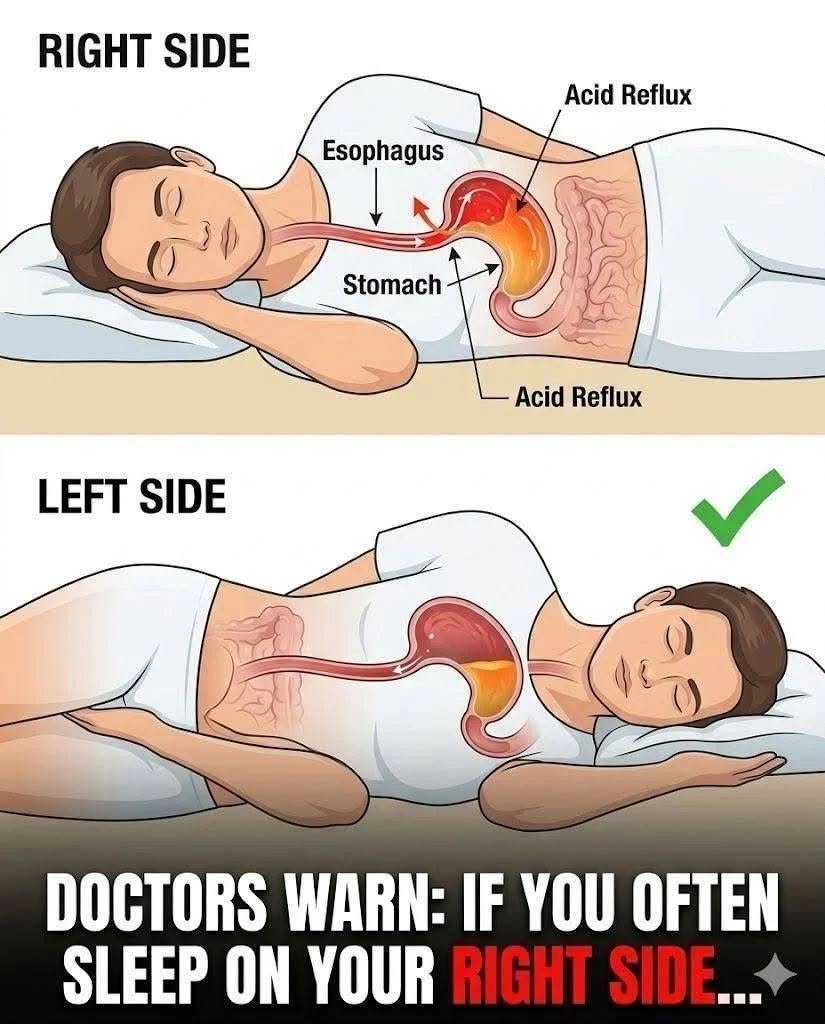
The stomach is located primarily on the left side of the upper abdomen. When you lie on your left side, the stomach’s natural position may help keep acidic contents away from the opening leading into the esophagus.
Gravity may provide an additional advantage by encouraging stomach contents to remain lower in the stomach.
Research investigating nighttime reflux has found that left-side sleeping can reduce acid exposure in the esophagus and may allow reflux episodes to clear more quickly compared with certain other sleeping positions.
This doesn’t mean that sleeping on the left side eliminates reflux. Rather, it may be a simple behavioral strategy that reduces symptoms for some people.
What Happens When You Sleep on Your Right Side?
The right side may have the opposite effect for some individuals.
Because of the shape and position of the stomach, lying on the right side can potentially allow gastric contents to come closer to the lower esophageal sphincter. In people prone to reflux, this may contribute to more frequent or longer-lasting symptoms.
If you regularly experience heartburn after going to bed, experimenting with your sleeping position may therefore be worthwhile.
Does Elevating Your Upper Body Help?
For people with frequent nighttime reflux, changing from a completely flat position can also be helpful.
Raising the upper portion of the body can use gravity to reduce the movement of stomach contents toward the esophagus. A wedge-shaped pillow or an appropriately elevated head end of the bed is generally more useful than simply stacking several ordinary pillows, which can bend the body in a way that may not provide consistent elevation.
The goal is to create a gentle incline from the upper torso rather than simply raising the head.