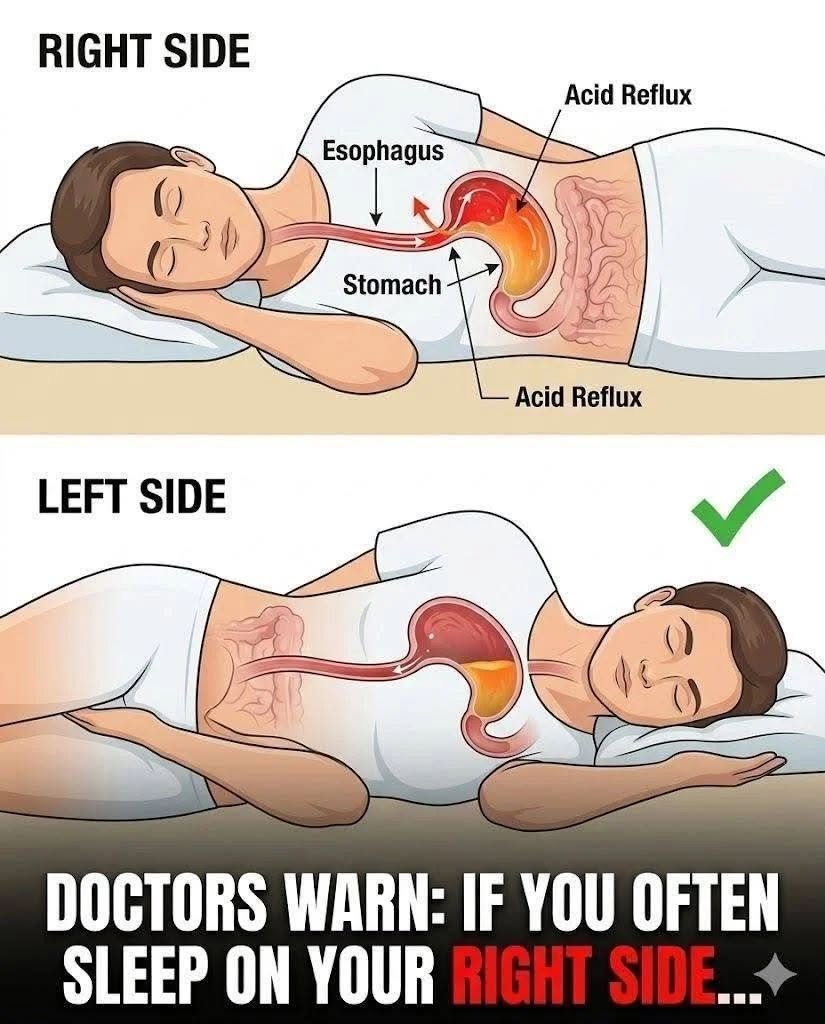
Why Sleeping on Your Left Side May Help With Acid Reflux
Sleeping position is only one part of nighttime reflux management. Several everyday habits may also help:
1. Avoid Eating Immediately Before Bed
Giving your stomach time to begin digesting a meal before lying down may reduce nighttime symptoms. Many people with reflux are advised to avoid lying down for several hours after eating.
2. Be Careful With Large Evening Meals
A very large meal can increase stomach fullness and may make reflux more likely. A smaller evening meal may be more comfortable for people who regularly experience nighttime heartburn.
3. Identify Your Personal Triggers
Certain foods and drinks can aggravate reflux symptoms in some people. Common triggers may include fatty foods, spicy foods, chocolate, caffeine, alcohol, mint, and acidic foods.
However, triggers vary considerably from person to person. You don’t necessarily need to eliminate foods that don’t cause symptoms.
4. Maintain a Healthy Weight When Appropriate
Excess abdominal pressure can contribute to reflux in some individuals. For people who are overweight, gradual weight reduction may improve reflux symptoms.
5. Avoid Tight Clothing Around the Abdomen
Tight belts or clothing around the waist may increase abdominal pressure and make symptoms more noticeable in some people.
What If Left-Side Sleeping Doesn’t Work?
Not everyone experiences the same response. If sleeping on your left side doesn’t improve your symptoms, other factors may be contributing to nighttime reflux.
Consider looking at:
Meal timing
Portion sizes
Individual food triggers
Alcohol or caffeine consumption
Body weight
Sleeping position
Medications
The frequency and severity of symptoms
If symptoms occur regularly despite lifestyle changes, medical evaluation may be appropriate.
When Should You Talk to a Doctor?
Occasional heartburn is common, but frequent or persistent symptoms shouldn’t simply be ignored.
Speak with a healthcare professional if you regularly experience reflux, particularly if it interferes with sleep or daily activities.
Medical attention is especially important if you develop difficulty swallowing, persistent vomiting, unexplained weight loss, vomiting blood, black stools, or persistent chest pain.
Chest discomfort should not automatically be assumed to be acid reflux. Severe or unexplained chest pain—especially when accompanied by shortness of breath, sweating, dizziness, or pain spreading to the arm, shoulder, back, neck, or jaw—requires urgent medical evaluation.
Frequently Asked Questions
Is sleeping on the left side good for acid reflux?
It may be. The anatomy of the stomach and the effects of gravity can make left-side sleeping a useful strategy for reducing nighttime reflux symptoms in some people.
Why does my heartburn get worse when I lie down?
Lying down removes some of gravity’s effect on stomach contents. This can make it easier for acid or stomach contents to move toward the esophagus.
Is the right side worse for reflux?
Research suggests that reflux may be more pronounced in the right-side position for some people. However, individual responses vary.
How long should I wait after eating before going to bed?
People who experience nighttime reflux are commonly advised to leave several hours between their evening meal and lying down. Your healthcare professional can provide individualized advice based on your symptoms.
Can changing sleeping position cure GERD?
No. Sleeping position may help control symptoms, but it does not cure the underlying condition. Persistent GERD may require lifestyle changes, medication, or further medical evaluation.
Final Thoughts
For people dealing with nighttime acid reflux, sleeping on the left side is a simple, low-cost strategy that may help reduce symptoms. Its potential benefit is linked to the anatomy of the stomach and the role of gravity in keeping stomach contents from moving upward.
Combining a suitable sleeping position with sensible meal timing, avoiding personal triggers, and elevating the upper body when appropriate may provide additional relief.
However, frequent or persistent reflux deserves more than a change in sleeping position. If heartburn regularly disrupts your sleep or is accompanied by concerning symptoms, professional medical advice is the safest next step.