How to Cook Eggs Perfectly: A Guide to Every Yolk Style
Eggs are one of the most versatile ingredients in the kitchen. They can be boiled, fried, poached, scrambled, baked, or transformed into an omelet, with each technique producing a completely different texture.
One of the most important factors when cooking an egg is the yolk. Some people prefer a bright, runny center that spills over toast, while others want a completely firm yolk that can be sliced cleanly.
The secret to getting your preferred result is controlling time, temperature, and technique.
Understanding Egg Doneness
Egg yolks gradually change from liquid to firm as they are heated. There is no single “perfect” level of doneness—the ideal texture depends entirely on personal preference and the dish.
For boiled eggs, even a difference of a minute or two can noticeably change the yolk.
For fried and poached eggs, controlling the heat is equally important because the white and yolk cook at different rates.
Let’s look at the most popular styles.
Soft-Boiled Eggs
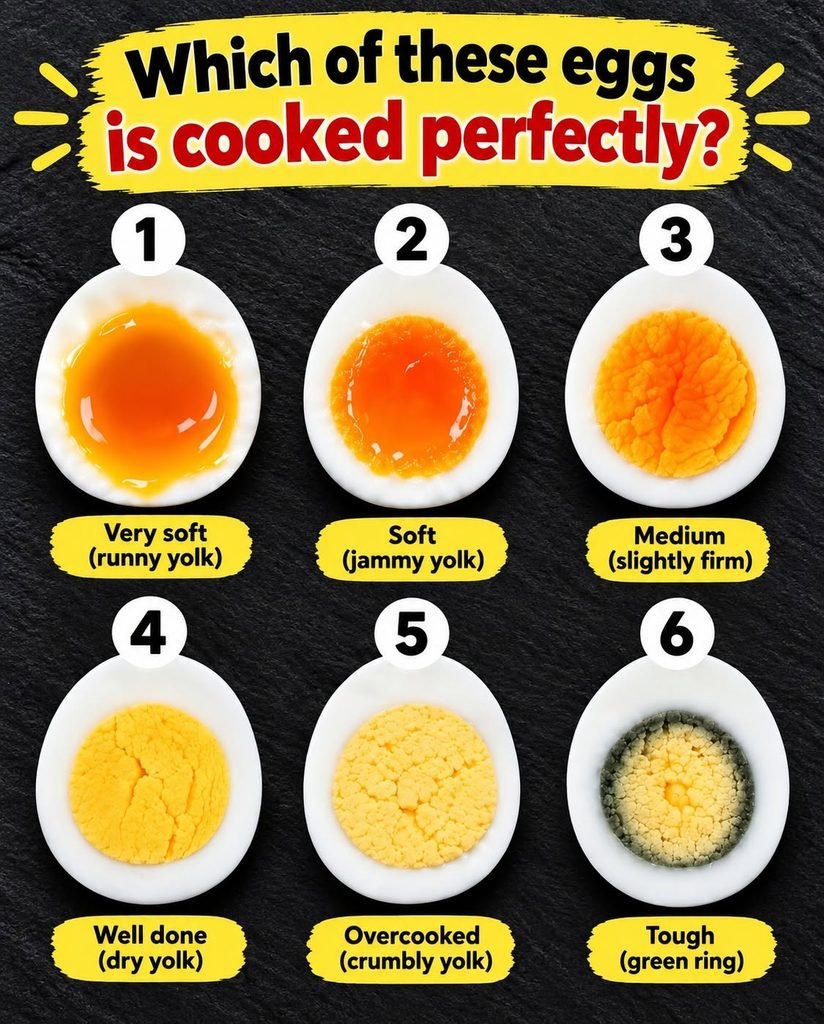
Soft-boiled eggs are ideal when you want a delicate white surrounding a warm, flowing yolk.
What to Expect
The white should be cooked enough to hold its shape, while the center remains soft and runny.
How to Make Them
Bring a pot of water to a gentle boil. Carefully lower the eggs into the water and cook for approximately 5–6 minutes, depending on egg size and starting temperature.
Transfer them immediately to cold or ice water to stop the cooking process.
Serve them in an egg cup with toast, or peel them carefully and use them over salads, noodles, or rice.
Jammy Eggs
A jammy egg sits between soft-boiled and hard-boiled.
The white is fully set, while the yolk has a thick, creamy consistency similar to soft custard or jam.
How to Make Them
Cook the eggs for approximately 7–8 minutes, then cool them immediately in ice water.
Jammy eggs are especially popular in salads, grain bowls, ramen, and toast dishes because the yolk is creamy without being completely liquid.
Medium-Boiled Eggs
Medium-boiled eggs have a yolk that is mostly set but still slightly creamy in the center.
A cooking time of around 8–9 minutes can produce this texture, although exact timing varies with egg size, water temperature, and altitude.
They are a good choice when you want more structure than a jammy egg without going fully firm.
Hard-Boiled Eggs
Hard-boiled eggs have fully cooked whites and yolks.
How to Make Them
Cook the eggs for approximately 10–12 minutes after the water reaches a boil, then transfer them to cold water.
Avoid excessively long cooking times. Overcooked eggs can develop a dry, crumbly yolk and sometimes a greenish-gray ring around the yolk.
That discoloration is caused by a reaction involving sulfur and iron and does not necessarily mean the egg is unsafe.
Sunny-Side-Up Eggs
Sunny-side-up eggs are fried on one side without flipping.
The ideal version has a set white and a warm, runny yolk surrounded by lightly crisped edges.
The Technique
Heat a lightly greased pan over medium-low heat and crack the egg into it.
Cook gently until the white is fully or mostly set while keeping the yolk intact.
If the top of the white remains undercooked while the bottom is becoming too brown, lower the heat and cover the pan briefly. The trapped steam can help cook the upper surface without requiring the egg to be flipped.