How to Cook Eggs Perfectly: A Guide to Every Yolk Style
Over-easy eggs are flipped briefly so that the top of the egg cooks while the yolk remains runny.
Cook the egg until the white is mostly set, carefully flip it, and cook the second side for roughly 15–30 seconds.
The yolk should remain liquid when cut.
This style is excellent with toast because the yolk can act almost like a natural sauce.
Over-Medium Eggs
Over-medium eggs are cooked longer after flipping.
The white is fully cooked, while the yolk becomes thicker and partially set rather than completely liquid.
They are a useful choice for people who enjoy a creamy yolk but want less runniness.
Over-Hard Eggs
Over-hard eggs are fried on both sides until the yolk is completely cooked.
After flipping, continue cooking until the yolk is firm.
This style is particularly practical for sandwiches and breakfast dishes where a runny yolk may be inconvenient.
Poached Eggs
Poached eggs are cooked directly in gently simmering water without their shells.
A properly poached egg has a tender white surrounding a soft, flowing yolk.
How to Poach an Egg
Bring water to a gentle simmer rather than a vigorous boil.
Crack the egg into a small bowl first. Then carefully slide it into the water.
Cook for approximately 3–4 minutes, depending on the desired texture.
Remove it with a slotted spoon and gently drain away excess water.
Poached eggs are excellent on toast, salads, vegetables, and dishes such as eggs Benedict.
Scrambled Eggs
Scrambled eggs are all about texture.
For soft scrambled eggs, whisk the eggs gently and cook them over low to medium-low heat, stirring frequently.
Remove them from the heat while they are still slightly glossy because residual heat will continue cooking them.
For firmer scrambled eggs, cook them longer until the moisture has mostly evaporated.
Avoid excessive heat, which can make scrambled eggs dry and rubbery.
Omelets
An omelet offers another way to control yolk and white texture.
Beat the eggs until evenly combined, then cook them in a lightly greased skillet.
For a tender French-style omelet, use relatively gentle heat and avoid excessive browning.
For a more firmly cooked omelet, allow the egg to cook longer before folding and adding fillings.
Cheese, herbs, mushrooms, vegetables, and cooked meats can all be used as fillings.
Baked Eggs
Baked eggs are particularly convenient when preparing several portions at once.
Crack eggs into a baking dish or individual ramekins and bake until the whites are set and the yolks reach the desired consistency.
Cooking time varies depending on oven temperature, dish size, and how many eggs are being prepared.
Keep a close eye on the yolks because they can go from soft to firm relatively quickly.
Why Timing Isn’t Always Exact
Cooking times should be treated as guidelines rather than absolute rules.
Several factors influence how quickly an egg cooks:
Egg size
Starting temperature
Water temperature
Pan temperature
Number of eggs
Altitude
Cooking equipment
Personal preference
For this reason, the most reliable way to master eggs is to test your preferred timing with the equipment you use regularly.
Food Safety Matters
Eggs can carry harmful bacteria, including Salmonella, so proper handling and cooking are important.
Keep eggs refrigerated according to local food-safety guidance, avoid using cracked or dirty eggs, and wash hands and utensils after handling raw eggs.
People who are pregnant, very young, older, or immunocompromised may be advised to avoid undercooked eggs and choose eggs cooked until both the whites and yolks are firm.
When in doubt, follow the food-safety guidance applicable in your country.
The Perfect Egg Is a Matter of Preference
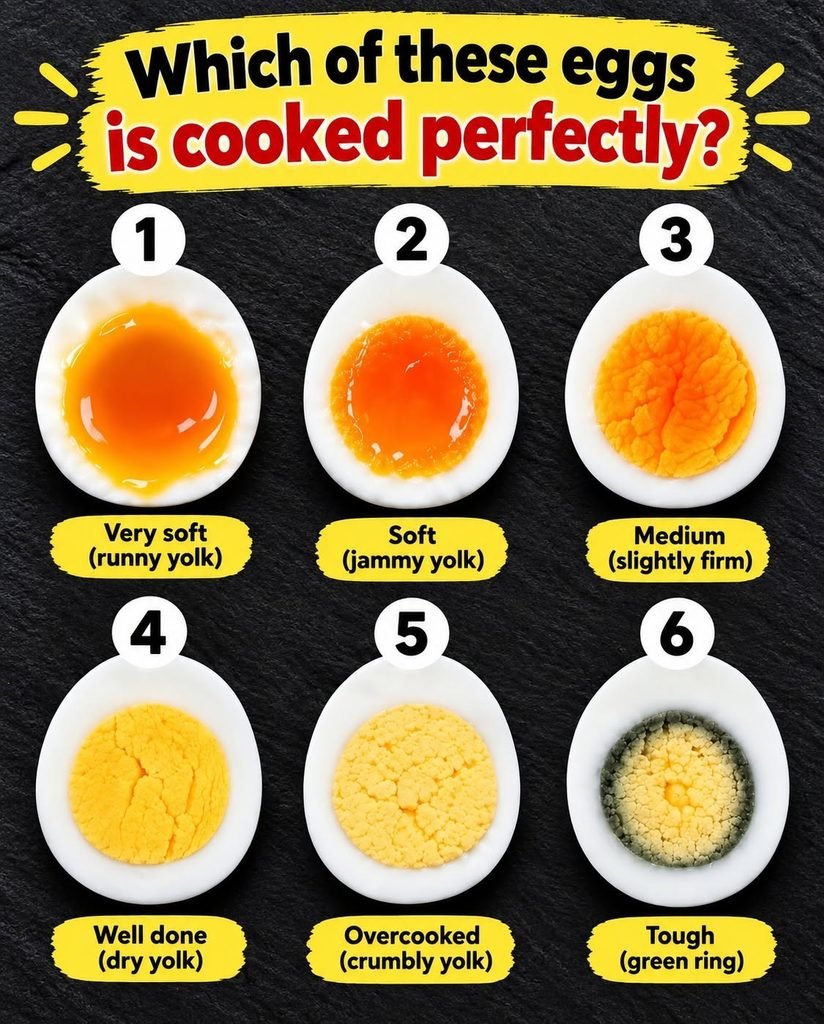
There is no universal definition of a perfectly cooked egg.
For one person, perfection means a soft-boiled egg with a completely liquid center. For another, it means a firm hard-boiled yolk or a fully cooked fried egg.
The important thing is understanding how cooking time and temperature affect texture.
Once you learn those fundamentals, you can consistently prepare eggs exactly the way you like them.
Final Thoughts
From soft-boiled and jammy eggs to sunny-side-up, poached, scrambled, and hard-boiled varieties, eggs offer an extraordinary range of textures from a remarkably simple ingredient.
The key is temperature control and timing. Start with a reliable method, make small adjustments based on your equipment, and pay attention to how the white and yolk change as they cook.
Whether you prefer a rich, runny yolk or a completely firm center, mastering these techniques will make it much easier to cook eggs exactly to your liking.