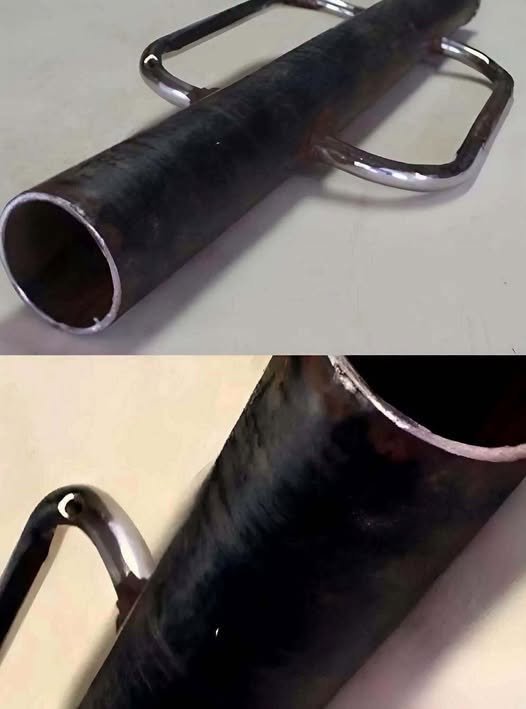
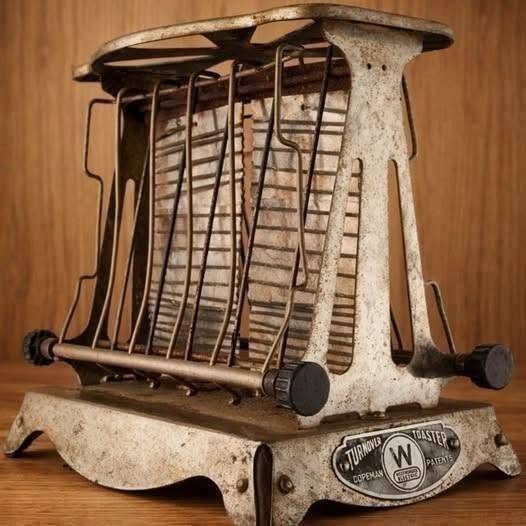
A strange chunk of heavy steel can look completely ordinary at first glance—until you start wondering what it was actually designed to do.
That is exactly why mystery-tool photos are so popular online. An object that appears to be nothing more than a solid piece of metal may actually be a specialized tool that once played an important role in a workshop, machine shop, blacksmith’s forge, or industrial setting.
The challenge is that shape alone can be surprisingly difficult to interpret. A hole, groove, flat surface, or unusual indentation may look decorative to one person but serve a very specific mechanical purpose to someone familiar with traditional tools.
So, what could a mysterious steel chunk actually be?
The Shape Is the Biggest Clue
When identifying an unfamiliar metal tool, its shape usually tells you more than its size.
Look closely at the object.
Does it have:
One or more round holes?
Different-sized openings?
A flat working surface?
Grooves or channels?
A curved or V-shaped section?
Tapered holes?
Steps or raised sections?
Sharp edges?
A heavy base?
Machining marks?
These details can reveal what the object was designed to interact with.
For example, a heavy steel block with holes of different shapes could be associated with metalworking. A tool with grooves may have been designed to support or shape material, while a solid block with a flat face could have served as a striking or forming surface.
Could It Be a Blacksmithing Tool?
One possibility with mysterious steel blocks is that they belong to the world of blacksmithing.
Traditional blacksmiths used numerous specialized tools besides the familiar anvil.
Some tools were designed to support hot metal while it was being shaped. Others helped create holes, curves, grooves, shoulders, or specific profiles.
Tools such as swage blocks, hardy tools, bending tools, punches, and dies can look extremely unfamiliar to someone who has never worked with forged metal.
A swage block, for example, is a heavy metal block containing various holes, grooves, and shaped sections that allow a blacksmith to form metal into particular shapes.
However, not every mysterious steel block is a swage block. The exact features and dimensions are important.
What About a Machinist’s Tool?
Another possibility is that the object came from a machine shop.
Machinists have traditionally used heavy steel fixtures, blocks, dies, forming tools, and specialized workholding equipment.
Some of these objects were never intended to be recognizable to the general public because they were designed for one particular manufacturing process.
A steel block might have been used to:
Hold a workpiece
Support material during machining
Form metal
Align components
Guide a cutting or drilling operation
Create a repeated shape
Support a piece during pressing
If the object has precise machined surfaces, symmetrical holes, or carefully manufactured recesses, a machine-shop origin becomes more plausible.
Why Is It So Heavy?
The weight itself can provide an important clue.
Heavy steel tools are often designed to resist movement, vibration, or deformation.
A tool used to shape metal, for example, needs to remain stable while significant force is applied.
That is why many traditional workshop tools are surprisingly heavy for their size.
A compact object made from thick steel may have been designed to function as a stable base, forming block, die, fixture, or support rather than something intended to be carried around frequently.
The Difference Between Cast and Forged Tools
The surface of the steel can also reveal something about its manufacturing history.
Older industrial tools may show evidence of forging, casting, machining, grinding, or repeated use.
Look for:
Hammer marks
Casting seams
Machined surfaces
Grinding marks
Rust patterns
Wear on specific edges
Manufacturer markings
Numbers or letters
A perfectly machined hole may suggest a different purpose from a rough forged opening.
Likewise, significant wear on one particular surface can indicate where the tool repeatedly contacted another object.
Could It Be an Anvil?
A large steel object with a flat surface naturally makes people think of an anvil.
But anvils usually have recognizable characteristics such as a substantial face, a horn on many traditional designs, and holes or other features used with specialized blacksmithing tools.
A smaller or unusually shaped steel block may instead be an anvil accessory, stake, forming block, or another specialized metalworking tool.
The absence of a horn does not automatically rule out a metalworking function.
Why These Objects Confuse Almost Everyone
Modern life has separated most people from traditional manufacturing.
A person may recognize a hammer, screwdriver, wrench, or drill immediately because these tools remain common.
But specialized workshop equipment is different.
Many tools were designed for a particular trade and may have been used every day by a blacksmith, machinist, mechanic, or metalworker while remaining completely mysterious to everyone else.