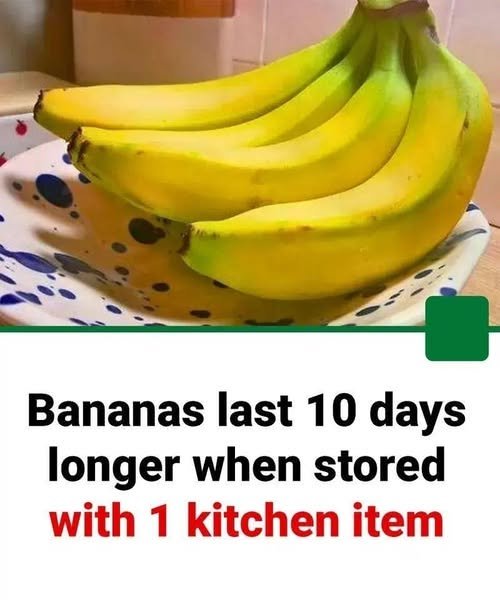
Bananas Last 10 Days Longer When Stored with 1 Kitchen Item? Here’s What Actually Works
A banana hanger is another simple storage solution.
Hanging bananas keeps them elevated and reduces contact with countertops and other surfaces. This can help prevent bruising, which is important because damaged areas can soften more quickly.
A hanger does not stop ripening, but it can help protect the fruit from unnecessary physical damage.
What About the Refrigerator?
Once bananas have reached the ripeness you like, refrigeration can be useful for slowing further ripening.
The peel may turn brown or dark in the refrigerator, but the fruit inside can remain perfectly usable.
For this reason, don’t judge a refrigerated banana entirely by the color of its skin.
If you prefer firm, yellow bananas, refrigerating them too early may not give you the texture you want. Let them ripen at room temperature first, then refrigerate them when they have reached your preferred stage.
Keep Bananas Away From Other Ripe Fruit
Another practical storage habit is to avoid placing bananas directly next to fruit that produces significant amounts of ethylene.
Apples, pears, avocados, and some other fruits can contribute to the ethylene environment around nearby produce.
This doesn’t mean you need to isolate every piece of fruit in your kitchen, but separating particularly ripe produce can sometimes help slow the ripening of more sensitive fruits.
Avoid Heat and Direct Sunlight
A warm kitchen can speed up the ripening process.
Try storing bananas away from:
Direct sunlight
Ovens and stovetops
Dishwashers that release heat
Radiators
Warm appliances
Enclosed spaces with poor airflow
A cool, dry countertop is generally a better choice.
Don’t Wash Bananas Before Storage
Washing bananas before storage can leave additional moisture on the peel.
Instead, wash the fruit shortly before eating it.
Keeping the surface dry can help reduce unnecessary moisture-related spoilage.
Can Bananas Really Last 10 Days Longer?
This is where viral storage claims often need some context.
There is no universal 10-day rule.
A banana that is already very ripe when you buy it will not suddenly remain fresh for another 10 days because its stem was wrapped. Likewise, bananas stored in a warm kitchen will generally ripen faster than those kept in a cooler environment.
The most useful approach is to combine several simple techniques rather than relying on one “magic” kitchen item.
The Best Simple Banana-Storage Routine
For maximum freshness, try this approach:
1. Buy bananas at the ripeness you need.
If you won’t eat them for several days, choose bananas that are still relatively firm and greenish.