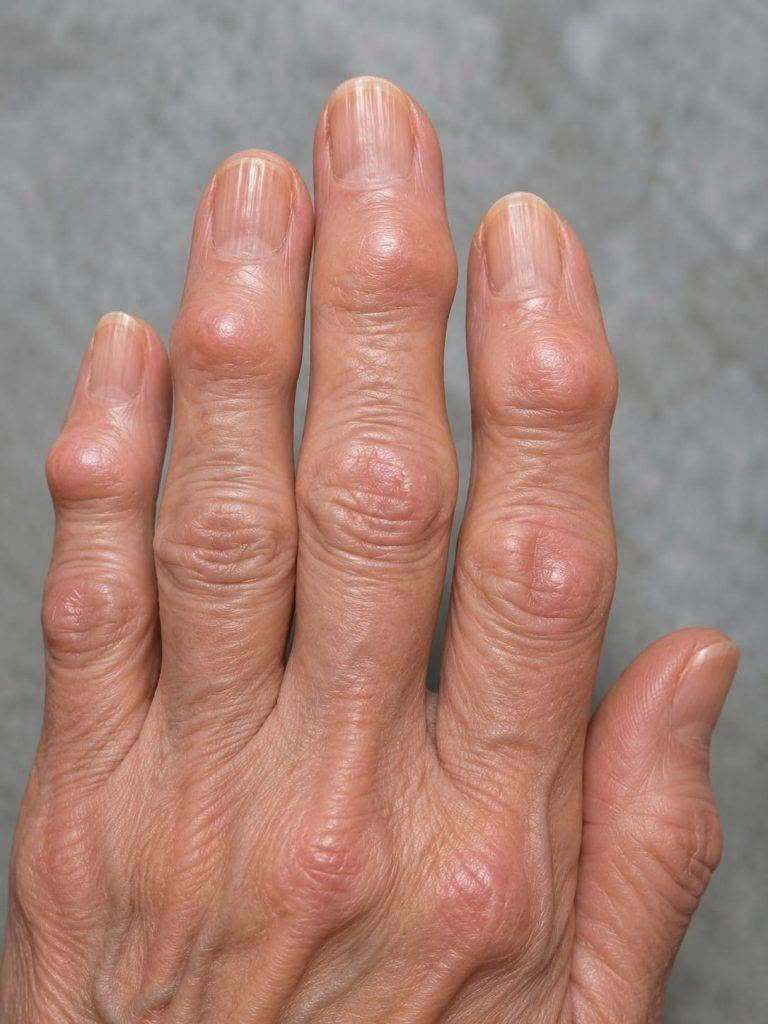
Gout is a form of inflammatory arthritis caused by the crystallization of uric acid in the joints. While it most commonly affects the big toe, it can also occur in the fingers. Over time, chronic gout can lead to the formation of tophi—hard, chalky deposits of uric acid that form under the skin. These lumps can appear at the joints and are often painless but can become inflamed. Unlike the bony nodes of osteoarthritis, tophi are deposits of crystallized material and can sometimes be seen through the skin as a white or yellowish color.