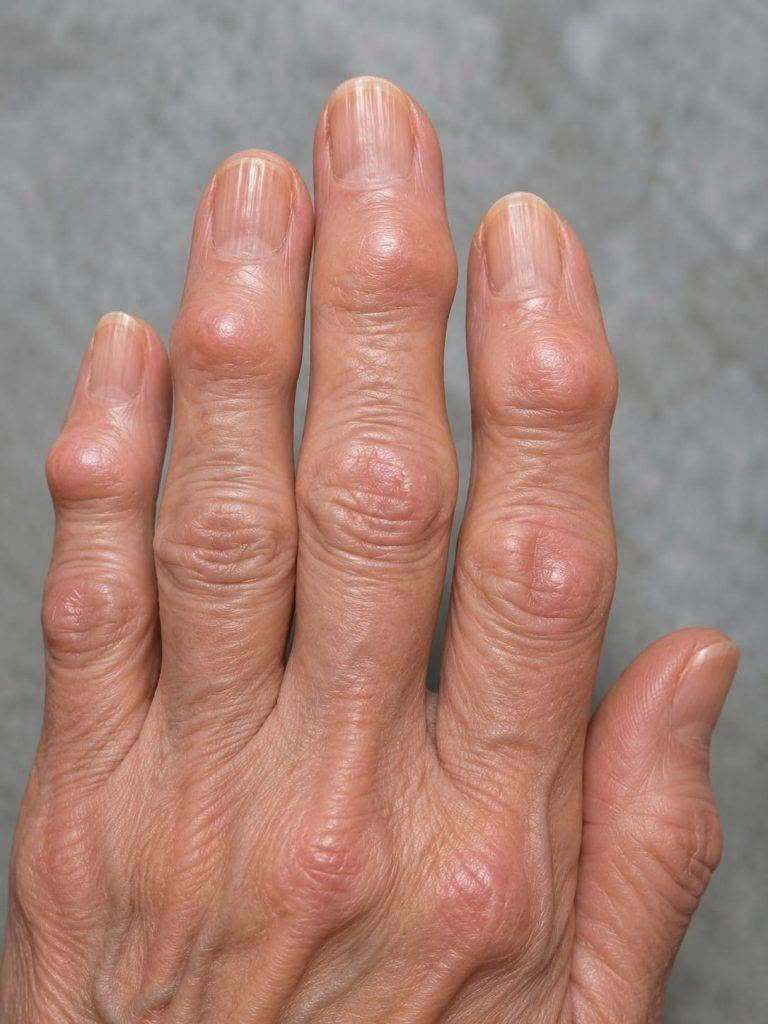
For osteoarthritis-related nodes, treatment focuses on managing symptoms and preserving function. This includes using over-the-counter pain relievers, applying heat or cold to the affected joints, and using splints to rest the joint during flare-ups. Gentle range-of-motion exercises can help maintain flexibility. Lifestyle modifications, such as maintaining a healthy weight to reduce stress on the joints and avoiding repetitive gripping tasks, can also be beneficial. While the bony lumps themselves are permanent, the pain and inflammation associated with them can often be managed effectively.
Conclusion
Hard lumps on the finger joints are a common finding, and in the majority of cases, they are a sign of osteoarthritis, specifically Bouchard’s or Heberden’s nodes. These bony growths are the result of the body’s attempt to repair cartilage loss and, while permanent, are not inherently dangerous. However, similar lumps can occur in inflammatory conditions like rheumatoid arthritis, psoriatic arthritis, and gout. The distinction is important because inflammatory arthritis requires different, often more aggressive, treatment to prevent joint destruction. If you notice new lumps on your fingers, especially if they are accompanied by pain, stiffness, or other systemic symptoms, consulting a healthcare professional is the best way to determine the underlying cause and appropriate course of action.