Begin by combining the flour, butter, sugar, salt, and yeast. Add the milk and egg yolks gradually, mixing until a smooth dough forms.
Knead gently until the dough becomes cohesive and elastic.
Avoid excessive kneading, as the finished pastry should remain tender rather than bread-like.
2. Let the Dough Rest
Divide the dough into equal portions and shape each portion into a rectangle or ball.
Cover and refrigerate or allow to rest according to the recipe.
Chilling the dough helps make it easier to roll and contributes to the characteristic texture of Beigli.
3. Prepare the Walnut Filling
Combine finely ground walnuts with sugar, lemon zest, and your preferred aromatic ingredients.
A small amount of milk may be added to create a moist, spreadable filling.
Raisins are also commonly included in walnut fillings, adding sweetness and texture.
4. Roll Out the Dough
Roll each portion into a thin rectangular sheet.
The dough should be thin enough to create several visible layers but strong enough to hold the filling without tearing.
5. Add the Walnut Filling
Spread the walnut mixture evenly across the dough, leaving a small border around the edges.
Do not make the filling excessively thick. A balanced ratio of pastry to walnut filling produces the best texture.
6. Roll the Beigli
Carefully roll the pastry into a tight log, folding the edges inward as you go.
Place the finished roll seam-side down on a baking tray.
Repeat with the remaining dough and filling.
7. Create the Traditional Finish
Brush the surface with beaten egg.
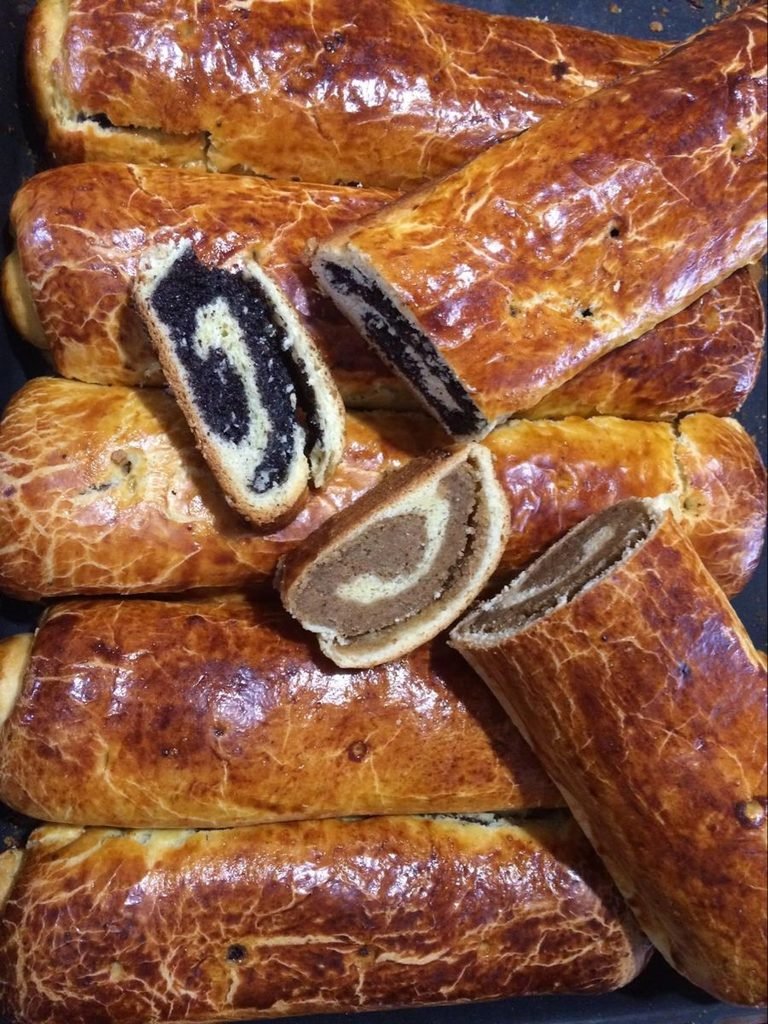
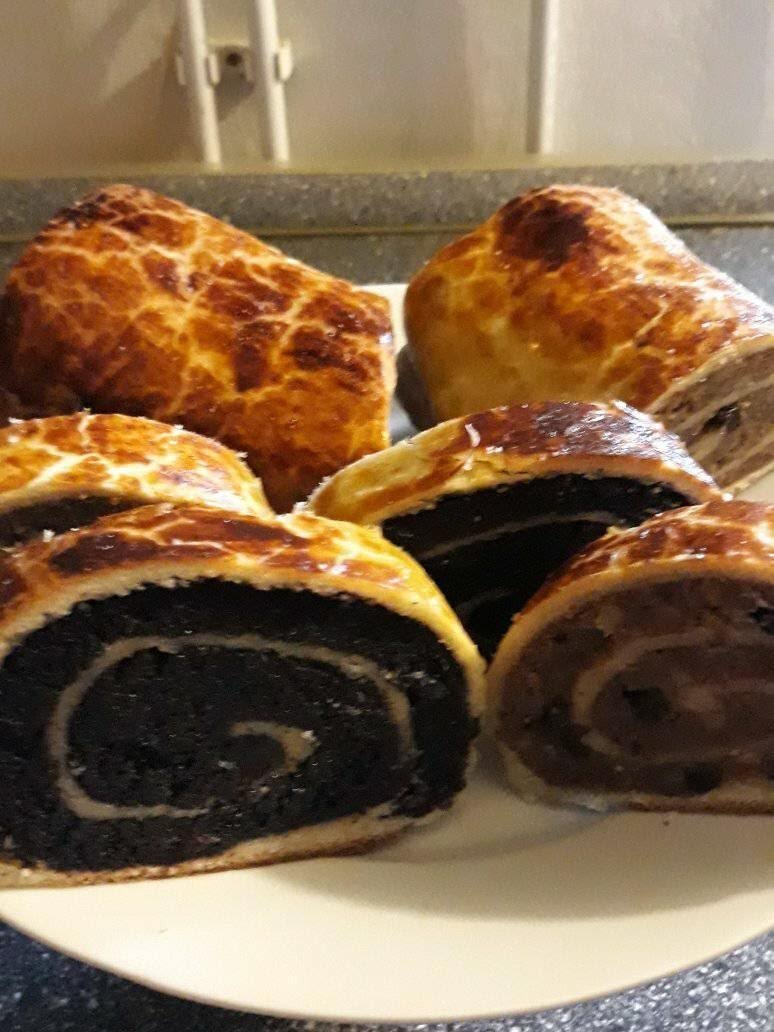
Some traditional methods involve alternating egg yolk and egg white washes, which can contribute to Beigli’s characteristic glossy, slightly marbled appearance.
Prick the surface gently with a fork or skewer in several places. This allows steam to escape during baking and helps reduce the chance of the pastry cracking.
8. Bake Until Golden
Bake the Beigli in a preheated oven until the surface becomes golden brown and the pastry is fully baked.
Allow the rolls to cool completely before slicing.
This is important because the walnut filling needs time to settle.
Why Does Beigli Crack?
One of the most recognizable characteristics of Beigli is its tendency to develop small cracks during baking.
While a heavily cracked roll may indicate problems with the dough, filling, or baking conditions, slight surface cracking is not unusual in traditional Beigli.
Several factors can contribute:
Excess moisture in the filling
Overfilling
Dough rolled too tightly
Insufficient ventilation
Temperature changes during baking
Piercing the dough before baking allows steam to escape and can help control cracking.
Tips for Perfect Hungarian Beigli
Use Finely Ground Walnuts
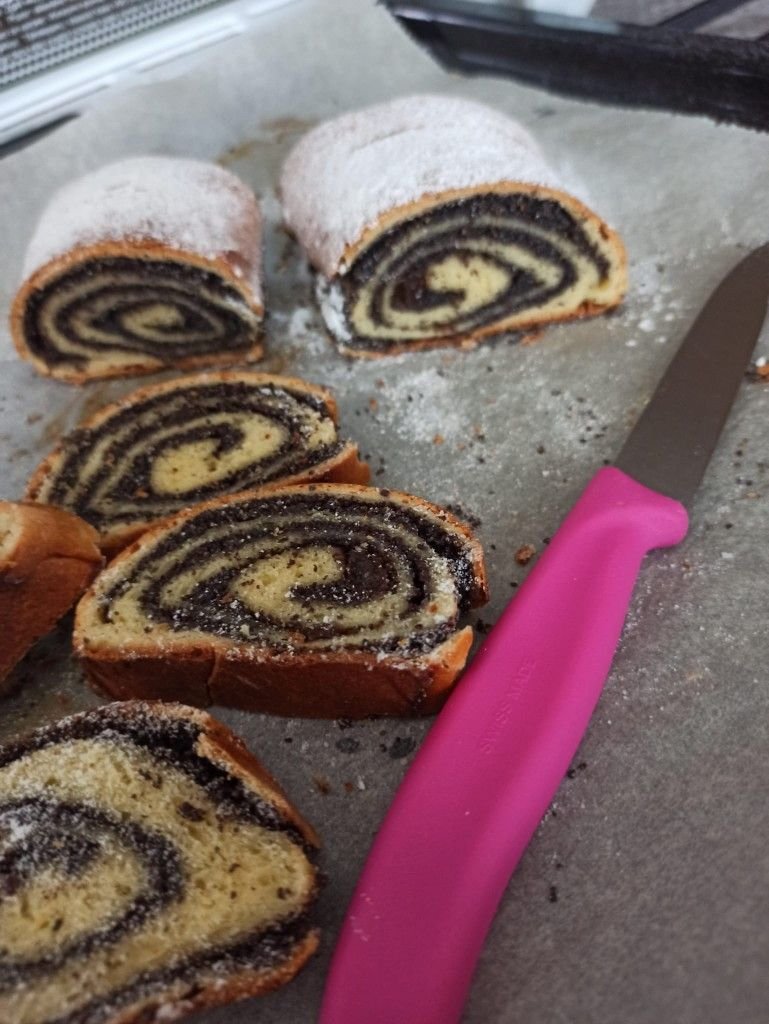
The walnut filling should have a relatively fine texture so it spreads evenly and produces a smooth spiral when sliced.
Keep the Filling Moist
A dry filling can make the pastry crumbly and difficult to roll. However, an excessively wet filling can create too much steam during baking.
The goal is a moist but spreadable consistency.
Don’t Overfill
It can be tempting to add as much walnut filling as possible, but too much can make the pastry difficult to roll and increase the risk of cracking.
Chill the Dough
Cold dough is easier to handle and helps maintain the rich, buttery structure of the pastry.
Let It Cool Before Slicing
Allow Beigli to cool completely before cutting. Use a sharp knife and make clean, gentle cuts to preserve the spiral pattern.
Walnut Beigli vs. Poppy Seed Beigli
While walnut Beigli is extremely popular, mákos beigli, made with poppy seeds, is another traditional Hungarian variety.
The two versions share the same basic pastry structure but have distinctly different fillings.
Walnut Beigli offers a rich, nutty flavor, while poppy seed Beigli has a deeper, slightly earthy character.
Many Hungarian households prepare both varieties during the holidays so guests can choose their favorite.
How to Serve Beigli
Hungarian Beigli is traditionally sliced into relatively thin pieces and served at room temperature.
It pairs beautifully with:
Coffee
Black tea
Hot chocolate
Dessert wine
Festive holiday drinks
The pastry can be served as part of a Christmas dessert table or enjoyed as an afternoon treat throughout the winter.
How to Store Hungarian Beigli
Beigli keeps relatively well when properly stored.
Once completely cooled, wrap it tightly or place it in an airtight container. Store it in a cool, dry place for short-term storage.
It can also be refrigerated for longer storage. Allow refrigerated Beigli to return toward room temperature before serving for the best texture and flavor.
The pastry can also be frozen, making it convenient for holiday preparation.
The Cultural Appeal of Beigli
Few Hungarian pastries capture the feeling of the holiday season quite like Beigli.
Its preparation requires patience, from making the dough and preparing the filling to carefully rolling and baking each pastry. The finished roll is then sliced and shared, making it a dessert that naturally belongs at the center of a family table.
The combination of buttery pastry, fragrant walnuts, citrus zest, and warm spices creates a flavor profile that feels both festive and nostalgic.
Final Thoughts
Hungarian Beigli – or Bejgli – is a timeless walnut roll that represents the warmth of Hungarian holiday baking.
Its delicate pastry, generous walnut filling, and beautiful spiral appearance make it an impressive addition to any dessert table. While traditionally associated with Christmas, this classic Hungarian pastry is delicious enough to enjoy throughout the year.
Whether you are discovering Beigli for the first time or recreating a family tradition, this walnut-filled pastry offers a delicious taste of Hungary—one slice at a time.