Hungarian Chimney Cake (Kürtőskalács): A Traditional Street-Food Classic
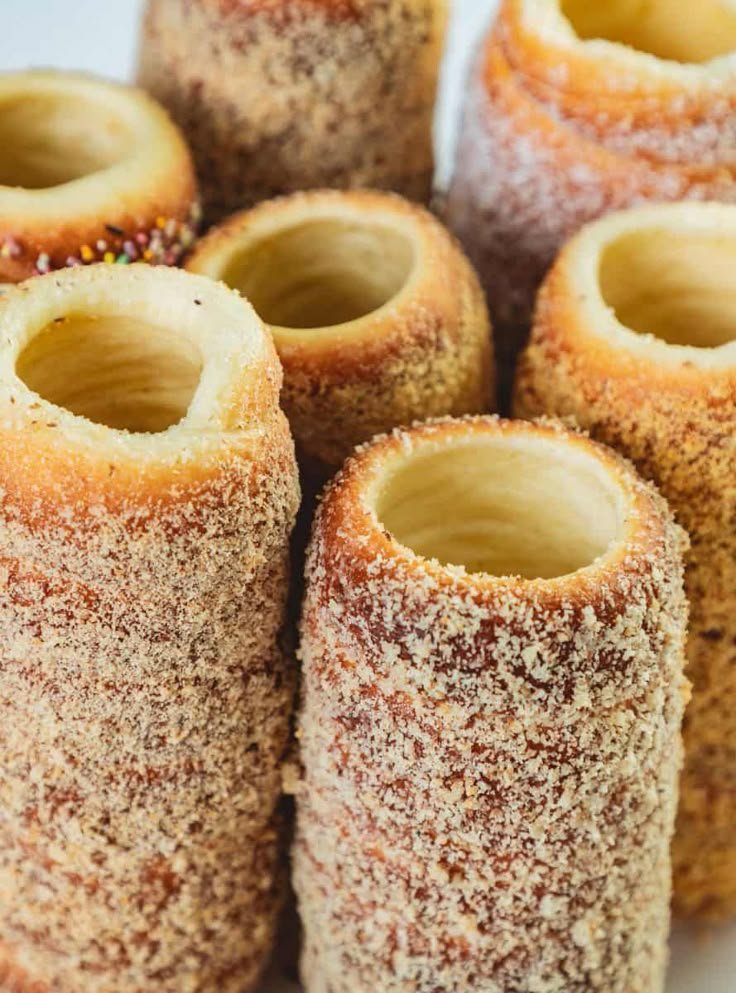
Hungarian Chimney Cake, known as Kürtőskalács, is one of Central Europe’s most recognizable traditional pastries. Made from a sweet, yeast-based dough wrapped around a cylindrical spit, the pastry is baked until golden and caramelized, then coated with sugar and a variety of toppings.
With its crisp, caramelized exterior and soft, fragrant interior, Kürtőskalács is a favorite at Hungarian festivals, markets, fairs, and celebrations.
What Is Kürtőskalács?
The Hungarian word Kürtőskalács is often translated as “chimney cake,” referring to the hollow cylindrical shape created during baking.
Unlike a conventional cake, Kürtőskalács is made from strips of enriched dough. The dough is carefully wrapped around a wooden or metal cylinder, rolled in sugar, and cooked while rotating.
As the pastry bakes, the sugar caramelizes, forming a glossy, crisp coating around the outside. The center remains soft and airy, creating a delicious contrast between textures.
A Traditional Hungarian Specialty
Kürtőskalács has a long culinary history in Central Europe and is particularly associated with Hungarian and Transylvanian traditions.
The pastry became especially popular at fairs and festivals, where it could be prepared fresh in front of customers. Its distinctive shape, aroma, and caramelized crust make it as visually appealing as it is delicious.
Today, Chimney Cake can be found in many Hungarian cities and at cultural events, where it continues to be enjoyed as a freshly baked street-food treat.
Ingredients
Traditional Kürtőskalács requires a relatively simple list of ingredients:
All-purpose flour
Yeast
Milk
Eggs
Butter
Sugar
Salt
Vanilla
Lemon zest, optional
Additional sugar for coating
Ground cinnamon, walnuts, coconut, or other toppings
The dough is enriched with butter, eggs, and milk, giving the finished pastry its characteristic softness and richness.