Hungarian Donuts with Chocolate Cream 🇭🇺 — Szalagos Fánk
How to Make Hungarian Szalagos Fánk
Step 1: Activate the Yeast
Pour the warm milk into a small bowl.
Add about 1 teaspoon of the sugar and sprinkle the yeast over the surface.
Let it stand for approximately 5–10 minutes, until the yeast becomes foamy.
The milk should be warm rather than hot. Excessive heat can damage the yeast.
Step 2: Make the Dough
Place the flour in a large mixing bowl.
Add the remaining sugar and salt.
Make a well in the center and add:
Egg yolks
Melted butter
Vanilla
Optional rum
Lemon zest
Activated yeast mixture
Mix everything together while gradually incorporating the flour.
Knead the dough for approximately 8–10 minutes, either by hand or using a stand mixer with a dough hook.
The finished dough should be soft, smooth, and slightly tacky, but it shouldn’t be extremely sticky.
Step 3: Let the Dough Rise
Place the dough in a lightly greased bowl.
Cover it with a clean kitchen towel or plastic wrap.
Leave it in a warm, draft-free place for approximately 1–1½ hours, or until it has roughly doubled in size.
This first rise is essential for developing the light texture that makes Hungarian fánk so special.
Step 4: Roll Out the Dough
Transfer the risen dough to a lightly floured work surface.
Gently press it down to release excess air.
Roll the dough to approximately ½ inch (1–1.5 cm) thick.
Don’t roll it too thin.
A thicker dough helps produce those wonderfully fluffy centers.
Step 5: Cut the Donuts
Using a round cookie cutter or drinking glass approximately 3 inches (7–8 cm) wide, cut circles from the dough.
Place each round onto a lightly floured tray.
Cover them loosely and allow them to rest for another 20–30 minutes.
This second resting period helps the donuts become lighter and more delicate.
Step 6: Prepare the Chocolate Cream
While the donuts rest, prepare the filling.
Place the chopped chocolate in a heatproof bowl.
Heat the heavy cream in a small saucepan until it is hot and steaming, but don’t bring it to a vigorous boil.
Pour the hot cream over the chocolate.
Let it sit for approximately 2 minutes.
Then whisk gently until completely smooth.
Add powdered sugar, vanilla, and a pinch of salt.
Allow the chocolate cream to cool until it becomes thick enough to pipe.
For a lighter filling, you can refrigerate the mixture until chilled and then whip it briefly until fluffy.
Step 7: Heat the Oil
Pour enough oil into a deep, heavy pot to allow the donuts to float freely.
Heat the oil to approximately 350°F (175°C).
A kitchen thermometer is extremely useful here.
If the oil is too hot, the outside can brown before the center cooks.
If it’s too cool, the donuts can absorb excessive oil.
Step 8: Fry the Donuts
This is where the famous “ribbon” develops.
Carefully place a few donuts into the hot oil without overcrowding the pot.
Traditionally, the donuts are placed into the oil with one side facing downward first.
Cover the pot briefly while the first side cooks.
After approximately 1½–2 minutes, carefully turn the donuts and continue frying until the second side becomes golden.
The exact cooking time depends on the thickness of the dough and the oil temperature.
When finished, transfer the donuts to a paper-lined rack or tray.
Allow excess oil to drain.
What Is the “Ribbon”?
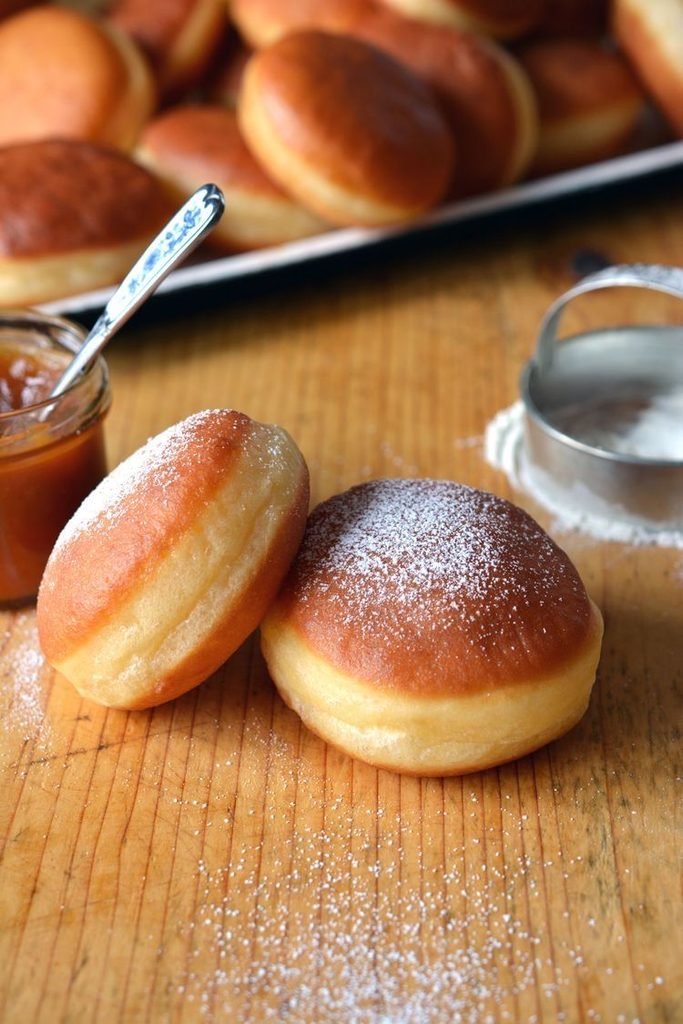
The pale band around the middle is the feature that gives Szalagos Fánk its name.
When the dough is properly proofed and fried at the right temperature, a lighter strip can remain around the center while the upper and lower surfaces become golden.
Getting this effect consistently takes practice.
The important factors include:
Properly risen dough
Correct dough thickness
Adequate resting time
Correct oil temperature
Not overcrowding the pan
Even if your ribbon isn’t perfect, the donuts can still be delicious.
Step 9: Fill the Donuts
Once the donuts have cooled enough to handle, use a piping bag fitted with a long filling tip.
Make a small opening on the side of each donut.
Pipe the chocolate cream into the center.
Don’t overfill them—the goal is a generous creamy center without causing the donut to split.
You can also cut the donuts partially open and spoon the chocolate cream inside.
Step 10: Finish With Powdered Sugar
Arrange the filled donuts on a serving plate.
Dust generously with powdered sugar.
For an extra chocolate finish, add a few chocolate shavings or a thin drizzle of melted chocolate.
Serve while fresh.
Traditional Apricot Jam Variation
Although chocolate cream is delicious, the traditional Hungarian approach often features apricot jam.
To make this version, simply pipe or spoon good-quality apricot jam into the center of each donut.
Finish with powdered sugar.
The combination of fluffy fried dough and slightly tart apricot jam is one of the classic ways Hungarian fánk is enjoyed.
Tips for Perfect Szalagos Fánk
Don’t Add Too Much Flour
A very stiff dough can produce heavy donuts.
Keep the dough soft and knead it until smooth.
Let the Dough Rise Properly
Under-proofed dough can result in dense donuts.
Wait until the dough has visibly expanded before rolling it out.
Don’t Skip the Second Rest
The cut donuts benefit from another short rise before frying.
Watch the Oil Temperature
Around 350°F (175°C) is a useful target, but monitor the oil throughout frying.
Don’t Overcrowd the Pot
Adding too many donuts at once can lower the oil temperature dramatically.
Fry in small batches.
Don’t Fry Them Too Long
Overcooking can make the donuts dry and dark.
How to Store Hungarian Donuts
Szalagos fánk is best the day it is made.
If you have leftovers, keep them covered at room temperature for a short period or refrigerate filled donuts if required by the filling.
Chocolate cream made with dairy should be kept refrigerated.
Because the texture is at its best when fresh, consider making only as many as you expect to serve.
Can You Freeze the Dough?
Yes.
You can freeze portions of yeast dough before frying, although texture is generally best when the dough is freshly prepared.
Another option is to prepare the dough, allow it to rise, shape the donuts, and then freeze them appropriately before their final proof. Thaw them in the refrigerator and allow them to finish rising before frying.
Frequently Asked Questions
Why is my fánk dense?
The most common possibilities are insufficient rising time, yeast that isn’t active, too much flour, or dough that’s been handled incorrectly.
Why don’t I have the famous ribbon?
The ribbon depends on several factors, including proofing, dough thickness, frying temperature, and handling. It can take some practice to achieve consistently.
Can I bake Hungarian donuts instead of frying them?
You can, but the result will be different. Traditional szalagos fánk is fried, and frying creates its characteristic texture and appearance.
Can I fill them with something other than chocolate?
Absolutely. Apricot jam is traditional, while raspberry jam, vanilla pastry cream, hazelnut cream, or other fillings can also work beautifully.
Can I use whole eggs instead of yolks?
You can, but the texture will change. Using egg yolks contributes richness and tenderness to the dough.
🇭🇺 A Hungarian Dessert Worth Sharing
Imagine bringing a plate of warm, golden fánk to the table.
Break one open and reveal the soft, airy interior.
Then comes the chocolate cream—smooth, rich, and slightly bittersweet.
Finish it with a snowfall of powdered sugar.
That’s the beauty of Hungarian Szalagos Fánk.
It’s humble enough for a family kitchen, yet special enough for celebrations and festive gatherings.
Final Thoughts
Szalagos Fánk is much more than an ordinary donut.
Its soft yeast dough, golden exterior, characteristic pale “ribbon,” and rich filling make it one of Hungary’s most memorable traditional sweets.
While apricot jam remains a classic choice, chocolate cream transforms these delicate Hungarian donuts into an irresistible dessert.
🇭🇺 Make them slowly, let the dough rise properly, keep your frying temperature steady, and don’t rush the process. The reward is a plate of light, fluffy, golden Hungarian donuts that disappear almost as quickly as you serve them.