Sleeping on Your Left Side: Fact-Checking Viral Health Claims vs. Scientific Reality
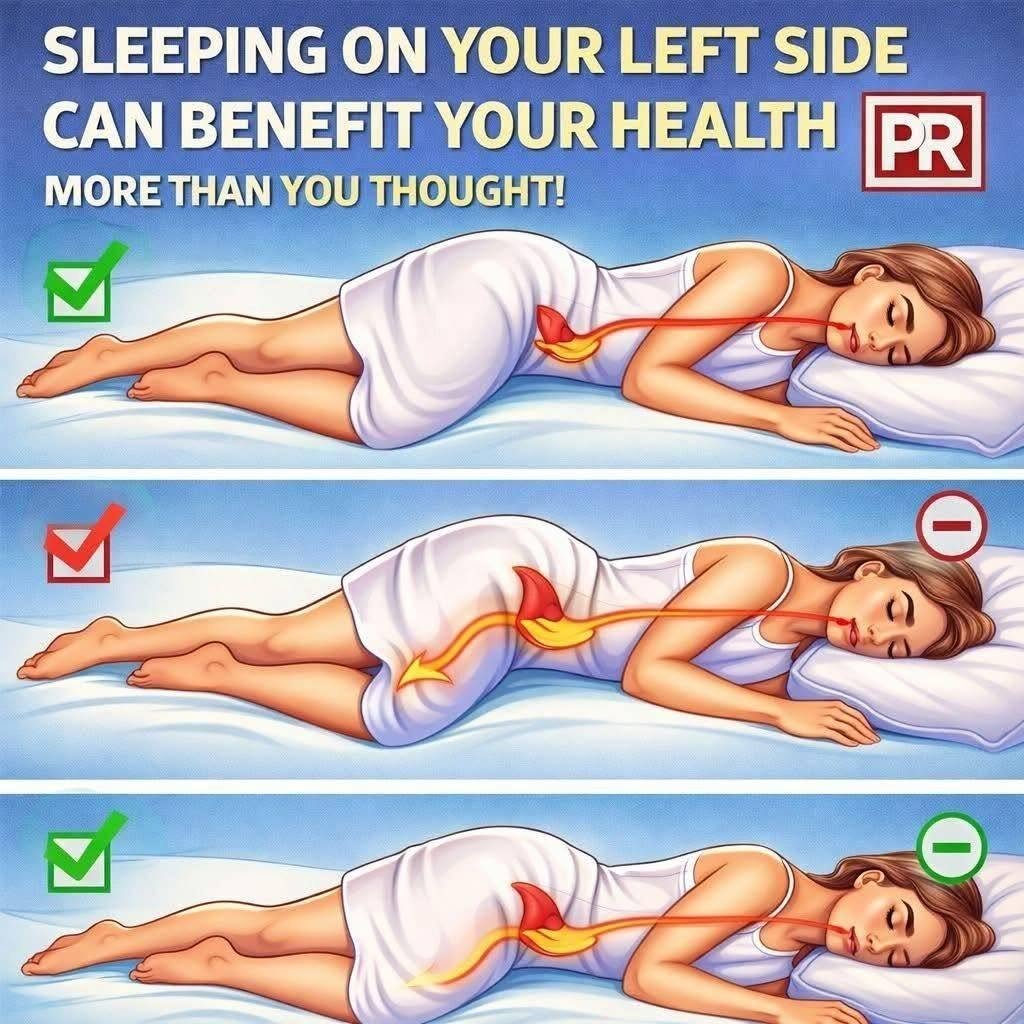
Sleeping on your left side is often presented online as a simple health “hack” that can supposedly improve digestion, protect the heart, detoxify the body, boost circulation, and even prevent serious diseases.
Some of these claims have a small connection to real physiology. Others go considerably beyond the available evidence.
The reality is more nuanced: left-side sleeping can be helpful for certain people and specific conditions, but there is no strong evidence that everyone needs to sleep on their left side to achieve better overall health.
For most adults, comfort, adequate sleep, proper support, and individual medical circumstances matter more than following one universally prescribed sleeping position.
Why Does the Left Side Matter?
The reason left-side sleeping receives so much attention is largely anatomical.
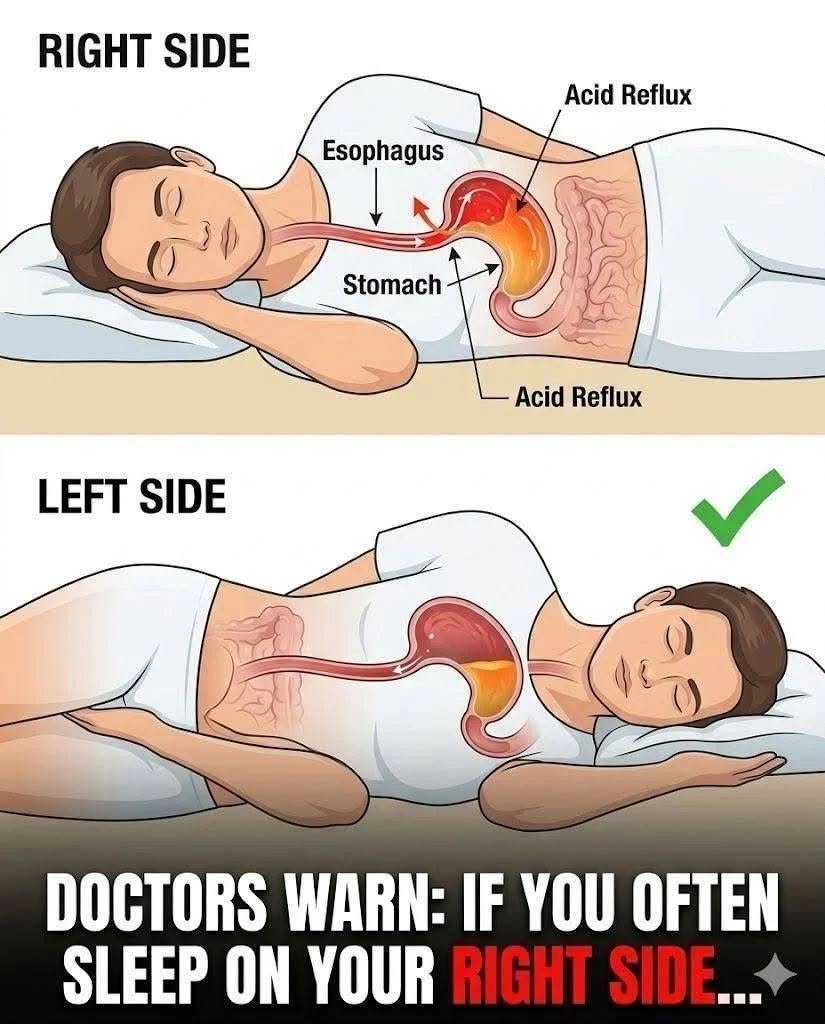
The stomach sits predominantly on the left side of the upper abdomen. Body position can therefore influence how stomach contents interact with the esophagus.
This is particularly relevant to people who experience gastroesophageal reflux disease (GERD) or nighttime heartburn.
Mayo Clinic specifically recommends starting sleep on the left side as one lifestyle measure that may reduce nighttime reflux.
That is a legitimate benefit—but it does not mean left-side sleeping is a cure for digestive disease.
Claim #1: Left-Side Sleeping Reduces Acid Reflux
Verdict: Supported for many people with nighttime reflux.
This is one of the better-supported claims surrounding left-side sleeping.
Research and clinical guidance indicate that sleeping on the left side can reduce exposure to reflux compared with certain other positions. Mayo Clinic recommends starting on the left side for people trying to reduce nighttime GERD symptoms.
Other measures can also matter, including avoiding meals close to bedtime, maintaining a healthy weight when appropriate, and elevating the upper body for people with frequent nighttime symptoms.
So if heartburn regularly wakes you up, experimenting with your left side may be worthwhile.
Claim #2: It Automatically Improves Digestion
Verdict: Overstated.
Because left-side sleeping may reduce acid reflux, it is sometimes promoted online as a way to “improve digestion.”
That is a much broader claim.
There is not good evidence that simply sleeping on your left side dramatically speeds digestion or improves the digestive system in otherwise healthy people.
Your digestive system continues functioning regardless of whether you sleep on your left or right side.
The more accurate statement is that body position can influence reflux symptoms, particularly during sleep.
That is very different from saying left-side sleeping makes your entire digestive system work better.
Claim #3: It Protects the Heart
Verdict: Too broad to be considered a universal health rule.
Social-media posts sometimes claim that everyone should sleep on their left side because the heart is located on the left side of the chest.
This explanation is misleading.
The heart is not simply “compressed” because you lie on your left side, and there is no general medical rule requiring healthy people to sleep exclusively on that side.
In fact, sleep-position recommendations can differ depending on a person’s cardiovascular condition. The Sleep Foundation notes that there is generally no major difference between left- and right-side sleeping for most people, while certain heart conditions may influence which position feels preferable.
If you have a diagnosed heart condition, your own healthcare professional’s advice is more relevant than a general social-media rule.
Claim #4: Left-Side Sleeping Improves Circulation
Verdict: Often exaggerated.
You may see claims that sleeping on the left side “boosts blood flow” throughout the body.
The circulatory system is far more complicated than that.
For healthy adults, there is not strong evidence that choosing the left side at night provides a dramatic, general circulation benefit.
Sleep position can influence cardiovascular and respiratory physiology in specific circumstances, but that does not mean lying on the left side is a universal circulation treatment.
A healthy circulatory system depends much more on overall cardiovascular health, physical activity, blood pressure control, metabolic health, and other established factors.
Claim #5: It Is Better During Pregnancy
Verdict: Side sleeping is important; left-side-only rules are more nuanced.
Pregnancy is one situation where sleep position deserves particular attention.
As pregnancy progresses, healthcare professionals generally recommend side sleeping rather than sleeping flat on the back for prolonged periods. Mayo Clinic notes that side sleeping can be more comfortable during pregnancy and recommends support pillows when needed.
Left-side sleeping has traditionally received particular attention because of concerns about pressure on major blood vessels when lying flat on the back later in pregnancy.
However, pregnant people should not panic if they wake up on their back. The practical goal is to favor a comfortable side position rather than becoming anxious about maintaining a perfectly fixed position throughout the entire night.
Claim #6: It Prevents Sleep Apnea
Verdict: Side sleeping can help, but “left side” is not the key point.
Sleep position can affect obstructive sleep apnea.
For many people with positional sleep apnea, sleeping on either side can reduce airway obstruction compared with sleeping flat on the back. Side sleeping may help keep the upper airway more open and reduce breathing interruptions.
However, there is not a universal rule that the left side is the best side for everyone with sleep apnea.
Some evidence suggests right-side sleeping can also be helpful for certain people.
If someone has loud habitual snoring, witnessed breathing pauses, gasping during sleep, or significant daytime sleepiness, changing sleep position should not replace medical evaluation for sleep apnea.
Claim #7: It Detoxifies the Body
Verdict: Not supported.
One of the more dramatic viral claims is that sleeping on the left side activates the body’s “detox system.”
This is an oversimplification.
Your liver, kidneys, lungs, digestive tract, and other systems already perform complex processes involved in metabolism and elimination of waste. There is no established evidence that sleeping on the left side provides a special overnight detoxification effect.
A healthy sleep schedule supports overall health, but that is very different from claiming that one sleep position “flushes toxins” from the body.
Claim #8: Everyone Should Sleep on the Left
Verdict: False.
There is no universal sleeping position that is ideal for every adult.
The Sleep Foundation notes that for most people, left- and right-side sleeping can both provide appropriate spinal alignment when the mattress and pillow provide adequate support.
Individual circumstances matter.
Someone with reflux may prefer the left side. Someone with shoulder pain may find one side uncomfortable. Another person may sleep more comfortably on their back.
And if a particular position causes pain or repeatedly disrupts sleep, forcing yourself to maintain it may be counterproductive.
How to Sleep Comfortably on Your Side
If you prefer side sleeping, a few simple adjustments can improve comfort.
Choose an Appropriate Pillow
Your pillow should keep your head and neck reasonably aligned with the rest of your spine.
A pillow that is too low or too high can contribute to neck discomfort.
Place a Pillow Between Your Knees
For people with back discomfort, placing a pillow between the knees can help keep the spine, pelvis, and hips in better alignment. Mayo Clinic specifically recommends this approach for side sleepers with back pain.
Support Your Body
A full-length body pillow can make side sleeping more comfortable, particularly during pregnancy.
Don’t Ignore Pain
If sleeping on one side consistently causes shoulder, hip, neck, or back pain, consider changing your position or improving your pillow and mattress support.
What About People With Reflux?
For people with nighttime GERD, left-side sleeping can be particularly useful.
Mayo Clinic also recommends elevating the head of the bed by approximately 6–9 inches for people with frequent nighttime heartburn. Simply adding several pillows under the head may not provide the same benefit as properly elevating the upper body.
Avoiding meals shortly before bedtime can also help some people.
If reflux is frequent, severe, or associated with difficulty swallowing, unexplained weight loss, vomiting, bleeding, or persistent chest discomfort, medical evaluation is appropriate.
The Bigger Picture: Sleep Quality Matters Most
It is easy to become obsessed with finding the “perfect” sleep position.
But sleep health involves much more than whether you are lying on your left or right side.
Consistent sleep timing, sufficient sleep duration, a comfortable sleep environment, appropriate physical activity, and management of conditions such as sleep apnea or chronic pain are all important.
A theoretically ideal position is not very useful if it prevents you from sleeping comfortably.
Final Thoughts
Sleeping on your left side is not a miracle health technique—but it is not merely an internet myth either.
There are legitimate reasons some people benefit from it. Nighttime acid reflux is one of the clearest examples, and side sleeping can also be useful for people whose sleep apnea is worse when lying on their backs.
Pregnancy is another situation where side sleeping becomes particularly relevant.
But claims that left-side sleeping universally detoxifies the body, dramatically improves circulation, protects the heart, or guarantees better digestion are not supported by strong evidence.
The most sensible approach is to treat sleep position as an individual factor rather than a one-size-fits-all health rule.
If sleeping on your left side feels comfortable and helps with reflux or another specific problem, there is a good reason to keep doing it. If you sleep comfortably on your right side, there is generally no need to force yourself to switch simply because a viral post says you should.