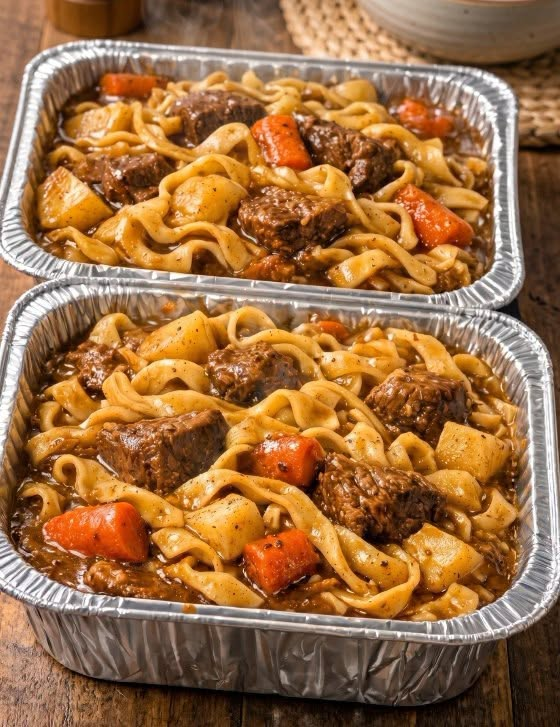
The image presents a deeply comforting sight: two foil pans filled with tender chunks of beef, thick egg noodles, and softened carrots, all bathed in a rich, dark gravy. There is no garnish, no fussy plating—just honest, stick-to-your-ribs food. The accompanying text frames this not as a gourmet creation, but as a survival tactic: a “genius pantry meal” that a father lived off during his college years because it required “almost zero effort.” The promise is simple and powerful: just three ingredients, combined, yield a massive, satisfying meal.
This is the kind of recipe that resonates because it understands the realities of tight budgets, limited time, and the deep human need for something warm and filling at the end of a long day. It sits at the intersection of culinary pragmatism and nostalgia. But what exactly is this three-ingredient wonder? The visual evidence points to a classic combination that has been a staple in American kitchens for decades: beef, egg noodles, and a can of condensed soup or a packet of onion soup mix. This article will explore the history of this type of convenience cooking, the science of why it works so well, and how to execute the recipe with variations that elevate it from a survival meal to something you would genuinely crave.