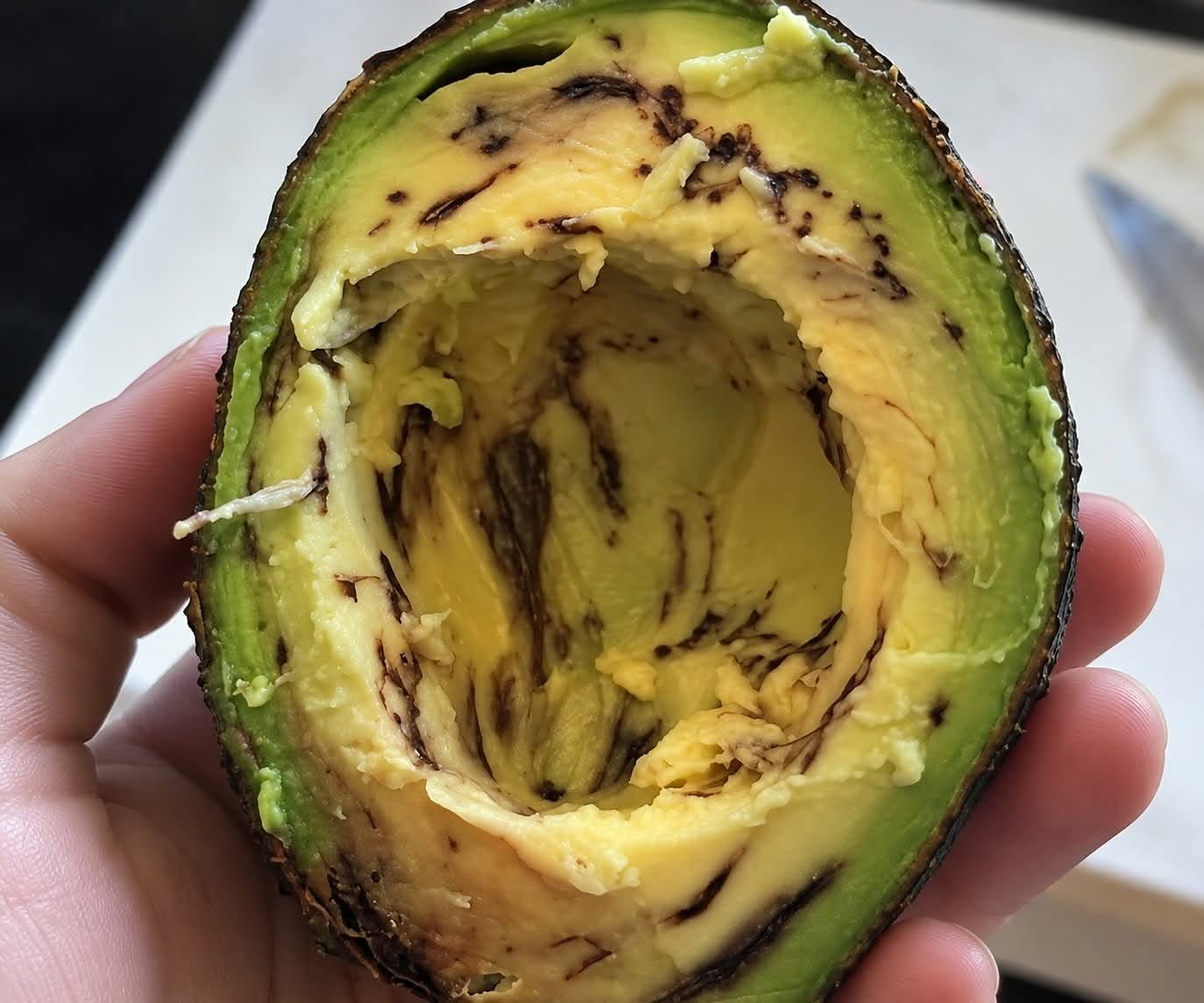
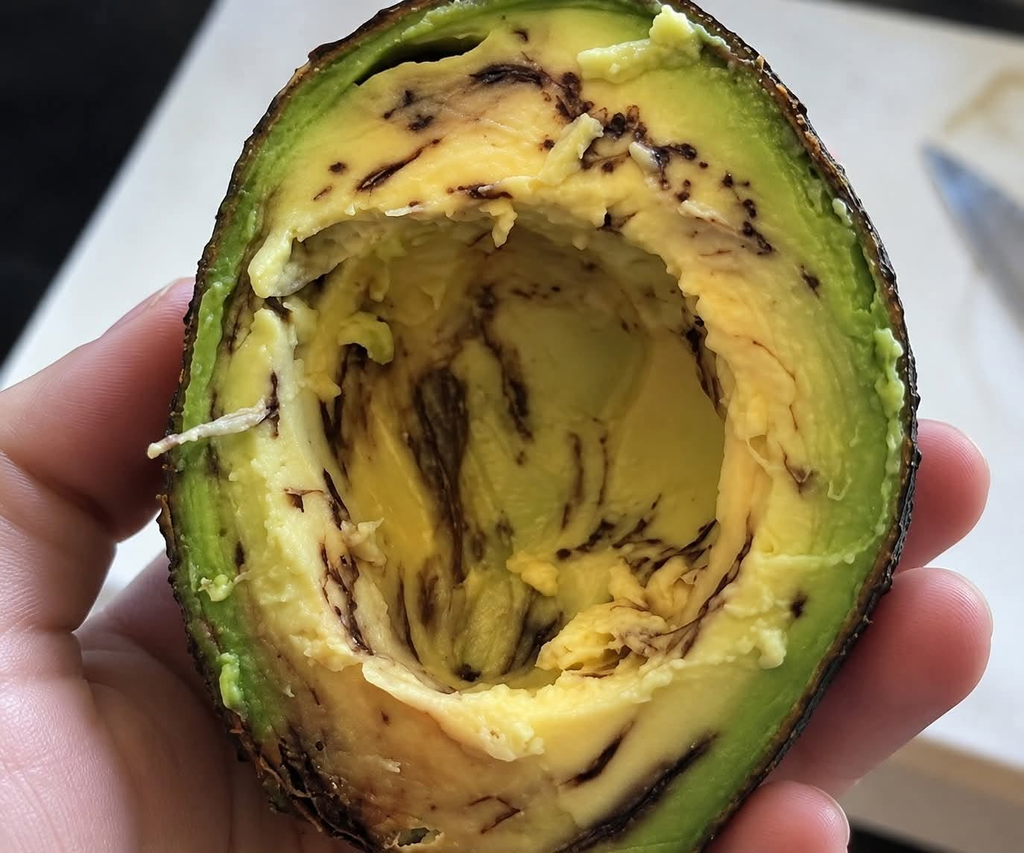
Cutting into a perfectly ripe avocado only to find dark, streaky lines or black spots snaking through the flesh is a uniquely disappointing experience. The image captures this exact moment: a hand holding a halved avocado whose interior is marred by an extensive network of blackened fibers and darkened patches, giving the fruit a distinctly unappetizing appearance. For many people, the immediate assumption is that the avocado has spoiled and should be thrown away. That assumption is not always correct, but it is not always wrong either.
The truth about black spots and dark streaks in avocados is more nuanced than most consumers realize. These discolorations can arise from several distinct causes, ranging from entirely harmless physiological processes to genuine microbial spoilage. The key to making a safe decision lies in understanding the difference between a cosmetic defect and a food safety hazard. This article will examine the science behind avocado discoloration, explain why some black spots are perfectly safe to eat while others signal rot, and provide clear, evidence-based guidance for evaluating the avocado in your own kitchen.