To understand why avocados develop black spots and streaks, it helps to know what you are actually looking at. The dark lines visible in the flesh are not random; they follow the fruit’s internal structure. The most common cause of black streaks is the discoloration of vascular bundles, the tiny channels that transport water and nutrients throughout the avocado . These bundles run through the flesh in patterns that connect the stem to the seed and the outer skin.
When the avocado experiences stress—whether from cold temperatures, physical impact, or simply advancing age—the tissues in these vascular bundles can oxidize and turn dark. This oxidation is a chemical reaction similar to what happens when a cut apple turns brown. It is a cosmetic change, not necessarily a sign of decay. Healthline notes that some avocados, particularly those harvested from young trees, may naturally develop dark streaks even though they are not rotten .
Cold Injury: The Most Common Culprit
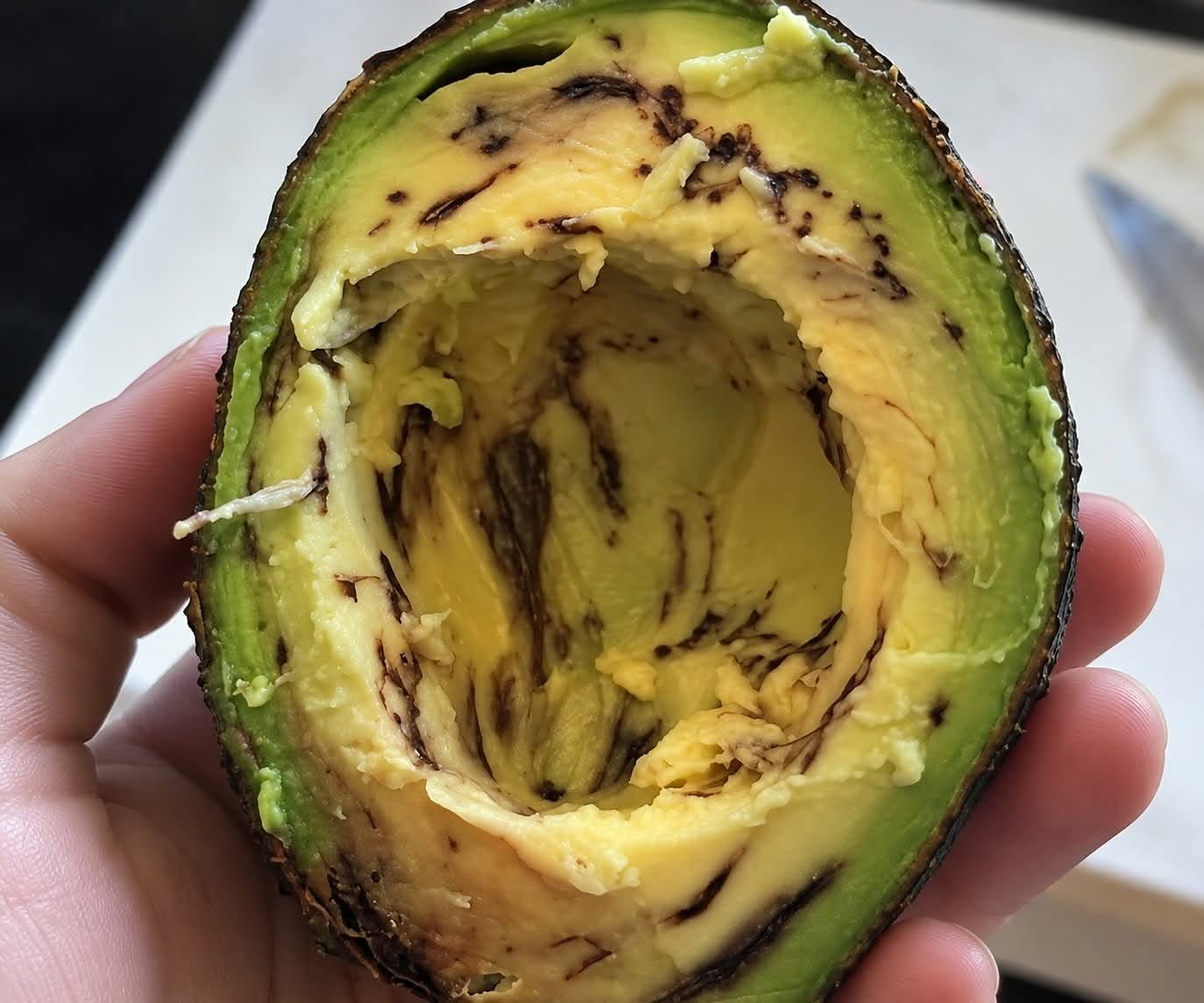
The avocado in the image displays a pattern that strongly suggests chilling injury, also known as cold damage. Avocados are tropical fruits and are sensitive to temperatures below roughly 5°C (41°F). When stored in a refrigerator that is too cold for too long, the fruit’s cells can rupture, leading to the formation of black spots, dark streaks, and sometimes hollow cavities within the flesh .
The Hass Avocado Board identifies prolonged cold storage as a major contributor to internal discoloration, describing a condition called “Grey Pulp” or internal browning that becomes more pronounced in ripe fruits . Importantly, chilling injury itself does not make the avocado unsafe to eat. It affects the texture and appearance, but the fruit remains safe as long as no secondary spoilage has occurred . The dark fibers in the image are consistent with this type of physiological damage rather than microbial rot.
When Black Spots Signal Spoilage
While many discolorations are harmless, there are clear warning signs that an avocado has crossed the line from cosmetically imperfect to genuinely spoiled. The most reliable indicators are smell and texture, not appearance alone.
An avocado that has begun to rot will typically emit an off odor—sour, fermented, or simply “wrong.” The flesh may become excessively soft, mushy, or watery, losing the buttery consistency of a healthy fruit. If the black discoloration is widespread and accompanied by a slimy or stringy texture, the avocado should be discarded . Visible mold, whether white, green, or black, is an unambiguous sign that the fruit is no longer safe to eat.
Fungal pathogens such as Colletotrichum gloeosporioides, the organism responsible for anthracnose, can cause sunken, black lesions that spread through the pulp. According to the University of California’s Integrated Pest Management program, decayed pulp initially remains firm but becomes soft and putrid as the infection advances . This is distinctly different from the localized, dry-looking black streaks of vascular discoloration. When rot is caused by pathogens, the decay typically spreads in a pattern from the skin inward, and the affected tissue becomes mushy rather than merely discolored.
The Role of Oxygen and Enzymes
It is also worth distinguishing between discoloration that occurs inside the whole fruit and browning that happens after the avocado is cut. When you slice an avocado and expose the flesh to air, enzymes called polyphenol oxidases react with oxygen to produce brown pigments. This surface browning is a normal chemical reaction and does not indicate spoilage . The black streaks in the image, however, are internal and follow the fruit’s vascular structure, suggesting a pre-existing physiological issue rather than simple surface oxidation.