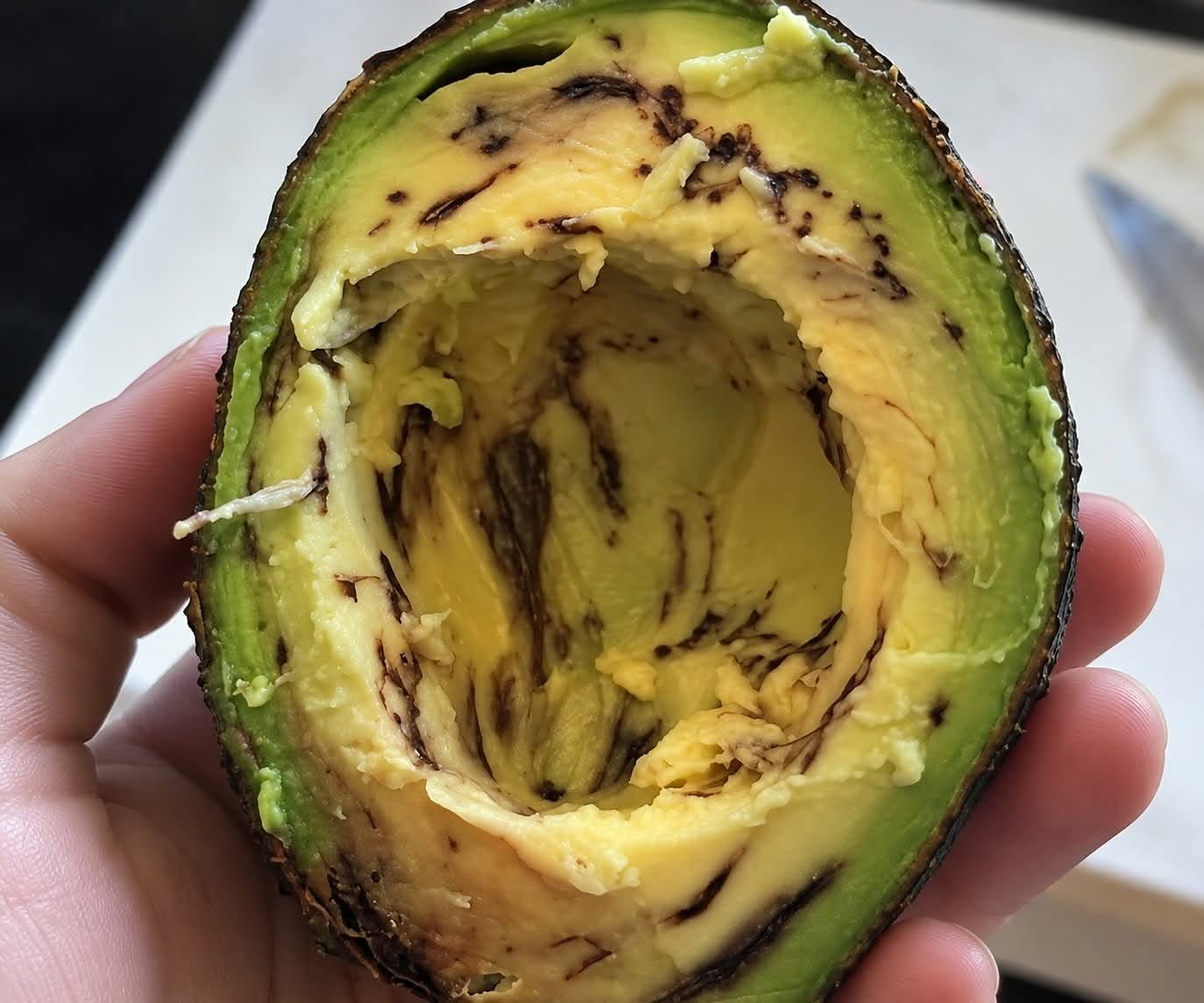
When faced with an avocado like the one in the image, the decision of whether to eat it should follow a simple, sequential process. First, smell the fruit. A fresh avocado has a mild, almost neutral aroma. Any hint of sourness, fermentation, or decay is a red flag. Second, feel the texture. The flesh should be soft but intact, not liquefied or slimy. If the avocado holds its shape when gently pressed and the discolored areas are firm rather than mushy, the fruit is likely still safe.
Third, taste a small amount of the unaffected flesh. If it tastes clean and buttery, the discoloration is almost certainly cosmetic. If it tastes bitter, sour, or otherwise “off,” discard the entire fruit . The presence of black streaks alone, without accompanying off-flavors or odors, is not sufficient reason to throw the avocado away. Many people simply cut around the darkened portions and enjoy the rest of the fruit without issue.
Why Some Avocados Are More Prone to Discoloration
Not all avocados are equally likely to develop these internal defects. The variety, growing conditions, and handling after harvest all play a role. Hass avocados, the most commonly sold variety in many markets, are known to be particularly susceptible to browning after the flesh is cut, though internal vascular discoloration can affect other varieties as well . Fruit harvested from young trees may be more likely to show dark streaks even when perfectly sound . Storage temperature is the single most controllable factor: keeping avocados at the proper temperature—neither too warm nor too cold—minimizes the risk of chilling injury.
Conclusion
The black spots and dark streaks in the avocado pictured are most likely the result of chilling injury or natural vascular discoloration, not spoilage. These cosmetic defects affect the fruit’s appearance and sometimes its texture, but they do not inherently make it unsafe to eat. The critical distinction lies in the accompanying signs: an avocado with black streaks that smells normal and has a firm, non-slimy texture is generally fine to consume after removing the discolored portions. An avocado with widespread blackening, a sour or fermented odor, mushy flesh, or visible mold should be discarded without hesitation.
Understanding the difference between a harmless physiological defect and genuine rot empowers consumers to reduce food waste without compromising food safety. The next time you cut into an avocado and find dark lines running through the flesh, take a moment to smell it and feel its texture before making a judgment. In many cases, the fruit is perfectly good—just a little bruised by its journey from the tree to your kitchen.
Frequently Asked Questions
1. Are black streaks inside an avocado safe to eat? In most cases, yes. Black streaks are typically discolored vascular bundles caused by oxidation, chilling injury, or natural aging. If the avocado smells normal and the flesh is not slimy or mushy, it is safe to eat after cutting away the darkened portions .
2. What causes the black spots in avocados? The most common causes are chilling injury from refrigerator temperatures that are too cold, natural oxidation of vascular tissues, and over-ripeness. Less commonly, fungal infections can cause black lesions, but these are usually accompanied by soft, putrid flesh and off odors .
3. How can I tell if an avocado with black spots is rotten? Smell and texture are the most reliable indicators. A rotten avocado will have a sour, fermented, or unpleasant odor and the flesh will be mushy, watery, or slimy. If there is visible mold or the black discoloration is widespread and the fruit smells wrong, discard it .
4. Can I just cut around the black parts and eat the rest? Yes, if the rest of the avocado looks and smells normal. Many people simply remove the discolored sections and enjoy the unaffected flesh. However, if the black areas are extensive or the fruit has an off odor, it is safer to discard the entire avocado.
5. Why do some avocados get black streaks and others don’t? Susceptibility depends on the variety, growing conditions, harvest timing, and storage. Hass avocados are prone to certain types of browning, and fruit from young trees may develop dark streaks naturally. Proper storage temperature is the most important factor in preventing chilling injury .
6. Does refrigeration cause black spots in avocados? Yes, if the temperature is too low. Avocados are tropical fruits and are sensitive to cold. Prolonged storage below approximately 5°C (41°F) can cause chilling injury, which manifests as black spots, dark streaks, and sometimes hollow areas in the flesh .
7. Is it safe to eat an avocado that has turned black after being cut? Surface browning after cutting is caused by oxidation and is harmless. If the avocado was properly refrigerated and shows no signs of mold or off odor, the browned surface can be scraped away and the rest of the fruit eaten. However, if it has been left at room temperature for an extended period, bacterial growth may be a concern .
8. What is the best way to store avocados to prevent black spots? Store whole avocados at room temperature until ripe, then move them to the refrigerator if you need to extend their shelf life. Avoid storing them in the coldest parts of the fridge, where they may suffer chilling injury. Once cut, wrap tightly or store in an airtight container with lemon juice to minimize oxidation .