The Truth About the “16-Hour Knee Gel” Claim: What Seniors Need to Know About Joint Health
This is one of the most important questions consumers should ask.
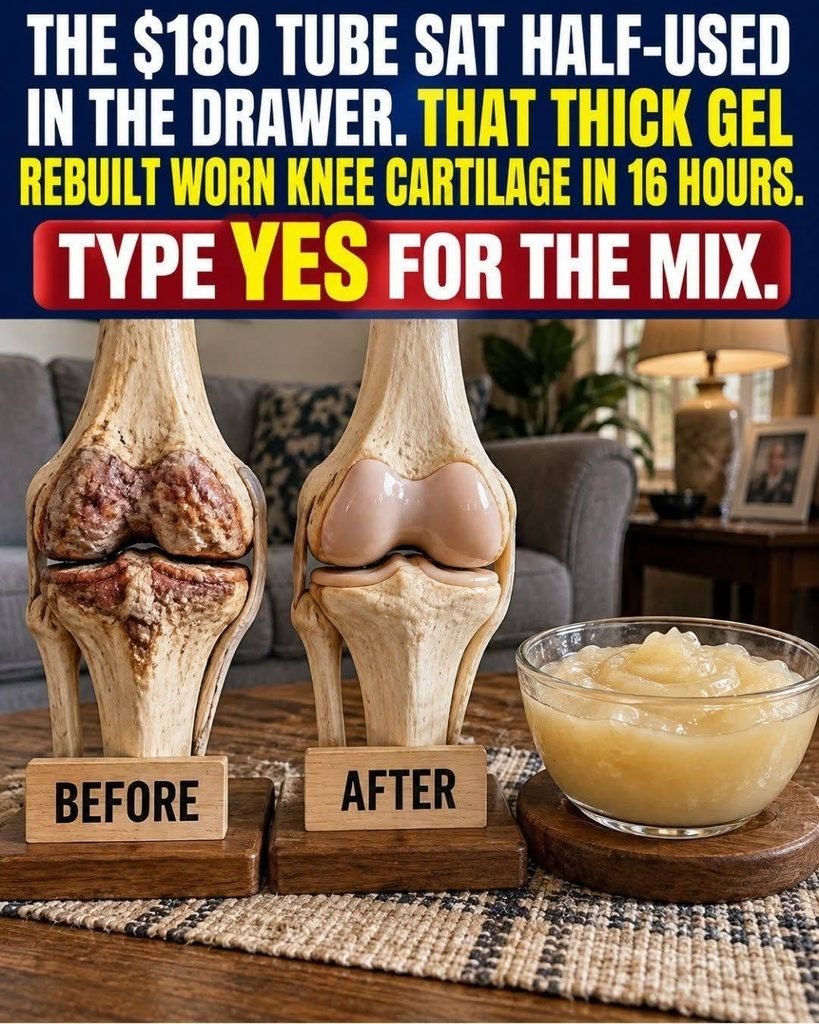
A pain-relieving topical gel should not be assumed to regenerate cartilage.
Osteoarthritis involves structural changes within the joint, and current treatments generally focus on reducing symptoms and improving function rather than simply reversing established joint damage.
Topical medications can help some people move with less pain, but that is different from repairing the underlying joint.
Claims that a topical product can “rebuild,” “restore,” or “reverse” knee cartilage should therefore be examined carefully and supported by credible clinical evidence.
What About Seniors?
Older adults deserve particular care when choosing pain treatments.
Oral NSAIDs can cause gastrointestinal, cardiovascular, kidney, and other adverse effects, with risks depending on the individual and the medication. Topical NSAIDs may reduce some systemic exposure compared with oral treatment, although the medication can still enter the bloodstream and is not risk-free.
This makes it important for older adults to consider their complete medical history.
Someone taking blood thinners, aspirin, or other medications—or someone with kidney, heart, stomach, or other medical problems—should discuss appropriate pain treatment with a healthcare professional.
Follow the Directions Carefully
A common mistake is assuming that applying more gel will provide more relief.
That is not necessarily true.
For topical diclofenac products, dosing depends on the affected joint and the specific formulation. FDA labeling for diclofenac sodium topical gel includes specific application amounts and frequency, and warns against exceeding the recommended total dose.
Topical medication should generally be applied only to the recommended area and to intact skin. It should not be placed on cuts, wounds, infections, or irritated skin.
Consumers should always follow the instructions for the exact product they are using.
What Really Helps Knee Osteoarthritis?
Medication can be useful, but it is only one component of managing chronic knee problems.
Regular Physical Activity
Appropriate movement can help maintain joint function and muscle strength.
Walking, swimming, cycling, and other low-impact activities may be easier on painful knees than high-impact exercise.
Strength Training
Strengthening the muscles around the knee can help support movement and function.
A physical therapist can develop exercises appropriate for an individual’s condition, mobility, and fitness level.
Weight Management
For people who are overweight, gradual weight loss can reduce mechanical stress on weight-bearing joints and may improve osteoarthritis symptoms.
This should be approached as a long-term health strategy rather than through extreme diets.
Physical Therapy
Physical therapists can work on strength, flexibility, balance, and movement patterns.
For some people, improving the way the knee and surrounding muscles function can be just as important as pain medication.
Heat and Cold
Heat can help with stiffness, while cold may temporarily reduce pain and swelling for some people.
The appropriate choice depends on the symptoms and individual response.
These approaches are among the non-drug strategies commonly recommended for managing knee osteoarthritis.
When Should Knee Pain Be Evaluated?
Persistent knee pain should not automatically be blamed on aging.
Medical evaluation is particularly important when pain is severe, progressively worsening, follows a significant injury, or interferes substantially with walking or everyday activities.
Swelling, redness, warmth, fever, instability, or an inability to put weight on the leg can also warrant prompt assessment.
A healthcare professional can determine whether the problem is osteoarthritis or another condition and recommend an appropriate treatment plan.
The Bottom Line on the “16-Hour” Claim
A long-lasting pain-relief claim does not automatically mean that a knee gel is ineffective—but it also does not prove that the product treats the underlying joint problem.
Look at the active ingredient, not just the marketing headline.
A topical NSAID such as diclofenac has evidence for relieving osteoarthritis pain in the knee, but it is a symptom treatment rather than a cartilage-rebuilding therapy. Other topical ingredients work differently, and the evidence supporting them varies.
For seniors, the safest approach is to consider topical products as one possible component of a broader joint-health strategy that can include physical activity, strength training, weight management when appropriate, physical therapy, and individualized medical care.
Final Thoughts
The promise of a “16-hour knee gel” can be attractive when chronic pain interferes with walking, sleeping, or everyday activities. But effective joint care requires looking beyond advertising language.
Some topical treatments genuinely can reduce knee pain. What they generally cannot do is magically restore a damaged joint or eliminate the underlying cause of chronic arthritis.
For older adults, understanding the active ingredient, following dosing instructions, considering medication interactions and health conditions, and combining appropriate pain relief with movement and strengthening can provide a much more realistic approach to long-term joint health.
The goal should not simply be to cover up knee pain—it should be to understand why the knee hurts and use evidence-based strategies to preserve mobility and quality of life.