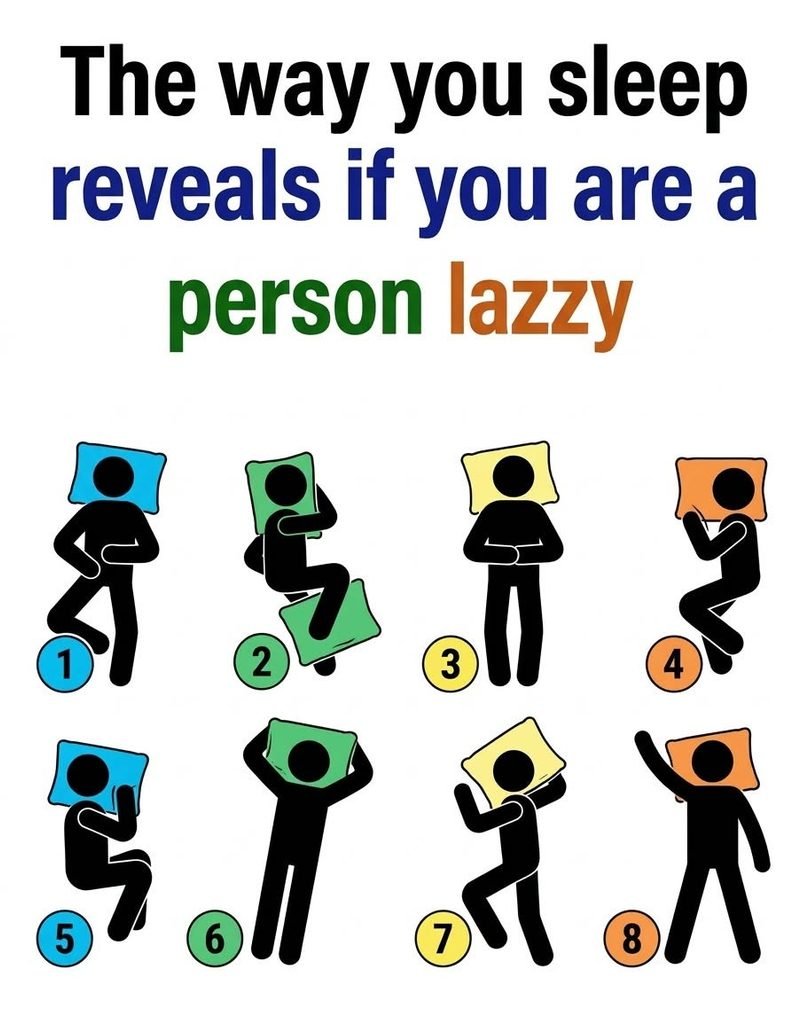
The Way You Sleep Reveals If You Are a Lazy Person
Stomach sleeping is another common position, although it can place additional strain on the neck because the head usually needs to remain turned to one side.
People who prefer this position may simply find it comfortable based on their individual body shape and sleeping habits.
Again, there is no scientific basis for concluding that stomach sleepers are more or less lazy than people who sleep in other positions.
The “Fetal” Position
The fetal position involves sleeping on the side with the knees drawn toward the chest. It can provide a feeling of comfort and warmth and is particularly common among people who naturally prefer curled-up sleeping positions.
Although popular personality theories sometimes attach specific characteristics to fetal sleepers, these interpretations should be viewed as entertainment rather than established psychological science.
What Sleep Habits Can Actually Tell Us
While sleeping position cannot reliably reveal whether someone is lazy, sleep behavior can provide useful information about sleep health.
For example, consistently feeling exhausted during the day, needing excessive amounts of sleep, frequently waking during the night, or struggling to fall asleep may indicate that something is interfering with sleep quality.
Stress, irregular schedules, medications, caffeine, alcohol, medical conditions, and sleep disorders can all influence how well someone sleeps.
Is Laziness Really the Right Explanation?
It is also important to distinguish between laziness and fatigue.
Someone who spends a lot of time in bed may not necessarily lack motivation. They could be recovering from insufficient sleep, experiencing stress, working irregular hours, or dealing with a health issue.
Sleep is a biological necessity, not a measure of productivity or character.
Getting enough high-quality sleep is essential for concentration, memory, emotional regulation, physical performance, and overall health.
The Bottom Line
Your sleeping position may tell you something about comfort and personal sleep habits, but it cannot reliably determine whether you are a lazy person.
Claims connecting specific sleeping positions with personality traits are popular because they are entertaining and easy to share, but they should not be confused with scientific assessments.
Instead of judging yourself—or someone else—by the way they sleep, pay attention to the factors that matter more: sleep duration, sleep quality, daytime alertness, and overall well-being.
Sometimes, sleeping longer isn’t laziness at all. It may simply mean your body needs rest.