What are the metal teeth on kitchen scissors called?
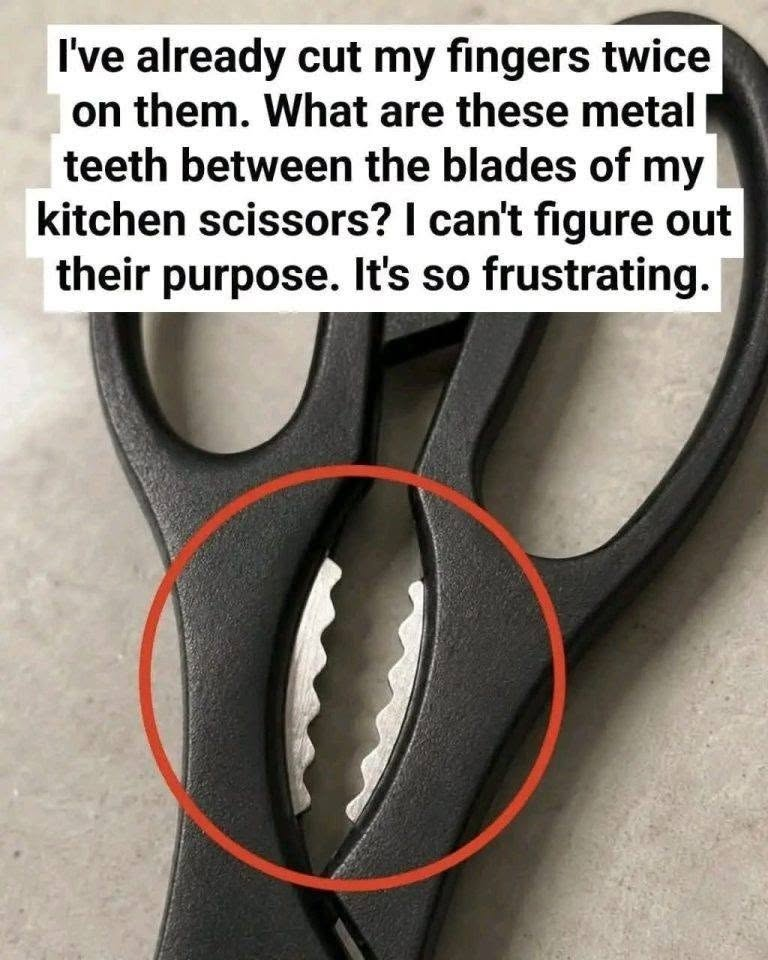
They are commonly referred to as the “bone notch,” “serration-grip,” “nutcracker,” or “cracker teeth” .
Can I use the teeth to open a wine bottle?
The teeth are not designed to remove corks from wine bottles. They are best suited for gripping and twisting screw caps, jar lids, and bottle caps .
Are the teeth safe to use on raw meat?
Yes, but you must clean the scissors thoroughly afterward. The teeth can grip bones and meat, but raw juices can harbor bacteria, so wash with hot, soapy water immediately after use.
Will using the teeth damage my scissors?
For sturdy kitchen shears, using the teeth for their intended purposes (cracking nuts, gripping lids, breaking small bones) will not cause damage. However, using lightweight scissors for heavy-duty tasks like cracking hard shells may bend the pivot or dull the teeth .
Can I use the teeth to crack crab legs?
Yes, the teeth are excellent for cracking crab and lobster shells. Crack the shell with the grip first, then use the blades to cut it open .
Do all kitchen scissors have this feature?
No. The serrated grip is a feature of multi-purpose kitchen shears, not all scissors. Check your tool to see if it has the distinct set of teeth between the handles .
How do I clean the teeth properly?
Use a small brush or toothpick to remove debris from between the teeth, then wash with hot, soapy water. If your scissors come apart, separate the blades for a more thorough cleaning .
What is the difference between the teeth and the serrated blade?
The teeth between the handles are for gripping and cracking. The serrations along the cutting edge are for holding slippery food in place while cutting .