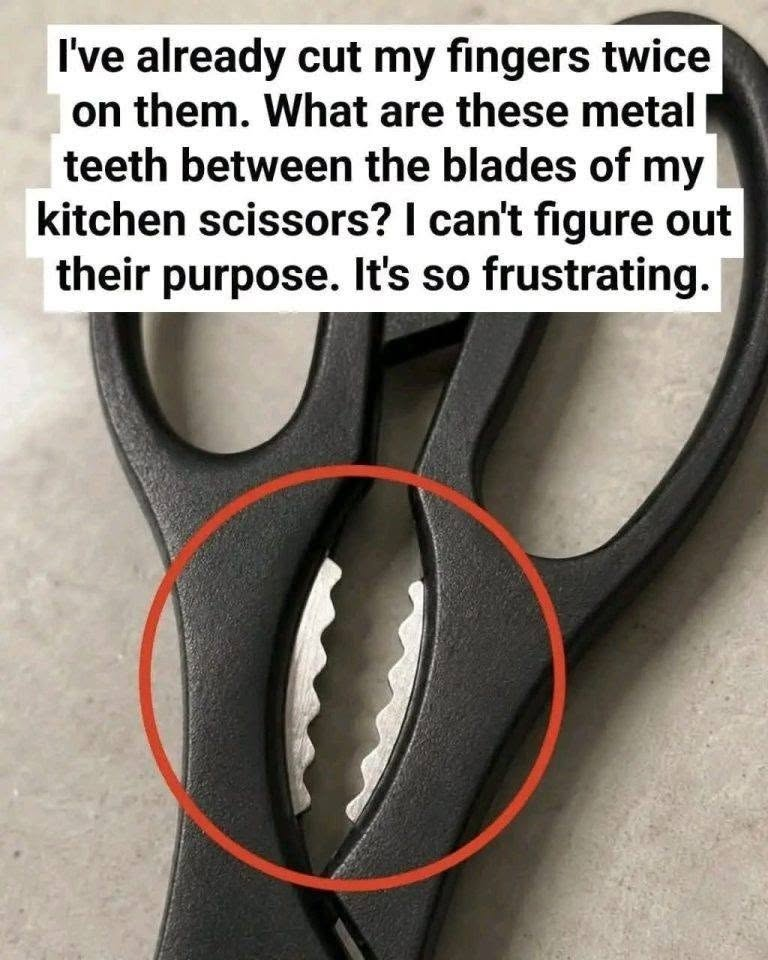
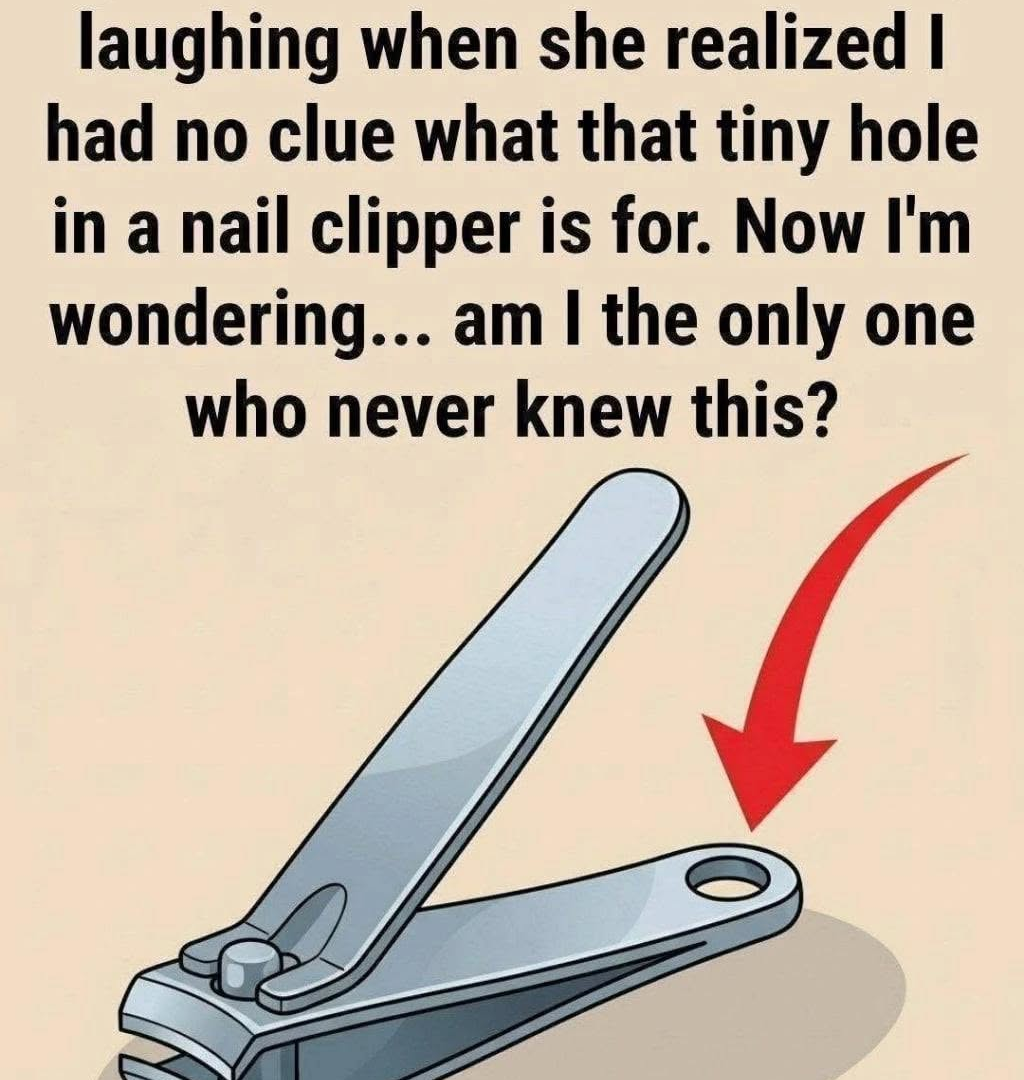
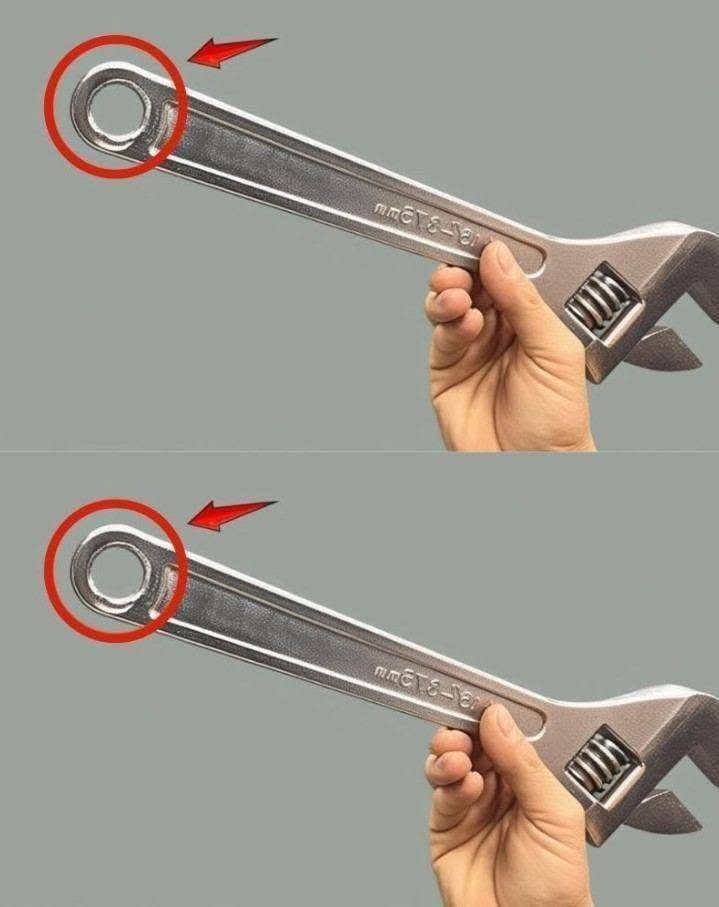
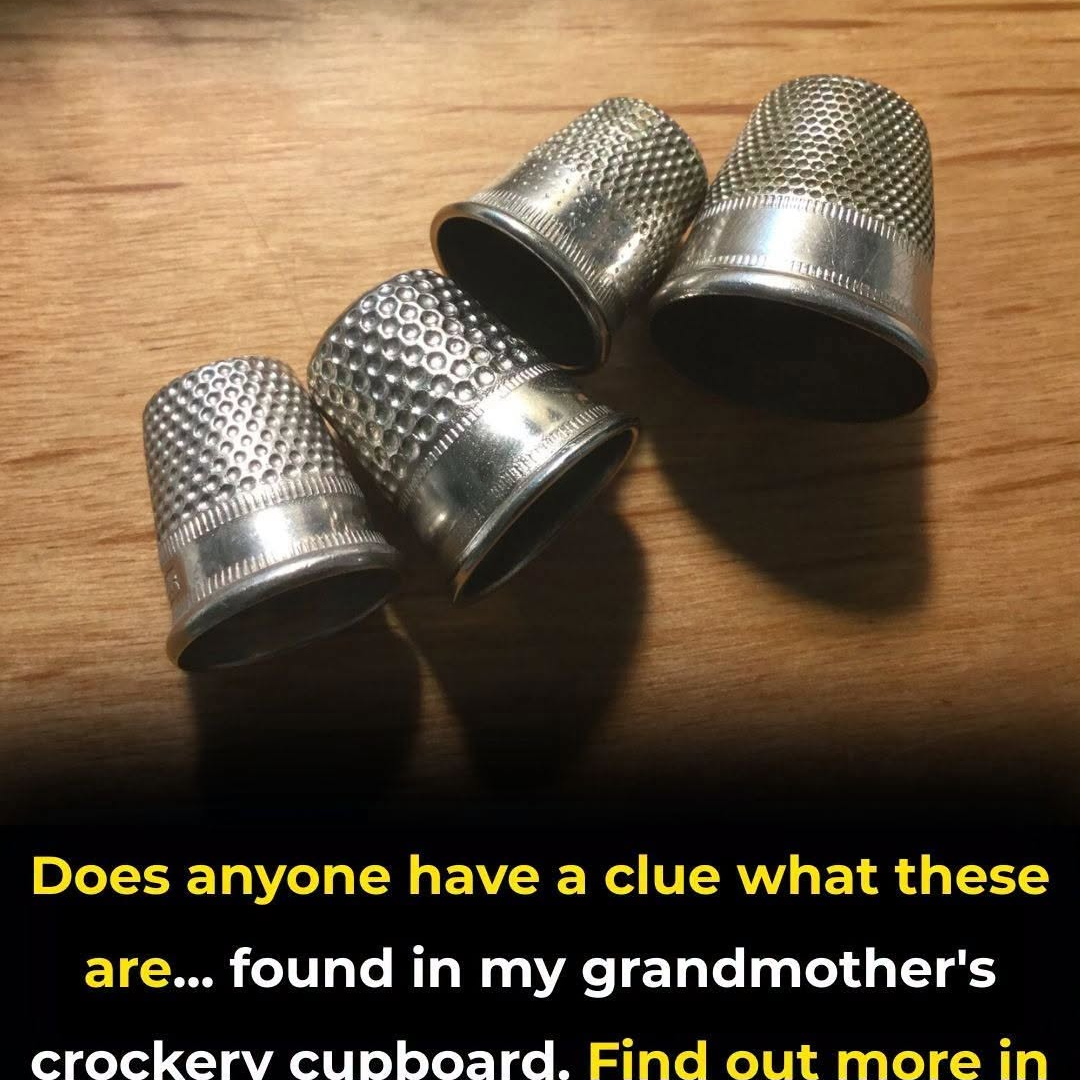
Before diving into the uses, it is important to distinguish between the two types of “teeth” commonly found on kitchen shears. The fine serrations running along the cutting edge of one blade are designed to grip slippery food—like raw chicken skin or fish—so it does not slide while you cut . The feature in question here, however, is the larger, distinct set of metal teeth located between the handles, just below the pivot point. These teeth are not for cutting at all; they function like a pair of pliers, closing together when you squeeze the handles to provide a powerful, non-slip grip . This distinction is crucial for understanding how to use the tool safely and effectively.
The Engineering Behind the Grip
The design is a clever application of leverage. By placing the gripping teeth close to the pivot and the handles far away, the scissors multiply the force applied by your hand. When you squeeze the handles, the teeth bite into whatever is placed between them with enough pressure to crack a shell or grip a stubborn lid. This is why the feature is sometimes referred to as a “nutcracker” or “cracker teeth” . The serrated texture prevents objects from slipping out during the squeeze, making it particularly effective for round or irregularly shaped items that would be difficult to hold with your fingers alone.