Rosemary: Is It Really “Nature’s Morphine” for Pain?
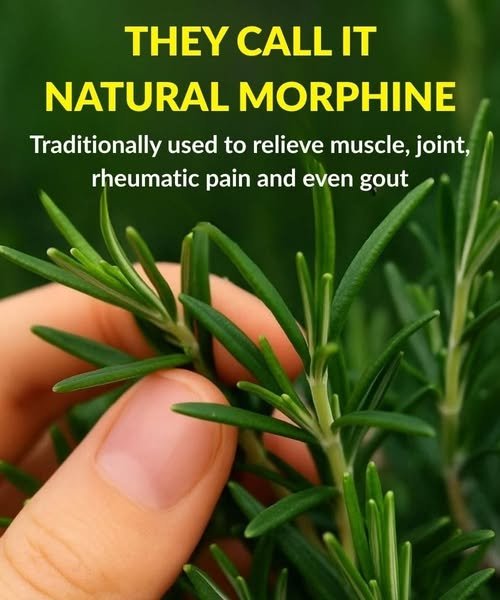
The rosemary plant in this image comes with a powerful claim: “They call it natural morphine.” The post suggests that rosemary has traditionally been used for muscle pain, joint pain, rheumatic pain, and even gout.
Rosemary certainly has a long history in traditional medicine—but calling it “natural morphine” is misleading. Rosemary does not contain morphine, and it should not be considered a natural replacement for prescription pain medication.
What Is the Plant in the Image?
The plant appears to be rosemary (Rosmarinus officinalis), an aromatic herb widely used in cooking and traditional herbal preparations.
Beyond its culinary use, rosemary leaves and rosemary oil have been studied and used in certain traditional medicinal preparations.
The European Medicines Agency recognizes traditional medicinal uses of rosemary leaf and rosemary oil for minor muscular and joint pain, among other traditional uses. However, the EMA emphasizes that these indications are based primarily on long-standing traditional use rather than strong clinical-trial evidence. (European Medicines Agency (EMA))
Why Do People Call It “Natural Morphine”?
The phrase is essentially a marketing-style nickname, not a medical classification.
Morphine is a specific opioid medication that acts on opioid receptors and can produce powerful analgesic effects. Rosemary does not work in the same way and should not be expected to provide comparable pain relief.
So while rosemary may have traditional applications for minor discomfort, “natural morphine” creates an impression of potency and equivalence that the available evidence does not support.
Can Rosemary Help With Muscle or Joint Pain?
There is some basis for the traditional claim.
The EMA has concluded that certain rosemary-oil preparations have a traditional medicinal use for relief of minor muscular and articular pain. The agency specifically notes, however, that this conclusion is based on long-standing use and that there is insufficient clinical-trial evidence to establish efficacy in the way that modern evidence-based medicines are established. (European Medicines Agency (EMA))
That means rosemary may have a role in some traditional preparations, but it shouldn’t be presented as a proven treatment for significant or persistent pain.
What About Gout?
This is where the viral claim needs even more caution.
Gout is caused by the buildup of uric acid crystals in joints, producing episodes of inflammation and intense pain.
The EMA’s current monograph for rosemary does not list gout as an established or traditional medicinal indication. Its recognized traditional uses for rosemary leaf and oil include minor muscular and joint pain, but that is not the same as treating the underlying cause of gout. (European Medicines Agency (EMA))
If someone has a suspected gout attack, relying on rosemary instead of appropriate medical treatment could delay effective care.