Rosemary: Is It Really “Nature’s Morphine” for Pain?
Rosemary Oil Is Different From Fresh Rosemary
Another important distinction is the form being used.
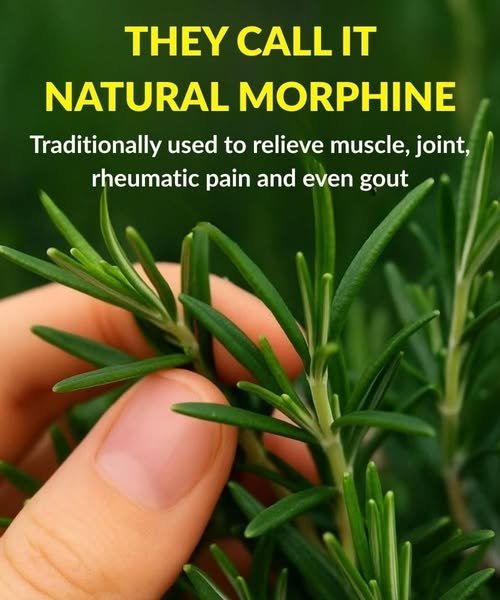
The image shows fresh rosemary leaves, while medicinal products may contain rosemary essential oil or standardized dried rosemary preparations.
These are not interchangeable.
Essential oils are highly concentrated and should not simply be swallowed or applied to the skin in undiluted form. The EMA’s information on rosemary oil specifically describes medicinal preparations intended for topical use and lists precautions and possible adverse reactions. (European Medicines Agency (EMA))
Is Rosemary Completely Harmless?
Not necessarily.
Even herbal products can cause unwanted reactions. The EMA reports that rosemary preparations can cause hypersensitivity reactions such as contact dermatitis in some people. (European Medicines Agency (EMA))
The EMA also lists situations where particular rosemary medicinal preparations should not be used, including pregnancy and breastfeeding for the medicinal products covered by its monographs, as well as certain medical conditions. (European Medicines Agency (EMA))
That’s why “natural” shouldn’t automatically be interpreted as “risk-free.”
How Is Rosemary Commonly Used?
As a culinary herb, rosemary is straightforward: it can be added to foods such as roasted vegetables, potatoes, meat, soups, and sauces.
Traditional medicinal preparations are a different matter. Depending on the product, rosemary may appear as a tea, bath preparation, or topical rosemary-oil medicine.
If you’re considering rosemary specifically for pain, it’s better to use a properly prepared product according to its instructions rather than experimenting with concentrated essential oil.
When Pain Needs Medical Attention
Don’t attempt to manage significant pain indefinitely with herbs.
Seek medical advice if pain is:
Severe or sudden
Persistent or worsening
Associated with significant swelling or redness
Accompanied by fever
Following an injury
Repeatedly affecting the same joint
Interfering with normal movement
A swollen, extremely painful joint can have several causes, and determining the cause is more important than simply trying to suppress the pain.
Final Thoughts
Rosemary is a fascinating medicinal and culinary herb, and there is a legitimate traditional basis for using certain rosemary preparations for minor muscular and joint discomfort. (European Medicines Agency (EMA))
But “natural morphine” is not an accurate medical description. Rosemary is not morphine, isn’t an equivalent painkiller, and shouldn’t be promoted as a substitute for appropriate treatment—especially for conditions such as gout.
The more accurate message is much simpler:
Rosemary has traditional uses for minor aches and pains, but its effects should not be exaggerated, and “natural” does not automatically mean powerful or risk-free.