Hungarian Sour Cherry Soup (Meggyleves): A Refreshing Taste of Summer
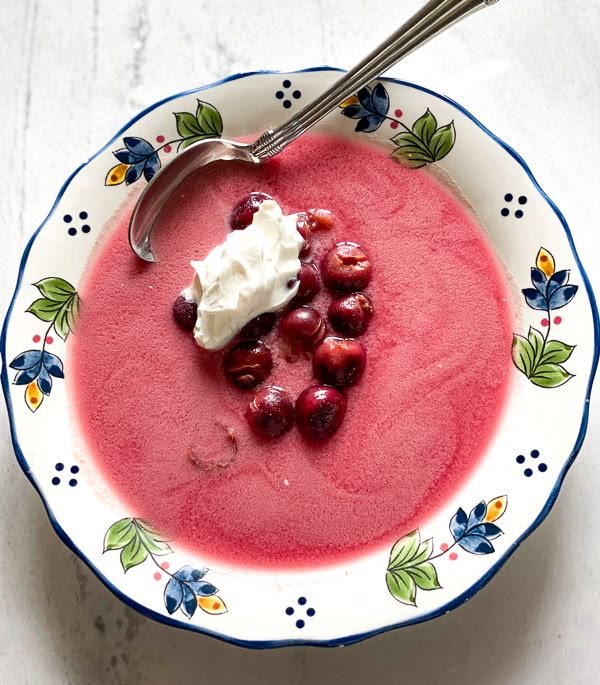
When most people think of soup, they imagine a steaming bowl of vegetables, meat, or rich broth. Hungarian cuisine offers a wonderfully different tradition: Meggyleves, a chilled sour cherry soup that transforms fresh fruit into an elegant and refreshing dish.
Known for its beautiful ruby-red color, gentle sweetness, and pleasant tartness, Meggyleves is particularly associated with warm-weather dining. Served cold, it offers a refreshing alternative to heavy summer meals while showcasing one of Hungary’s most cherished seasonal fruits.
What Is Meggyleves?
The Hungarian word “meggy” means sour cherry, while “leves” means soup. Together, Meggyleves simply means “sour cherry soup.”
The dish is traditionally prepared by gently cooking sour cherries with water, sugar, and aromatic spices. Depending on the recipe, cinnamon, cloves, lemon, vanilla, or other flavorings may be added.
A creamy element is often incorporated toward the end of cooking, creating a smooth consistency that balances the natural acidity of the cherries.
Once prepared, the soup is thoroughly chilled and served cold.
The Star Ingredient: Sour Cherries
The defining ingredient is the sour cherry, known in Hungarian as meggy.
Compared with sweet cherries, sour cherries have a noticeably sharper acidity and a more complex fruit flavor. This tartness is precisely what makes them so effective in a chilled soup.
Sugar is added to balance the acidity rather than completely mask it. The best versions of Meggyleves maintain a recognizable contrast between sweet and tart flavors.
Fresh sour cherries are ideal during the summer season, while preserved or frozen cherries can also be used when fresh fruit is unavailable.
A Simple but Sophisticated Ingredient List
Traditional Meggyleves does not require a long list of ingredients.
Typical preparations may include:
Sour cherries
Water
Sugar
Cinnamon
Cloves
Lemon
Vanilla
Sour cream, cream, or another dairy ingredient
The exact proportions and ingredients can vary considerably between Hungarian households.
Some versions are relatively light and fruit-forward, while others are creamier and closer to a chilled dessert.