Hungarian Sour Cherry Soup (Meggyleves): A Refreshing Taste of Summer
The cherries are first combined with water and sugar and gently simmered with selected spices.
Cinnamon and cloves are particularly traditional flavor companions because their warmth contrasts with the bright acidity of the fruit.
The mixture is cooked until the cherries become tender and release their deep color and flavor into the liquid.
A creamy mixture may then be incorporated to create a smoother consistency. Careful preparation is important when dairy is involved, as excessive heat can affect the texture.
After cooking, the soup is allowed to cool before being thoroughly chilled.
The finished dish is served cold, allowing the fruit, spice, and creamy elements to come together.
Why Is It Served Cold?
The cold temperature is one of the defining characteristics of Meggyleves.
Hungarian summers can be warm, and a chilled fruit soup provides a refreshing way to enjoy seasonal produce.
Unlike a traditional hot soup, Meggyleves feels light and invigorating. Its combination of cool temperature, tart cherries, and gentle sweetness makes it particularly appealing during hot weather.
The dish can function as a first course, a light snack, or even a dessert depending on how it is prepared and served.
The Balance Between Sweet and Tart
One of the secrets behind Meggyleves is achieving the right balance.
Sour cherries naturally contain significant acidity. If too little sugar is used, the soup can taste sharply sour. If too much sugar is added, the characteristic freshness of the cherries can disappear.
Traditional preparation is therefore less about making the soup simply “sweet” and more about balancing acidity with sweetness.
The result should remain distinctly fruity, with the sour cherry flavor at the center.
The Role of Spices
Although cherries are the star, spices give Meggyleves much of its character.
Cinnamon
Cinnamon adds warmth and complements the fruit’s natural acidity.
Cloves
Cloves contribute a deeper aromatic note and are traditionally used in relatively small quantities.
Vanilla
Vanilla can soften the sharper edges of the sour cherry flavor and add a subtle dessert-like aroma.
Lemon
A little lemon can brighten the flavor further, although the amount must be carefully balanced because the cherries are already acidic.
These ingredients demonstrate an important principle in Hungarian cooking: spices are often used to enhance the main ingredient rather than overpower it.
Meggyleves as Part of Hungarian Summer Cuisine
Fruit soups have a distinctive place in Hungarian culinary culture.
Rather than treating fruit exclusively as a dessert ingredient, Hungarian cuisine has long incorporated fruits into savory and semi-sweet dishes. Chilled fruit soups are one of the clearest examples of this tradition.
Meggyleves is especially associated with summer, when cherries are abundant and their fresh flavor is at its best.
For many people, the dish carries a strong sense of seasonality and nostalgia.
Different Ways to Serve It
Meggyleves can be presented in several ways.
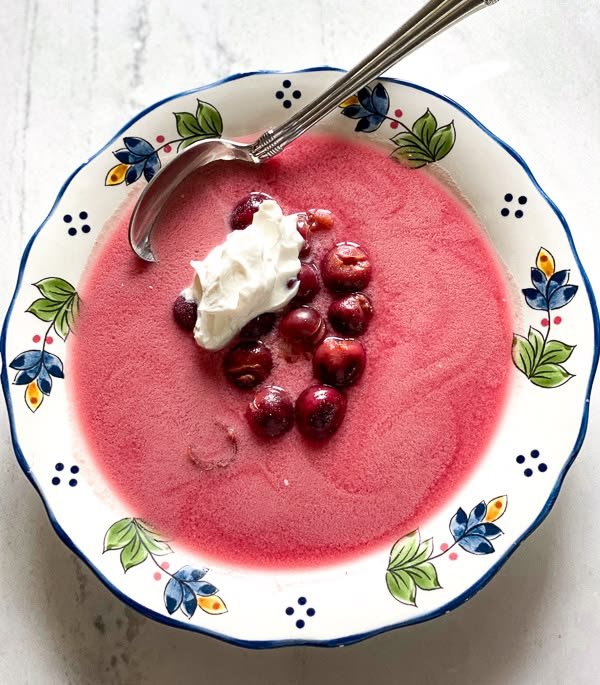
A traditional serving may be relatively simple, with the chilled soup poured into a bowl and a few cherries visible throughout.
For a more elegant presentation, it can be served in individual glass bowls or cups.
A small amount of cream or sour cream can be added for contrast, while a few whole cherries provide a decorative finish.
The soup can also be served as part of a larger summer meal, where its refreshing character helps prepare the palate for richer dishes.
Is Meggyleves a Soup or a Dessert?
This is one of the most interesting aspects of the dish.
Although its name literally identifies it as a soup, Meggyleves occupies a flexible place between first course and dessert.
A less sweet version can work as a refreshing opening course, while a richer, sweeter preparation may feel much more like a dessert.
This flexibility reflects the broader Hungarian tradition of fruit-based dishes that do not fit neatly into modern Western categories.
Why Meggyleves Remains Popular
Meggyleves has endured because it combines several qualities that are particularly appealing in warm weather.
It is:
Refreshing
Fruity
Light
Aromatic
Easy to prepare
Naturally seasonal
Adaptable to different tastes
Most importantly, it celebrates the distinctive flavor of sour cherries without requiring complicated culinary techniques.
Final Thoughts
Hungarian Sour Cherry Soup, or Meggyleves, is a beautiful example of Hungary’s creative approach to seasonal cooking.
Its combination of tart cherries, gentle sweetness, aromatic spices, and a cool, refreshing texture makes it unlike most traditional soups found elsewhere.
Whether enjoyed as a light summer starter, a refreshing snack, or a fruit-based dessert, Meggyleves offers a memorable taste of Hungarian culinary tradition.
At its heart, the dish is a celebration of simplicity: take ripe seasonal fruit, balance its natural acidity with sweetness and spice, serve it chilled, and allow the ingredients to speak for themselves.