Understanding the Warning Window: TIA and the Pre-Stroke Body
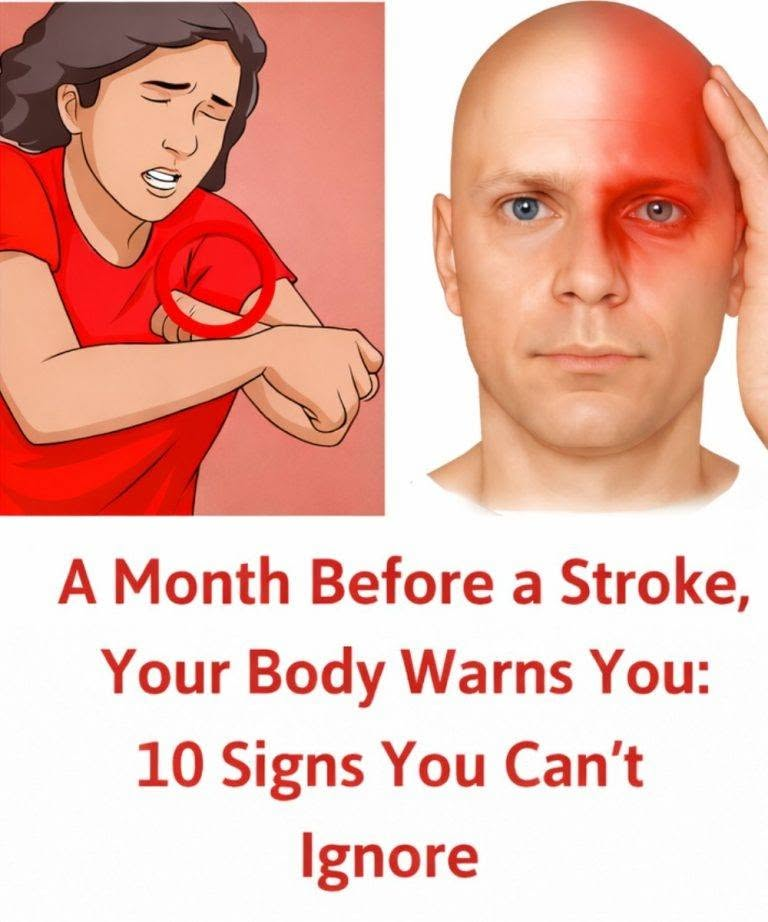
The concept of a “month before a stroke” is rooted in the clinical reality of the TIA. A TIA occurs when a blood clot or plaque temporarily blocks an artery supplying the brain, causing ischemia—a lack of oxygen and nutrients—to a specific region . Unlike a full stroke, the blockage is brief, and blood flow is restored before permanent tissue death occurs. Symptoms typically last from a few minutes to a few hours, and by definition resolve within twenty-four hours . However, the underlying vascular disease that caused the TIA does not disappear. The clot may have come from a narrowed carotid artery or an irregular heartbeat like atrial fibrillation, and the risk of a subsequent, larger stroke is significantly elevated in the days and weeks that follow .
This is why the TIA is considered a “warning shot.” The body is not necessarily sending a warning a full month in advance in every case; rather, the TIA itself is the warning, and it can occur days or weeks before a major stroke. Some sources note that subtle signs—dizziness, limb tingling, or fatigue—can precede a stroke by days or even a month, though these are often nonspecific and easily attributed to other causes . The key takeaway is that any sudden, neurological symptom, even if it disappears, demands immediate medical evaluation. The warning window is not a period for watchful waiting; it is a window for urgent intervention.
Sign 1: Sudden Numbness or Weakness on One Side
The most classic and recognizable warning sign is a sudden loss of strength or sensation on one side of the body. This may manifest as an arm that feels heavy and cannot be lifted, a leg that buckles, or a face that droops on one side . The NHS advises a simple test: ask the person to raise both arms and keep them there; if one arm drifts downward, it is a sign of weakness . Similarly, a smile that is uneven, with one side of the mouth not lifting properly, indicates facial weakness . These symptoms are caused by interrupted blood flow to the motor cortex or the pathways connecting the brain to the limbs and face. Crucially, these symptoms can be fleeting. A person might feel a sudden heaviness in their arm that passes within minutes. This is precisely the danger of a TIA—the transient nature of the symptom encourages complacency, but the underlying threat remains.
Sign 2: Speech Difficulty and Confusion
Trouble speaking or understanding language is another profound warning sign. A person may suddenly slur their words, struggle to find the right word, or speak in garbled sentences that are difficult to comprehend . They may also appear confused, unable to follow a conversation, or disoriented . This is a hallmark of a stroke affecting the language centers of the brain, typically located in the left hemisphere. The American Academy of Neurology emphasizes that confusion or trouble speaking or understanding is one of the five most common signs of stroke . As with physical weakness, speech difficulties can be transient. A person might momentarily lose the ability to articulate a thought, only to recover seconds later. This should never be attributed to fatigue or a “senior moment”; it is a neurological event that requires urgent assessment.
Sign 3: Vision Changes in One or Both Eyes
Visual disturbances are a frequently overlooked warning sign. A person may experience sudden blurred vision, double vision, or a complete loss of vision in one eye, often described as a “curtain” coming down . The World Stroke Organization lists sudden trouble seeing in one or both eyes as a key warning sign . These symptoms can be caused by a blockage in the ophthalmic artery, which supplies the eye, or in the posterior circulation of the brain, which controls visual processing. Because vision often returns to normal quickly, people may dismiss the event as eye strain, a migraine, or a temporary “floater.” However, a sudden, painless loss of vision in one eye—even if brief—is a classic presentation of a TIA affecting the carotid artery and is a critical warning of impending stroke.
Sign 4: Severe, Unexplained Headache
A sudden, severe headache with no known cause is another red flag. The CDC and the World Stroke Organization both list this as a key symptom . This is not a typical tension headache or a mild migraine; it is often described as the “worst headache of one’s life,” a thunderclap headache that peaks in intensity within seconds. Such a headache can be a sign of a hemorrhagic stroke (bleeding in the brain) or a warning of an impending aneurysm rupture. While a TIA is typically ischemic (caused by a blockage), a sudden severe headache should never be ignored, as it may indicate a different, equally dangerous vascular event. If a headache is accompanied by nausea, vomiting, dizziness, or confusion, emergency medical attention is imperative .
Sign 5: Dizziness, Loss of Balance, and Coordination Problems
Sudden dizziness, vertigo, or a loss of balance and coordination can signal a stroke affecting the cerebellum or brainstem, areas responsible for motor control and equilibrium . A person may suddenly feel as though the room is spinning, be unable to walk in a straight line, or experience a sudden fall. The BE FAST acronym, used by many emergency responders, includes “Balance” as the first letter, emphasizing its importance . While dizziness is a common and often benign symptom, its sudden onset—especially when accompanied by any other warning sign on this list—is a cause for serious concern. In older adults, an unexplained fall should always prompt a neurological evaluation, as the risk of a subsequent stroke is significant.