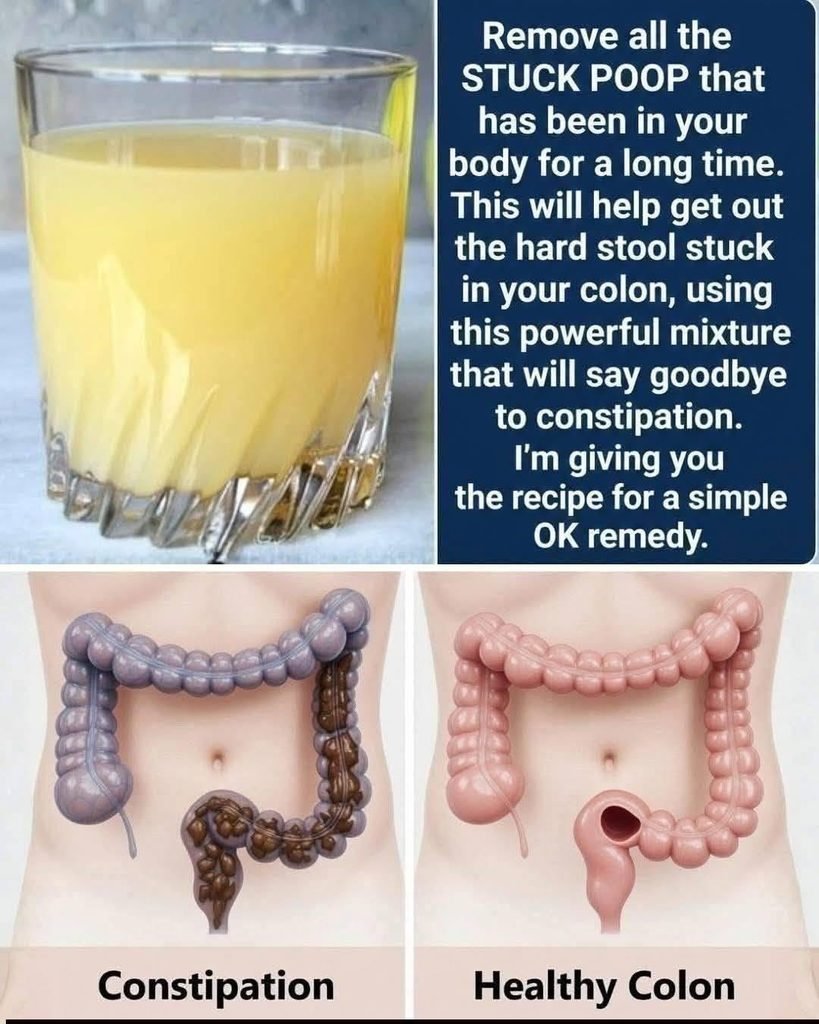
Can a Simple Drink Really “Clean Out” Stuck Stool? What the Image Gets Right—and Wrong
Does Stool Stay in Your Colon for Years?
This is one of the biggest misconceptions in posts like the one shown.
People with constipation can certainly have stool retained in the bowel, and some people develop fecal impaction, where a large amount of hard stool becomes difficult to pass. But the idea that everyone’s colon becomes coated with years of accumulated waste that can be flushed out with a special drink is not supported by standard medical guidance.
Constipation is a real medical problem, but it shouldn’t be confused with the popular “colon cleansing” narrative.
What Can Actually Help?
For ordinary constipation, evidence-based approaches often begin with lifestyle changes.
1. Increase Fiber Gradually
Adults generally need around 22–34 grams of fiber per day, depending on age and sex. Good sources include:
When lifestyle measures aren’t enough, healthcare professionals may recommend an appropriate short-term laxative. Options can include fiber supplements, osmotic agents, stool softeners, lubricants, or stimulant laxatives, depending on the situation. (Institut National du Diabète et des Maladies Digestives et Rénales)
The right option depends on the cause of constipation, other medications, medical conditions, and how severe the symptoms are.
When Constipation Needs Medical Attention
Don’t rely on a homemade drink if constipation is accompanied by warning signs.
Seek medical attention promptly if you have constipation along with:
Blood in the stool or rectal bleeding
Constant or severe abdominal pain
Vomiting
Fever
Inability to pass gas
Unexplained weight loss
Persistent symptoms that don’t improve with self-care
The drink shown in the viral image may look like a simple “colon cleanse,” but there is no reliable evidence that a particular homemade mixture can remove years of accumulated stool from the colon.
For ordinary constipation, a combination of adequate fiber, appropriate fluid intake, physical activity, healthy bowel habits, and—when appropriate—medical treatment is much better supported by evidence. (Institut National du Diabète et des Maladies Digestives et Rénales)
And if constipation is severe, persistent, or accompanied by pain, vomiting, bleeding, or an inability to pass gas, it’s important to get medical advice rather than attempting an aggressive home cleanse.